
 Lauge Risom Koch
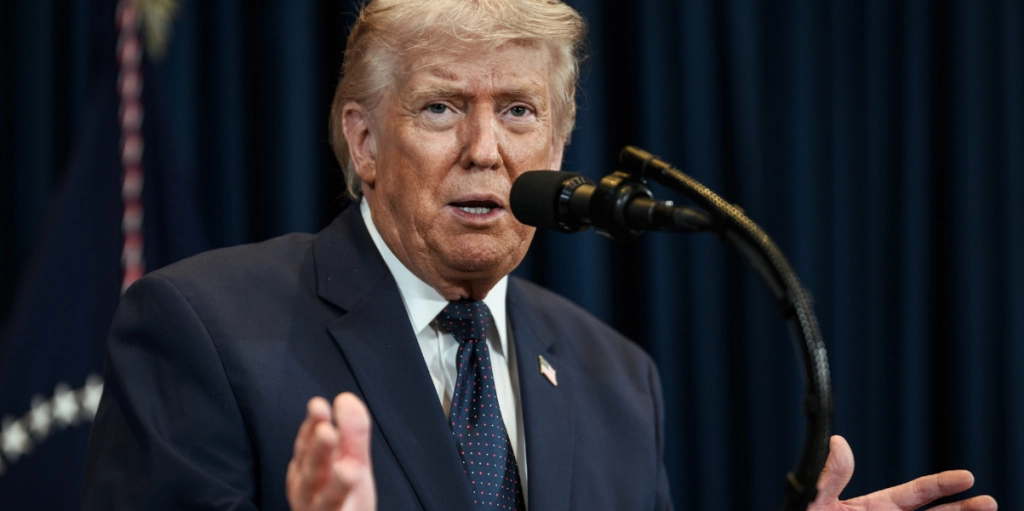
Following an announcement by President Trump, a historic agreement aims to completely disarm Hamas and establish a new international security framework to stabilize the Gaza Strip.


The shattered neighborhoods of Gaza face a new diplomatic reality as international mediators attempt to permanently remove weapons from one of the world’s most volatile coastlines. Families still living in temporary shelters now watch as a massive geopolitical apparatus mobilizes to restructure their local governance and security. Behind the high-level negotiations, everyday residents desperately hope this framework will finally allow them to rebuild their homes and businesses without the looming threat of sudden airstrikes.
The Disarmament Framework
United States President Donald Trump has brokered a sweeping agreement to formally disarm Hamas and all other militant factions operating within the Gaza Strip. Taking to his Truth Social platform, Trump framed the newly finalized mandate as a monumental milestone for regional security that many critics believed was impossible. The arrangement serves as a critical expansion of the comprehensive 20-point peace plan originally introduced in late 2025 to halt the active conflict.
The weapon handover will not happen overnight but rather through a series of carefully structured and internationally monitored phases. As militants surrender their arsenals, Israeli military units will gradually withdraw from their remaining forward operating bases inside the territory. A newly formed International Stabilization Force will then coordinate with a vetted Palestinian police presence to maintain basic street-level security.
This complex logistical operation requires unprecedented cooperation from regional powers who have spent years navigating the delicate crisis. Diplomats from Egypt, Qatar, and Turkey acted as vital intermediaries to secure compliance from the remaining militant leadership. The success of this weapons transfer will ultimately determine if billions of dollars in foreign reconstruction aid can safely flow into the devastated civilian infrastructure.


Shifting Power Dynamics
The formal removal of militant weaponry fundamentally alters the power structure that has dominated the coastal enclave for nearly two decades. The Peace Council, a transitional governing authority led by Trump, will temporarily oversee all major administrative functions and municipal rebuilding efforts. This transitional body bypasses traditional militant leadership, placing the day-to-day logistics in the hands of a specialized technocratic committee.
Local governance will eventually transition to a reformed Palestinian administration, provided they meet strict compliance metrics established by the international community. This staggered handover is designed to prevent the territory from ever again being utilized as a staging ground for cross-border terrorism. For local merchants and civil servants, the immediate future means operating under an entirely new set of economic and legal guidelines.
The broader geopolitical implications stretch far beyond the immediate Mediterranean coastline and into the wider Middle East. The resolution legally solidifies elements of a larger diplomatic roadmap that deeply impacts the future of a two-state solution. Israeli officials view the verified demilitarization as an absolute prerequisite before they will fully relinquish operational control of the immediate border zones.
The Reality on the Ground
Despite the historic signatures in Washington and allied capitals, executing a total disarmament in a fractured urban environment presents massive logistical hurdles. Independent monitors must securely catalog and destroy thousands of weapons hidden within a complex network of subterranean tunnels and ruined buildings. The verification process demands rigorous oversight to ensure rogue factions do not splinter off and retain hidden caches of munitions.
For the average civilian trying to secure clean water and basic medical care, the high-level treaties must translate into immediate tangible relief. The presence of an international stabilization force is intended to prevent internal power vacuums and protect essential humanitarian supply chains. Parents hoping to send their children back to school need guarantees that their neighborhoods will not suddenly devolve into localized turf wars.
The coming months will ruthlessly test whether a diplomatic framework can overcome decades of entrenched violence and deep-seated historical grievances. The ultimate success of the disarmament hinges on total compliance from factions that have historically viewed armed resistance as their core identity. The international community is now betting its geopolitical capital that economic opportunity and structured governance can permanently replace the militant paradigm.



