
 Nicolai Haugsted

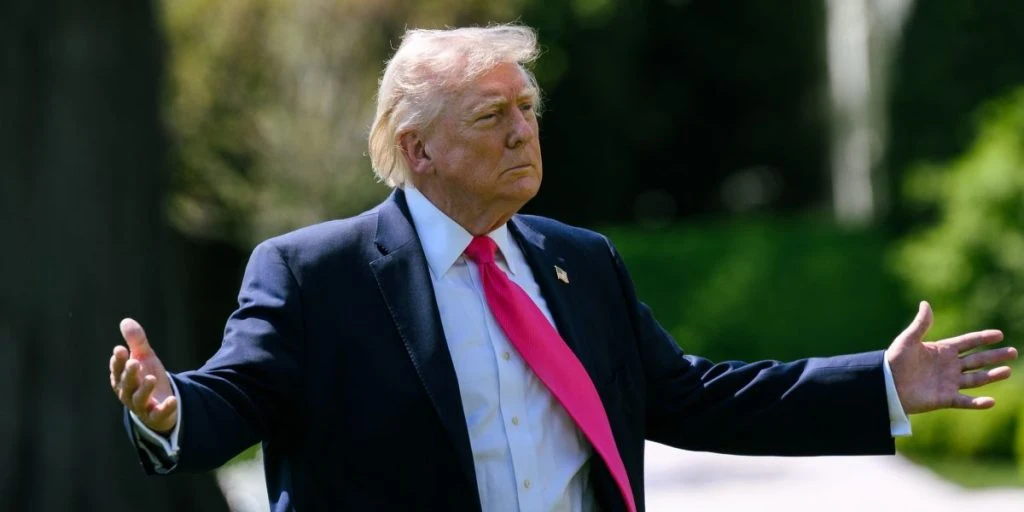
Trump’s latest election announcement sparks accusations of desperation as Republicans fight to retain control of Congress.


With the US midterm elections approaching, Donald Trump is once again making election integrity a major talking point in his campaign efforts. The president has repeatedly raised concerns about voter fraud, while Democrats and election officials have challenged many of his allegations about the American voting system.
Now, with Republicans fighting to retain control of Congress, Trump has introduced a rather extraordinary financial incentive.
The president is promising a staggering $1 million to anyone who reports election fraud that leads to an arrest and conviction.
But the announcement has not impressed everyone. Instead critics, according to RadarOnline, are accusing Trump of making a desperate attempt to influence the political conversation just days before Americans head to the polls.


Trump puts a million-dollar reward on the table
The president announced his proposal on Truth Social on Monday, October 26, explaining that the reward would apply to fraud involving both previous elections and the upcoming November 3 midterms.
“Anybody reporting Voter Fraud in the past Elections, or the upcoming 2026 Midterm Election, will be paid $1,000,000 upon the arrest and conviction of those that created the Fraud!” Trump wrote.
The president repeated the promise shortly afterward while speaking to reporters before boarding Air Force One for a campaign rally in Mississippi.
“I’m also going to be issuing a $1million bonus or reward, or whatever you want to call it, for anybody that reports voter fraud, leading to the arrest and conviction of somebody,” he said.
However, the announcement came without a detailed explanation of how the proposed reward system would operate.
Trump did not specify which government agency would administer the payments or where the money would come from.
The promise nevertheless attracted considerable attention, particularly because of its timing.
Critics question Trump’s motivation
With election day less than two weeks away, several social media users interpreted the announcement as a political maneuver rather than a conventional law enforcement initiative.
“Trump is desperate to announce giving money away right now… an election is days away,” one critic wrote on X.
Another questioned the president’s decision to offer financial rewards, describing him as “a politician who resorts to money because he lacks personal appeal…”
Others wondered whether the announcement reflected concerns about Republican performance in the upcoming elections.
“Is Trump really panicking that much?” one commentator asked.
Another user offered a considerably shorter reaction.
“Bribe…”
The comments illustrate the criticism surrounding Trump’s proposal, although they do not establish why the president decided to announce it.
The White House has presented the reward as an effort to identify and prosecute election-related offenses.
California becomes a major battleground over voter fraud
Trump’s announcement follows a series of federal investigations into alleged illegal voting.
On October 19, the Justice Department announced charges against 28 green card holders in California accused of election-related offenses.
Acting Deputy Attorney General Trent McCotter defended the investigation and emphasized the importance of preventing illegal ballots.
“Every illegal vote cancels out the vote of a lawful American citizen,” he said.
Federal prosecutors alleged that most of those charged had illegally cast ballots.
However, criminal charges are allegations until proven in court, and individual cases do not establish that widespread election fraud is taking place.
California’s Democratic leadership has strongly criticized the administration’s approach.
Governor Gavin Newsom described the federal investigation as “sad” and warned that it should “scare the h-ll out of every American.”
California Attorney General Rob Bonta also accused the administration of “politicizing and weaponizing the law.”
Democratic attorneys general have reportedly strengthened their coordination ahead of the midterms amid concerns about federal intervention in state election procedures.
Previous fraud allegations have faced corrections
The Trump administration’s claims about noncitizen voting have also attracted scrutiny in recent months.
In July, Homeland Security Secretary Markwayne Mullin alleged that four states had a combined 250,000 noncitizens on their voter registration lists.
However, the Department of Homeland Security subsequently acknowledged that the figure had been inflated.
Separately, New Jersey Governor Mikie Sherrill disclosed that a software error had resulted in thousands of noncitizens being registered.
Registration errors can raise legitimate administrative concerns, but they do not necessarily mean that those individuals actually voted.
Some Republican election officials have also expressed frustration with Trump’s statements about election security.
Matt Crane, head of the Colorado County Clerks Association, told CBS’s 60 Minutes that he was troubled by the president spreading “disinformation and lies” about elections.
“This is not a partisan issue,” Crane said.



