
 Kenneth Glad
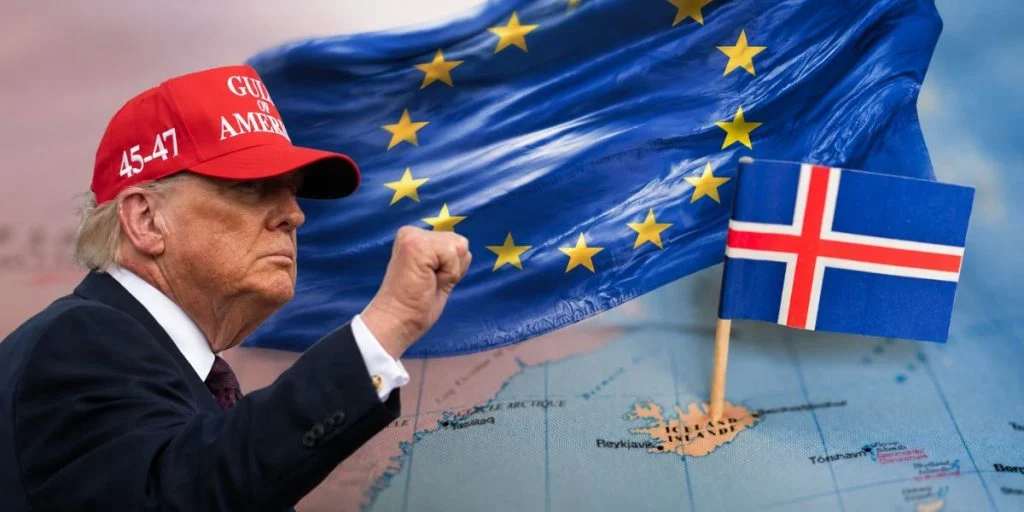
Iceland will soon decide whether to resume a political process abandoned more than a decade ago. A parallel discussion is developing in Norway, but neither country is close to approving membership.


Icelanders will vote on August 29, 2026, on whether the government should restart negotiations to join the European Union. Early voting began on July 27, according to Icelandic authorities. Approval would reopen accession talks, not make the country an EU member.
Negotiators would have to examine Icelandic law and policies across the areas covered by EU membership. Any agreement produced by that process would then be submitted to voters in a separate referendum. Iceland’s government has said negotiations can consider whether a candidate’s particular circumstances justify transitional arrangements or other accommodations.
Prime Minister Kristrún Frostadóttir believes the international climate has strengthened the argument for closer European ties. According to DR, the debate has been influenced by uncertainty about United States’ commitments to NATO, President Donald Trump’s ambitions regarding Greenland and his threats to impose tariffs.
Public opinion remains narrowly divided. A Gallup survey reported by Politico found that 52 percent supported restarting the negotiations, while 48 percent opposed doing so.


Iceland previously applied for EU membership in 2009 and opened formal talks the following year. Negotiations were suspended after a change of government in 2013, by which point 27 policy chapters had been opened and 11 provisionally completed. In 2015, Reykjavik asked the union to stop regarding Iceland as a candidate country.
Existing links complicate the choice
Remaining outside the EU has not kept Iceland apart from much of its economic system. The European Economic Area brings Iceland, Norway and Liechtenstein into the EU single market, requiring them to incorporate legislation covering relevant areas of cross-border commerce.
The three countries cannot vote in the EU institutions that formally adopt those rules. They can, however, provide expertise and submit views while the European Commission is preparing proposals, a process the European Free Trade Association calls decision shaping. New legislation is subsequently incorporated into the EEA Agreement through decisions of the EEA Joint Committee.
That arrangement gives Iceland extensive market access without full participation in EU decision-making. Membership would therefore concern political influence and representation as well as trade.
The dispute also reaches areas not fully covered by the EEA, including fisheries, which carry major economic and political importance in Iceland. Lykke Friis, director of the Danish think tank Europa, told DR that fishing rights and the transfer of sovereign authority remain central sources of resistance.
Guðrún Hafsteinsdóttir, leader of Iceland’s opposition Independence Party, has also opposed membership. In an interview with Politico, she connected the issue to national identity and Iceland’s relatively recent independence.
Norway’s discussion remains at an earlier stage. The leader of its opposition Conservative Party has called for the country to reconsider joining, DR reported. Voters rejected membership by narrow margins in referendums held in 1972 and 1994.
Sources: DR, Politico



