
 Jens Asbjørn Bøgen
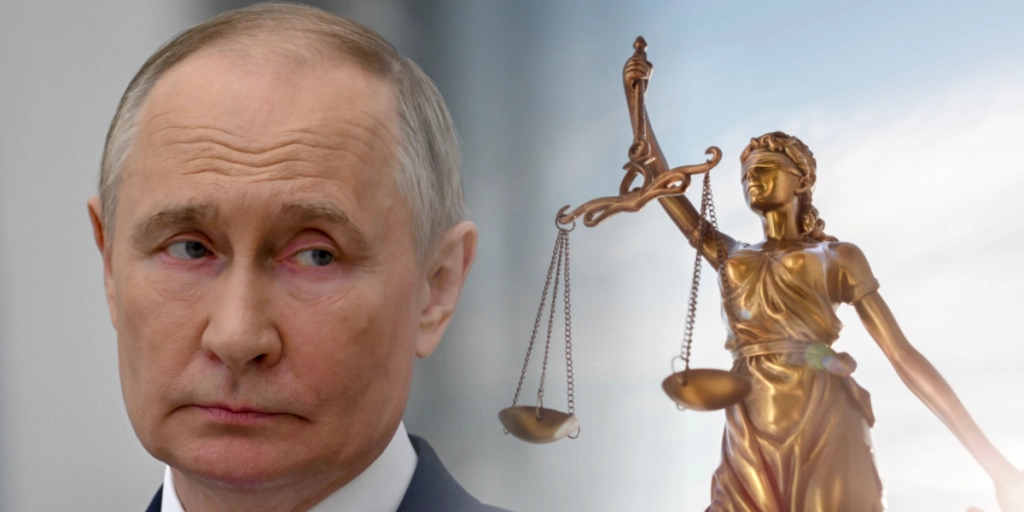
The total number of countries is now 17, which means the Council of Europe is required to put it to a vote.


A push to hold top Russian officials accountable for the invasion of Ukraine is gaining traction across Europe.
Ukraine’s Foreign Minister Andrii Sybiha announced on X on April 14 that Iceland and Poland have agreed to support the creation of a special tribunal under the Council of Europe.
According to Sybiha, both countries are ready to join the legal agreement needed to launch the initiative.
He said Kyiv is continuing to expand international backing, calling on countries worldwide to participate in what he described as a historic accountability effort.


Article continues below.
Click to display external content from twitter,
- You can always enable and disable third-party content.

You agree to display external third-party content. Personal data may be sent to the provider of the content and other third-party services.
What is the tribunal?
Ukraine agreed in June 2025 to establish the tribunal within the Council of Europe framework.
For it to become operational, a host country must be selected and participating states must commit funding through a formal legal mechanism.
Lithuania was the first to sign the agreement in November 2025, followed by countries including Austria, Denmark, and the Netherlands. Costa Rica remains the only non-European country to join so far.
The point of the tribunal is to prosecute the Russian leadership for launching the invasion of Ukraine. This would require a special tribunal, as the International Criminal Court is “only” investigating allegations of Russian war crimes, genocide, crimes against humanity, and similar offenses.
Minimum requirement met
At least 17 European nations are now prepared to commit to the tribunal, meeting the minimum number required for the proposal to move forward.
A vote is expected at a Council of Europe meeting in May, Sybiha said.
The planned court would focus specifically on prosecuting the crime of aggression, defined as the decision to launch an invasion of another country. This would target senior leadership rather than lower-level war crimes.
Sybiha emphasized that justice would be central to any long-term peace settlement. He warned that those responsible, from frontline actors to senior political and military leaders in Moscow, must face consequences.
Sources: Statements from Ukraine’s Foreign Ministry, International Criminal Court, Council of Europe, The Kyiv Independent



