
 Nicolai Haugsted

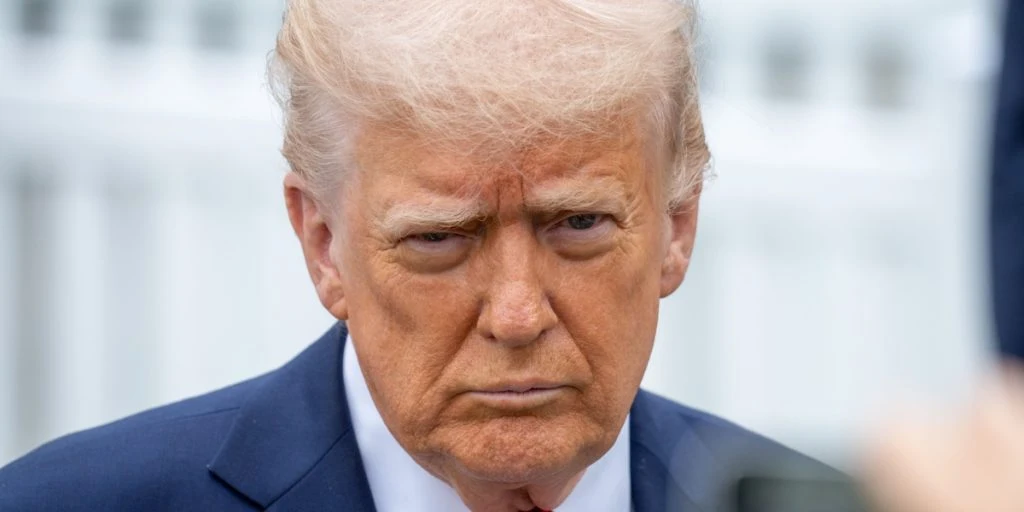
Trump’s ambassador delivers a sharp warning after being called a liar by Cuba’s foreign minister.

Diplomatic disagreements between the United States and Cuba are hardly unusual, especially when the United Nations gets involved.
For decades, the two countries have clashed over Washington’s economic sanctions, with Havana accusing the Americans of strangling its economy and successive US administrations criticizing Cuba’s political system.
But the latest confrontation in New York demonstrated just how personal those disagreements have become under Donald Trump.
During a United Nations General Assembly session on Tuesday, an argument between American and Cuban officials escalated into shouting, accusations and angry demands for order.


At one point, Trump’s ambassador to the United Nations found himself exchanging sharp words with Cuba’s foreign minister in front of representatives from around the world.
Diplomatic pleasantries were apparently in short supply.
Cuban officials interrupt Trump’s ambassador
The confrontation began as US Ambassador Mike Waltz addressed the General Assembly ahead of a vote on the long-standing American economic embargo against Cuba.
Waltz was urging UN member states to reject a resolution condemning the sanctions, which have been a recurring source of international criticism for decades.
During his remarks, the ambassador accused Cuba’s socialist government of years of corruption and misconduct.
His comments did not sit particularly well with the Cuban delegation.
Several representatives, including Foreign Minister Bruno Rodríguez, began banging on their table while demanding a point of order.
UN officials attempted to restore calm, but Rodríguez was not finished.
The Cuban foreign minister walked down the aisle toward the front of the General Assembly and directly confronted Waltz.
“You are a liar!” Rodríguez shouted.
The American ambassador responded with a warning of his own.
“You understand who you’re dealing with? This is America. Back up.”
The exchange was a considerable departure from the carefully measured language normally associated with international diplomacy.
It also offered a rather public demonstration of the growing hostility between Washington and Havana.
Click to display external content from x,
- You can always enable and disable third-party content.

You agree to display external third-party content. Personal data may be sent to the provider of the content and other third-party services.
Trump’s pressure campaign is taking its toll
The argument comes as Trump’s administration continues tightening economic restrictions on Cuba.
Washington has sought to pressure the country’s communist government into political and economic changes, including greater openness to private investment.
However, the measures have also contributed to worsening living conditions for ordinary Cubans.
In late January, Trump announced that countries supplying oil to Cuba could face American tariffs.
The threat has severely disrupted fuel supplies to the Caribbean island, which already faced serious economic difficulties.
Electricity shortages have become particularly damaging.
Widespread blackouts have affected households, businesses and essential services, including water distribution, telecommunications and food preparation.
Cuba’s government argues that Washington’s restrictions are making economic recovery increasingly difficult.
Cuban officials have also pointed to what they consider a contradiction in American policy.
While the Trump administration demands greater economic openness and private investment, Havana argues that American sanctions make such reforms harder to implement.
The US government, meanwhile, maintains that pressure is necessary to challenge Cuba’s political leadership and its treatment of citizens.
Another confrontation follows last week’s dispute
Tuesday’s argument was not the first public clash involving Waltz and Cuban representatives this month.
Just a week earlier, the American ambassador confronted Cuban diplomat Ernesto Soberón Guzmán outside a US-organized event at the United Nations.
The gathering featured Cuban dissidents and former political prisoners and focused on allegations of repression by the Cuban government.
Washington has increasingly used such events to highlight human rights concerns and encourage international opposition to Havana’s leadership.
The diplomatic campaign also serves a more immediate purpose.
American officials are trying to persuade other countries to vote against the annual UN resolution calling for an end to the US embargo.
For Cuba, the resolution represents an important opportunity to demonstrate that Washington’s economic restrictions remain deeply unpopular internationally.
For the Trump administration, the vote offers another platform to argue that Cuba’s government, rather than American sanctions alone, bears responsibility for the country’s difficulties.
The United States faces an uphill diplomatic battle
The annual UN vote has consistently demonstrated how isolated Washington’s position on the embargo has become internationally.
For 34 years, the resolution has attracted overwhelming support from member states.
Last year’s vote was particularly decisive.
A total of 165 countries supported the resolution condemning the embargo, while seven voted against it and 12 abstained.
Argentina, Ukraine and Hungary were among the countries opposing the measure for the first time.
Although the resolution carries considerable diplomatic significance, it does not have the legal power to force the United States to remove its sanctions.



