
 Kenneth Glad
European sanctions aimed at cutting business ties with a key Russian military site are facing fresh scrutiny after several foreign-linked companies failed to leave by the required deadline. Despite clear legal obligations, a mix of legal uncertainty, financial risk, and political pressure has slowed or blocked corporate exits.

Under EU sanctions adopted in 2025, companies linked to member states are required to divest from the Alabuga Special Economic Zone by Jan. 25, 2026. The zone has been widely identified as central to Russia’s drone warfare capabilities.
“The EU obliged its companies to exit this special economic zone as of Jan. 25, 2026,” Roman Steblivskyi of the Economic Security Council of Ukraine told The Kyiv Independent.
Yet the publication found that several firms continue to maintain a presence, often through locally managed subsidiaries or partially detached operations.
EU envoy David O’Sullivan confirmed the restriction and warned that sanctions breaches could lead to enforcement action.


Industry beside warfare
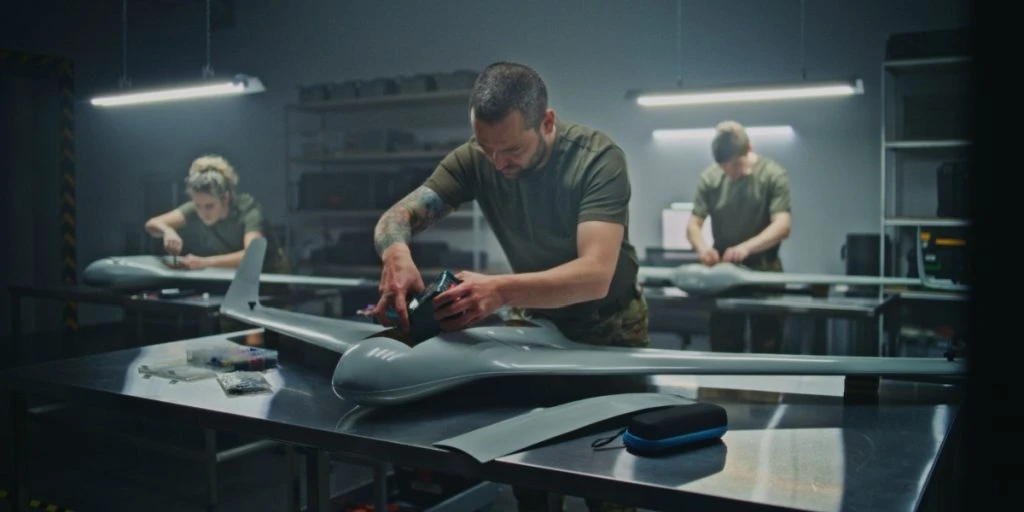
Alabuga, in Russia’s Tatarstan region, has become a focal point for the assembly of Shahed-type drones used in repeated strikes on Ukraine.
According to The Kyiv Independent, this production ramped up after Moscow secured Iranian technology, a claim supported by analysis from C4ADS.
What complicates matters is geography. The outlet reported that industrial facilities tied to Western companies sit close to drone-related infrastructure, with expansion visible in satellite imagery.
“They have launched drone production right next to the factories of Western manufacturers,” a Ukrainian officer said.
The Ukrainian outlet also found that these businesses, while not directly linked to weapons manufacturing, paid more than $34 million in taxes in 2025, contributing to Russia’s state revenues.
Business risks rise
Some companies attempted to leave but encountered barriers. Firms such as Rockwool and Air Liquide had their Russian assets placed under external control, limiting their ability to exit and exposing them to political pressure.
Others remain operational in different forms. Belgian-owned Drylock Technologies, for example, continued expanding its Russian facilities and drew criticism after public statements from its local leadership supported troops.
“Today, I would like to congratulate our guys, who are on the front line now,” said local CEO Andrey Pavlov.
Following media inquiries, those messages were removed.
German manufacturer Knauf and U.S.-based Allied Mineral Products indicated they are reviewing compliance or maintaining restricted operations, though specifics remain unclear.
Taken together, the findings reported by The Kyiv Independent point to a broader challenge for Western policymakers. Sanctions designed to isolate Russia’s war economy are proving harder to enforce in practice, particularly when companies face the prospect of asset seizures or forced administration.
Sources: The Kyiv Independent, C4ADS



