
 Kenneth Glad
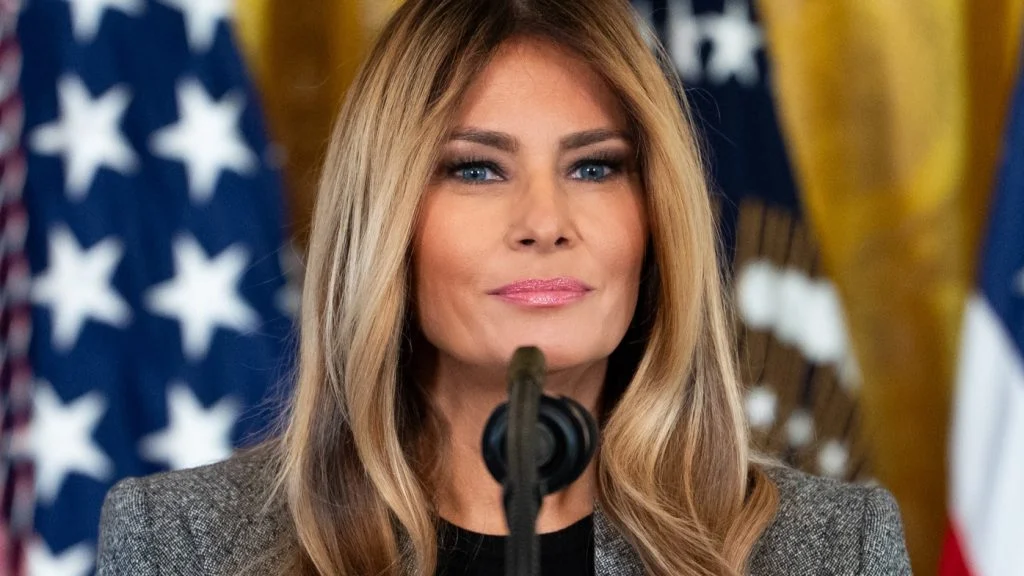
When Melania Trump welcomed Keith and Aviva Siegel to the White House on Wednesday night, the meeting was meant to be a moment of recognition — a private expression of thanks from two former hostages still adjusting to freedom after more than a year defined by fear and uncertainty.


Keith and Aviva Siegel, American-Israeli citizens married for more than four decades, were taken from their home in Kibbutz Kfar Aza during the Hamas-led attacks on October 7, 2023. The assault on southern Israel killed more than 1,200 people and left entire border communities devastated, according to AP News. The Siegels were among roughly 251 people abducted and taken into Gaza.
Aviva Siegel, 63, was held captive for 51 days before being released in November 2023 during a temporary ceasefire. In the weeks following her release, she became one of the most visible advocates for the remaining hostages, giving interviews and urging international leaders to maintain pressure for their return.
She has described violent conditions in captivity and long periods without information about her husband’s fate, writes The Times of Israel.
Keith Siegel, then 65, remained in captivity for more than 480 days. Israeli media later reported that he was moved repeatedly, held in isolation for extended periods and subjected to physical abuse.


His family has said he learned only after his release that his mother had died while he was being held, news he was unable to process at the time. He was freed in February 2025 as part of a broader ceasefire agreement that involved U.S. mediation.
Life is not quite the same
Since his return, the Siegels have spoken publicly about the difficulty of resuming daily life. Keith has described struggling with sleep and routine, while Aviva has said the psychological weight of captivity did not end with her release.
As reported by The Media Line, they have appeared before international bodies, including a United Nations committee, to testify about the treatment of hostages and to advocate for accountability.
Their visit to Washington was not a formal diplomatic appearance. According to CNN, it was arranged at the Siegels’ request after Aviva reached out privately to the first lady following her release.
The two met in New York in early 2025, an emotional encounter that later appeared in Trump’s documentary, Melania. Trump has said the White House meeting was intended as a continuation of that relationship, a chance for the couple to visit in person and express their thanks.
But the event, held Wednesday afternoon in the Blue Room, did not remain narrowly focused.
Questions that won’t go away
During a brief exchange with reporters, Melania Trump was asked about renewed pressure from survivors of Jeffrey Epstein’s abuse to move Ghislaine Maxwell to a higher-security federal prison. Unilad reports that Maxwell was convicted in 2021 of sex trafficking and conspiracy and sentenced to 20 years in federal prison.
Concerns about her placement have circulated for months. Whistleblowers have alleged that Maxwell’s conditions differ from those faced by other inmates, prompting House Judiciary Committee Democrats to publicly call on the Bureau of Prisons to review the matter. In letters and statements, lawmakers have framed the issue as one of consistency and public confidence in the justice system.
Instead, she looked down briefly, clasped her hands, and redirected attention to the reason for the gathering, saying it should remain focused on honoring the Siegels.
For many survivor advocates, the debate over Maxwell’s incarceration has become about more than logistics. While her conviction marked a rare moment of accountability in the Epstein case, questions about her treatment have reopened frustrations over whether justice in high-profile abuse cases is applied evenly.
Optics matter more than rules
The tension returned later in the event when Trump referenced her documentary, Melania, telling those in the room that a previous meeting with Aviva Siegel appears in the film. The remark came midway through the sit-down, after Keith Siegel finished speaking, as photographers shifted position and aides along the wall glanced at one another.
The project was produced under a multimillion-dollar deal with Amazon MGM Studios.
Asked afterward whether it was appropriate to mention the film during an official White House event, Trump said it was “not promotion,” explaining that the Siegels had asked to visit and thank her in person. There are no laws barring a first lady from promoting personal work, though White House staff are prohibited from doing so.
Criticism came from ethics watchdogs and advocacy groups, who spoke less about legality than perception. Several said the White House carries symbolic expectations that go beyond technical compliance, particularly when private business interests intersect with official settings.
Past first ladies have authored books and pursued media projects of their own, typically after leaving Washington. What some observers find different now is how closely commercial storytelling and the presidency overlap in real time.
Gratitude and unease in the same room
The Siegels themselves expressed appreciation during the meeting. Keith thanked Trump for her support and spoke about his recovery, including humanitarian work abroad. Both he and Aviva acknowledged their participation in the documentary.
Among hostage advocates, reactions were more mixed. Some said privately that while survivor consent is central, the broader framing of such moments can still feel uncomfortable — especially when stories of trauma are folded into political or commercial narratives beyond the survivors’ control.
By the time the event ended, the gathering had become more complicated than originally planned.
Sources: AP News, CNN, Unilad, The Times of Israel, The Media Line



