
 Kenneth Glad
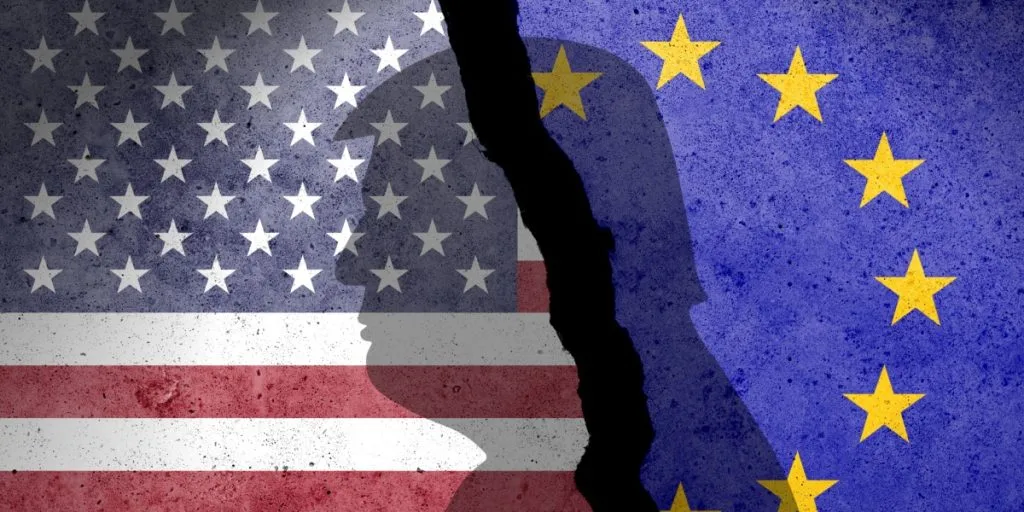
Public opinion across parts of Europe is shifting in ways that could reshape the continent’s security priorities. A new survey suggests growing support for military self-reliance, even as trust in traditional allies weakens. The old certainties are starting to fray.


Support for collective defense remains high, but personal willingness to fight tells a different story. The “European Pulse” survey, conducted by Cluster17 for Politico and beBartlet between March 13 and 21 among 6,698 people in six European countries, reveals a gap between principle and action.
Around three-quarters of respondents said they would back sending troops to defend a NATO ally, and even more supported defending a fellow EU state. But when the scenario turns personal, confidence drops sharply.
Only 19% said they would be ready to “take up arms and fight” if their own country were attacked. Others leaned toward support roles or indirect contributions, while some would avoid involvement altogether. A willingness to defend does not always mean a willingness to fight.
Allies in question
Trust in Washington is no longer a given. The findings reported by Politico show that 36% of respondents view the United States as a threat, while just 12% still consider it a close ally.


This shift follows Donald Trump’s return to the presidency in January 2025, writes Digi24. His administration has questioned NATO commitments, imposed tariffs on allies and initiated a conflict with Iran without European backing.
Russia remains the dominant concern, though, cited as a threat by 70% of respondents, with China at 29%.
Views of the US now sit uneasily in between, reflecting uncertainty rather than clear alignment.
Spain shows the sharpest skepticism, while Poland stands apart, with only 13% seeing Washington as a risk.
Autonomy gains ground
Momentum is building for Europe to stand more firmly on its own. According to Politico, 86% of respondents believe the continent should strengthen its defense capabilities, a signal that the debate over strategic autonomy is no longer confined to policymakers but has spread into public opinion.
Support for a joint European force stands at 69%, suggesting openness to deeper military integration.
Still, money complicates the picture. Opinions on defense spending are split almost evenly, with some calling for increases and others arguing current levels are sufficient or already excessive.
Regarding Ukraine, the divisions are just as pronounced: 34% say Europe is not doing enough, 31% consider the current approach adequate and 30% believe support has gone too far.
For NATO and EU leaders, this fragmentation could make future coordination harder, especially if public backing becomes more conditional.
Sources: Politico, Digi24



