
 Christine Drews Sieger
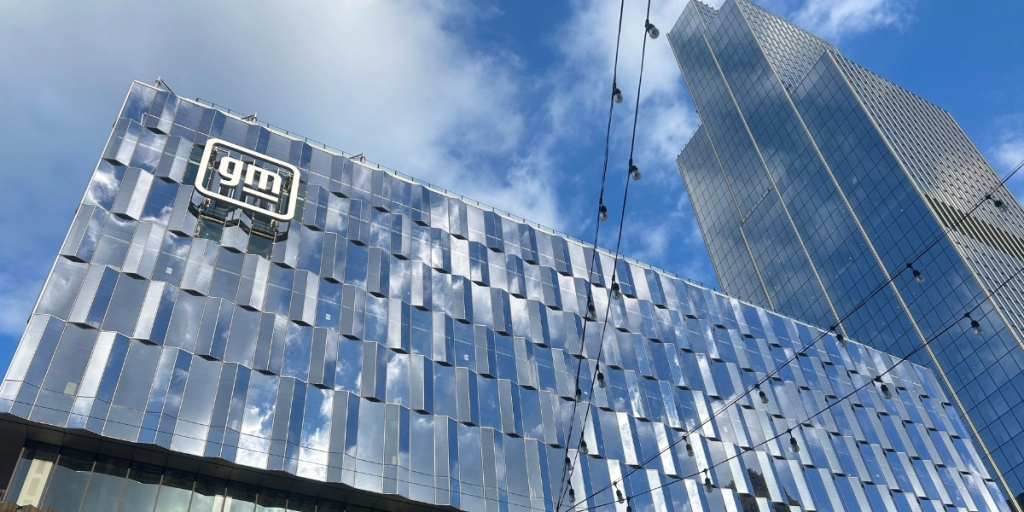
Trump celebrates tariff gains, but Michigan voters face rising costs and an uncertain economic future.


On Wednesday of this week, President Donald Trump visited General Motors in the state of Michigan to declare his trade policy a resounding success. But outside the factory gates, many consumers are experiencing a somewhat heavier everyday reality.
Economists point out that more expensive imports of key components and rising gasoline prices are hitting ordinary households hard. At the same time, opinion polls show clearly declining consumer confidence.
“The car companies are doing better than they ever have,” Trump confidently remarked during an event at the auto plant in Milford. He proudly added that “it is amazing what tariffs will do for General Motors,” before placing his signature on a factory-new Corvette.
Among voters, however, the financial strain is felt significantly. Yet not all supporters escape the economic hangover, The Independent reports.


Among the audience was 64-year-old retiree Lisa Scherer, who, despite a tight monthly payout of around $1,100 and sky-high fuel prices, still offers her backing. She nevertheless maintained her support with the words: “I guess, no pain, no gain.”
Numbers show decline
The economic picture in Michigan appears deeply divided beneath the surface. Even though the auto industry—with GM leading the way—teases future billion-dollar projects and the relocation of production to domestic soil, the cash reality here and now is entirely different.
New labor market figures from the authorities show that the industrial sector in Michigan has lost more than 8,000 jobs since the new import tariffs came into effect last spring.
The gulf between rhetoric and reality draws sharp criticism from local pollster Bernie Porn. He assesses that the president’s rosy depiction is light-years away from the reality voters face at the cash registers, where inflationary pressure still overshadows everything else.
The industry itself warns that supply chains risk severe disruption if the administration carries out its threat to impose a 50 percent tariff on Canadian imports.
Many automakers point out that relief on auto parts is only temporary and runs until 2030, creating future uncertainty, according to The Independent.
Uncertain future course
The trade war and the resulting price increases risk weakening voter support in the upcoming primary election in Michigan.
Republican candidates such as John James and Mike Rogers are now fighting to hold onto voters as the debate over trade penalties against neighboring Canada intensifies.
Among Trump’s loyal base, however, the attitude is that one must arm oneself with patience, The Independent reports.
49-year-old handyman Roy Parks argues that the current price increases are merely a passing evil that one must grin and bear to achieve lasting improvements to the American economy.
The question leading up to the upcoming election in November will therefore be whether voters in Michigan will reward Trump’s promises of future growth or whether high living costs will turn the mood against Republican candidates.
History shows the flip side of tariffs
The discussion around Trump’s current trade policy echoes experiences from his first presidential term when, in 2018, he introduced tariffs on items including steel and aluminum with the goal of protecting American producers.
According to an analysis from the U.S. International Trade Commission (USITC), the tariffs had a clear effect on imports, but they simultaneously increased costs for American companies that relied on foreign materials.
The USITC concluded, among other things, that U.S. importers between 2018 and 2021 largely bore the financial burden of the tariffs because the prices of imported goods rose correspondingly.
The experiences from the first trade conflict thus show the dilemma that also characterizes the current debate: tariffs can strengthen individual domestic industries, but can at the same time make production more expensive for companies and consumers.



