Kenneth Glad
A recent political shift is prompting fresh discussions across Europe. Leaders are now reassessing priorities amid changing dynamics within the region.

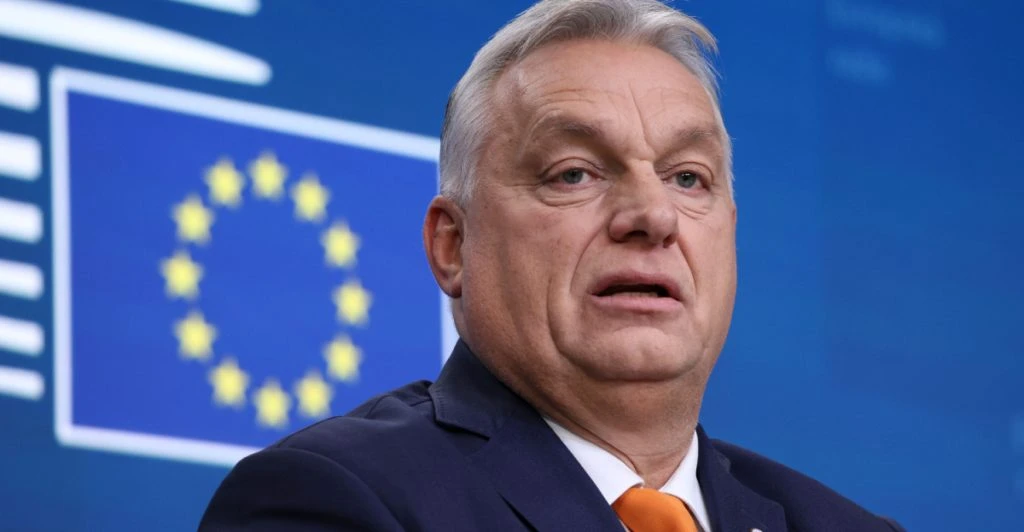
EU leaders meeting in Cyprus this week are confronting a changed political landscape, one shaped in part by Hungary’s recent election.
The shift comes at a sensitive time, with decisions pending on Ukraine, defense and the bloc’s long-term finances.
Viktor Orbán, who lost his parliamentary majority earlier this month, remains in a caretaker role but did not attend the summit.
According to DR, his absence has practical consequences: One of the EU’s most consistent blockers of joint decisions is no longer in the room.


Officials cited by the Danish broadcaster say discussions that once stalled are now advancing more smoothly, particularly on financial and foreign policy issues.
Political network loses anchor
For years, Orbán invested political capital in building ties with nationalist parties across Europe.
His efforts helped connect figures such as France’s Marine Le Pen and Italy’s Matteo Salvini, though their cooperation often remained limited by national priorities.
Analysis by DR-journalist Ole Ryborg suggests that, following his electoral defeat, this loose alignment is struggling to maintain direction.
Without a central figure coordinating strategy, differences between these parties are becoming more visible.
That fragmentation matters in Brussels, where influence often depends on disciplined coalitions rather than informal alliances.
Distance from Washington grows
The changes are also being felt in Europe’s relationship with the United States. Several parties that once embraced Donald Trump’s rhetoric are now treading more carefully.
In France, Le Pen’s National Rally has internally concluded it should avoid visible ties to Trump ahead of elections, DR reports. The calculation reflects concern about how such associations resonate with voters.
At the same time, European governments are reassessing their reliance on Washington.
Expectations that trade concessions might secure stronger US security commitments have weakened, particularly amid tensions over NATO and conflicts involving Iran.
Decisions gather pace
Concrete policy moves are already emerging. EU countries are progressing toward a €90 billion support package for Ukraine, aimed at covering financial needs over the next two years.
New sanctions on Russia are also under preparation. At the same time, discussions around potential measures targeting Israel – linked to developments in Gaza and the wider region – are gaining traction.
Budget talks are evolving in parallel. Several member states are pushing for stricter rules tying EU funding to democratic standards, a proposal that previously faced resistance from Budapest.
The combined effect is a European Union that is, at least for now, finding it easier to act collectively. Whether that momentum holds will depend on how durable this new political balance proves to be.
Sources: DR (Danish Broadcasting Corporation)