
 Kenneth Glad

Ancient explorers crossed vast oceans to find new homes. It was a monumental task. Today, modern science is uncovering exactly how they pulled it off.

The Pacific Ocean covers a massive chunk of our planet. Despite the sheer scale, early Polynesian seafarers tackled these waters in wooden vessels.
They settled scattered islands across millions of square miles. These voyages remain some of the most impressive navigational feats in human history, according to HistorieNet.
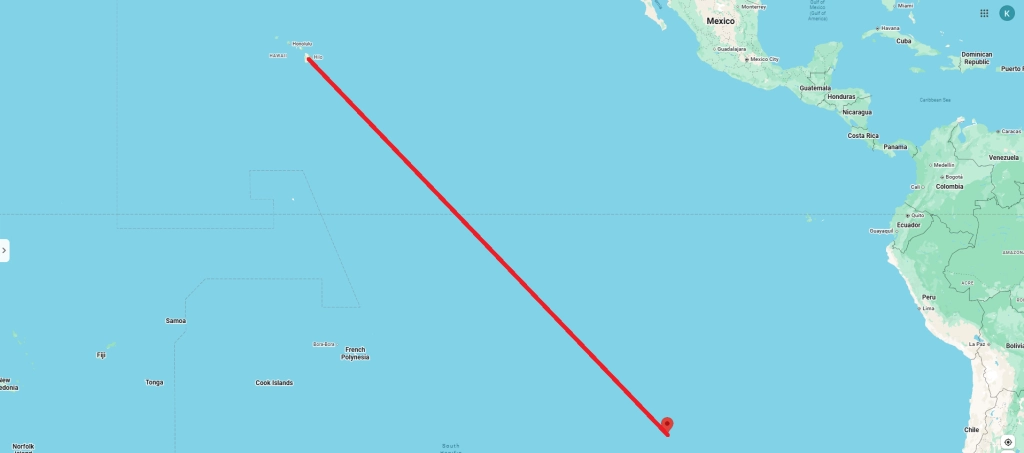
Hawaii sits in the far north of this ocean expanse. It is separated from Easter Island in the south by roughly 7,000 kilometers of open water.
Unlocking ancient secrets
Researchers have long wondered where Hawaii’s first residents came from. A new study published in the journal Science is shedding light on this puzzle.


Cole Shanks from the University of California, Santa Cruz, led the project. To trace ancient human movements, his team analyzed genetic material from over 1,000 people in French Polynesia.
They then compared this information with genetic data from both Hawaii and Easter Island. What they found completely flipped previous assumptions.
The unexpected link
Hawaii’s original population actually shares more genetic heritage with Easter Island than with any other studied group. This shocked the team. Geographically, Easter Island is the furthest away.
Stanford University geneticist Alexander Ioannidis explained the discovery in a press release. Researchers previously considered Easter Island the final stop. But new data suggests it was actually a key part of the pathway toward Hawaii.
These closely related groups likely shared ancestors who originally set sail from Mangareva in the South Pacific. They made these journeys roughly 800 to 1,000 years ago.
Health in the bloodline
The genetic data does not mean explorers sailed in a straight line from Easter Island to Hawaii. That is highly unlikely. Instead, experts believe they used double-hulled canoes to sail west toward French Polynesia first.
From there, they probably navigated northward until they reached the Hawaiian islands. And every stop along the way left a permanent mark on the descendants.
When a small group starts a new community, they bring only a fraction of the original genetic variety. This is a well-known biological phenomenon.
This limited gene pool made certain rare traits much more common over time. Today, this historical bottleneck still affects rates of hereditary eye and kidney conditions on both Hawaii and Easter Island.
When founding populations are small, inherited flaws that are normally kept in check can quickly spread across generations. In these island communities, that meant mutations linked to serious health problems became deeply entrenched.
Doctors in both places now see elevated cases of inherited vision loss, along with genetic disorders that steadily cause kidney tissue to fail. Understanding this shared DNA helps medical teams spot these specific risks early, while giving patients clearer answers about illnesses that have quietly run in their families for centuries.



