
 Edith Hejberg

Although the US still owes WHO approximately $260 million, legal scholars believe the money is unlikely to be paid
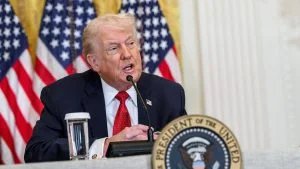

The United States has officially withdrawn from the World Health Organization (WHO), marking the completion of a key goal of President Donald Trump’s administration.
The move was confirmed by the Department of Health and Human Services (HHS), ending years of tension between the US and the global health agency.
Trump’s long-standing push to leave WHO

Trump first attempted to leave WHO during his initial term and issued a formal executive order on the first day of his second term to trigger the process. Under international law, the US had to provide one year’s notice and settle its outstanding dues before leaving.
US owes WHO millions, but unlikely to pay
Although the US still owes WHO approximately $260 million, legal scholars believe the money is unlikely to be paid. “WHO has no power to force the US to pay what it owes,” said Dr. Lawrence Gostin, a global health law expert from Georgetown University.


WHO avoids confrontation over US exit
While WHO could block the withdrawal by demanding payment first, experts say the agency is unlikely to escalate tensions. “It probably won’t risk creating further conflict when Trump is set on withdrawing anyway,” said Gostin.
Full termination of funding and staff recall

On Thursday, HHS confirmed that all US government funding to WHO had ceased. US personnel and contractors embedded with the organization were recalled, and the country formally ended its participation in WHO-led committees, governance bodies, and technical groups.
US leaves room for selective collaboration

Despite the broad withdrawal, the US hasn’t ruled out limited cooperation. Asked whether it would join an upcoming WHO-led meeting on next year’s flu vaccine, officials said discussions were still ongoing.
White House defends move as fulfilling a promise

“This is a promise made and a promise kept,” said a senior administration official, accusing WHO of acting against US interests. Officials argued the organization failed to deliver sufficient returns for America’s investment and involvement.
Criticism of WHO’s Covid-19 response

The Trump administration heavily criticised WHO’s handling of the Covid-19 pandemic, accusing it of delaying the global emergency declaration and echoing China’s early messaging, despite evidence of data suppression and delayed transparency.
HHS slams WHO’s stance on virus transmission

In its statement, HHS cited WHO’s reluctance to acknowledge airborne transmission and asymptomatic spread of Covid-19. “This action means our health policies are no longer constrained by unaccountable foreign bureaucrats,” an official stated.
US vows continued leadership in global health
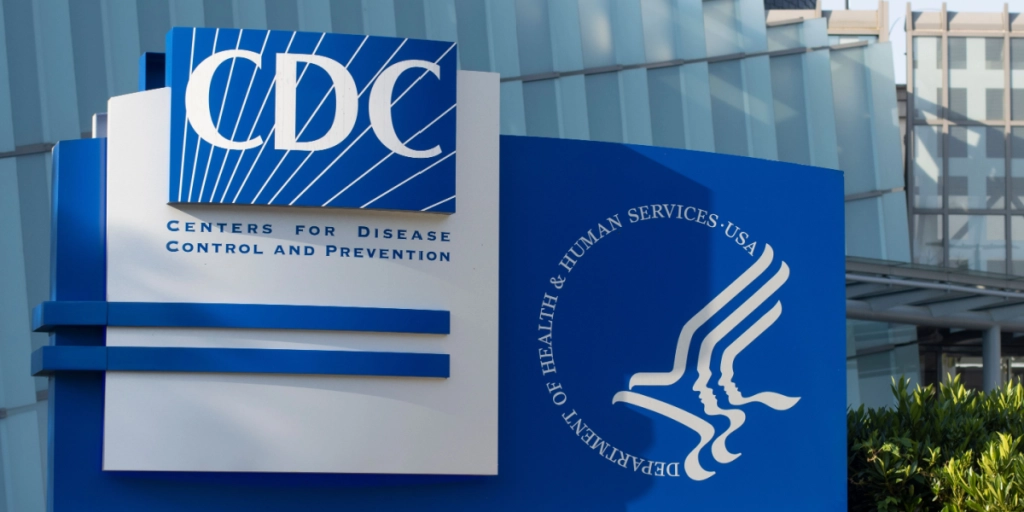
Officials insisted the US would remain a global health leader through direct partnerships with countries, NGOs, and faith-based groups. The CDC’s Global Health Center is expected to lead the effort, focusing on disease surveillance and data sharing.
Experts warn of a fragmented global health approach
Health experts expressed concern that bypassing WHO would lead to a fragmented system. A former CDC official noted the agency only has staff in about 60 countries, making WHO’s broader network essential for effective coordination and monitoring.
Scientists condemn the move as dangerous

Medical leaders and infectious disease experts sharply criticised the withdrawal. “It is scientifically reckless,” said Dr. Ronald Nahass of the Infectious Disease Society of America, calling global cooperation a “biological necessity.”
A decision with global consequences

Dr. Michael Osterholm warned that future pandemics would spread faster without US leadership at WHO. Dr. Gostin called the move “the most ruinous presidential decision in my lifetime,” predicting a slower and weaker US response to future outbreaks.



