
 Kathrine Frich

Iran and Russia have drawn closer in recent years, deepening military and economic ties as both face Western sanctions.

Tehran has supplied Moscow with Shahed drones used extensively in Ukraine, while Iran formally joined the expanded BRICS bloc alongside Russia and China.
Despite talk of a “strategic partnership,” the relationship remains rooted in pragmatism rather than formal alliance commitments.
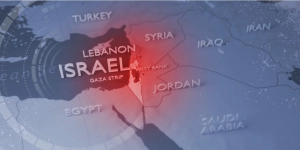
As tensions flare in the Middle East following US and Israeli strikes on Iran, analysts are examining what the fallout could mean for the Kremlin.
Energy prices and war funding
One immediate consequence of escalation in the Gulf is volatility in global energy markets. Rising oil and gas prices would directly benefit Russia’s state budget, which remains heavily dependent on energy exports.


Higher prices could provide Moscow with additional revenue to sustain its military campaign in Ukraine.
At the same time, more expensive energy places strain on European economies, potentially limiting the fiscal space available for long-term military and financial support to Kyiv.
Western distraction
A prolonged conflict in the Middle East risks diverting US and allied attention from Ukraine.
Analysts note that extended operations against Iran could consume American military resources, including air defence interceptors and precision munitions. If US stockpiles are redirected toward the Gulf, Ukraine’s access to certain systems could tighten.
This shift would not require Russia to intervene directly in Iran’s defence. Instead, Moscow could benefit indirectly from a redistribution of Western focus and matériel.
Reinforcing the Kremlin narrative
Russian commentators have framed the strikes on Iran as confirmation of what the Kremlin describes as Western unpredictability and aggression.
According to analysis cited by Al Jazeera, some in Moscow view the escalation as validating Russia’s long-standing claim that it is confronting an “irrational” West.
The comparison echoes Vladimir Putin’s reaction to NATO’s 2011 intervention in Libya, which he has previously cited as a turning point in his distrust of Western powers.
Such events may strengthen the domestic narrative of Russia as a “besieged fortress,” reinforcing support for the leadership and its hardline foreign policy.
Limits of support for Tehran
Despite close cooperation, Moscow has shown no indication that it plans to enter the conflict on Iran’s side.
Russia maintains working relations with Israel, which has not joined Western sanctions against Moscow and has avoided supplying Ukraine with certain key weapons systems. Preserving that balance remains strategically valuable for the Kremlin.
Observers suggest that Russia is also keen to keep communication channels open with Washington, particularly in relation to Ukraine.
Open military backing for Tehran could complicate those calculations.
For the Kremlin, the unfolding crisis appears less about choosing sides and more about weighing costs and benefits, from energy markets to geopolitical leverage, in a rapidly shifting landscape.
Sources: Al Jazeera, O2.



