
 Mikkel Christensen
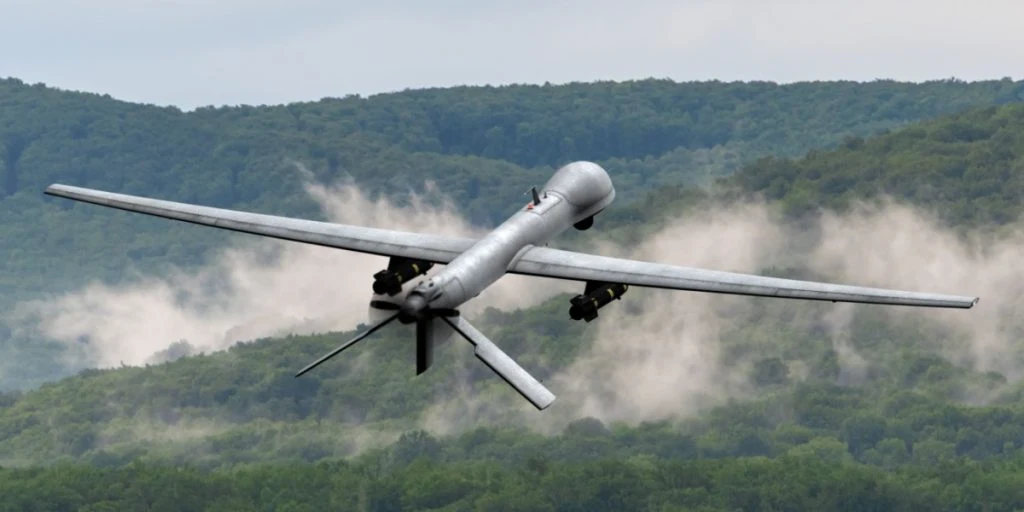
Ukraine’s air defense systems are facing a growing challenge as incoming threats become harder to interpret in real time.


Ukraine’s air defense systems are facing a growing challenge as incoming threats become harder to interpret in real time.
The difficulty is no longer just intercepting drones, but identifying which ones pose genuine danger.
That uncertainty is increasing pressure on operators who must make rapid decisions during large-scale attacks.
Misjudging a target can mean wasted resources or missed threats. Recent developments suggest that confusion itself is becoming part of the strategy.


According to TVP World, some Russian Shahed drones are now being fitted with mock air-to-air missiles, complicating how they appear on approach. The additions are not designed to increase firepower, but to alter perception.
Ukrainian defense adviser Serhii Beskrestnov said the change is already being observed in the field. “The enemy has begun installing mock-ups of R-60 missiles on Shahed drones.”
The modification makes drones look more heavily armed, raising their priority level during interception.
Tactical deception
Modern air defense relies on quickly classifying incoming objects based on speed, trajectory and visible configuration. Adding fake payloads can interfere with that process.
“The aim is to intimidate our aviation and draw the attention of interceptor units,” Beskrestnov said.
Similar deception tactics have been used in the war before, including decoy drones designed to exhaust air defenses or trigger unnecessary responses.
Evolving drone use
Shahed drones, derived from Iranian designs, have been widely used for long-range strikes. Their relatively simple build allows for frequent adjustments and field-level modifications.
TVP World reports that the use of mock components may help preserve more limited weapon stocks while maintaining operational pressure.
Earlier adaptations included attempts to arm drones with real missiles, indicating a continuing effort to expand their role beyond basic strike missions.
Strain on defenses
For Ukrainian forces, the challenge now extends beyond interception to accurate threat evaluation.
Multiple units across different branches may respond simultaneously to perceived high-risk targets.
“We have many interceptor units across different branches and agencies, and of course everyone will try to destroy such an ‘important’ target,” Beskrestnov said.
He added that distinguishing real threats from decoys is becoming increasingly important: “We need to consider how to distinguish Shahed drones equipped with fake missiles.”
Sources: TVP World



