
 Kathrine Frich
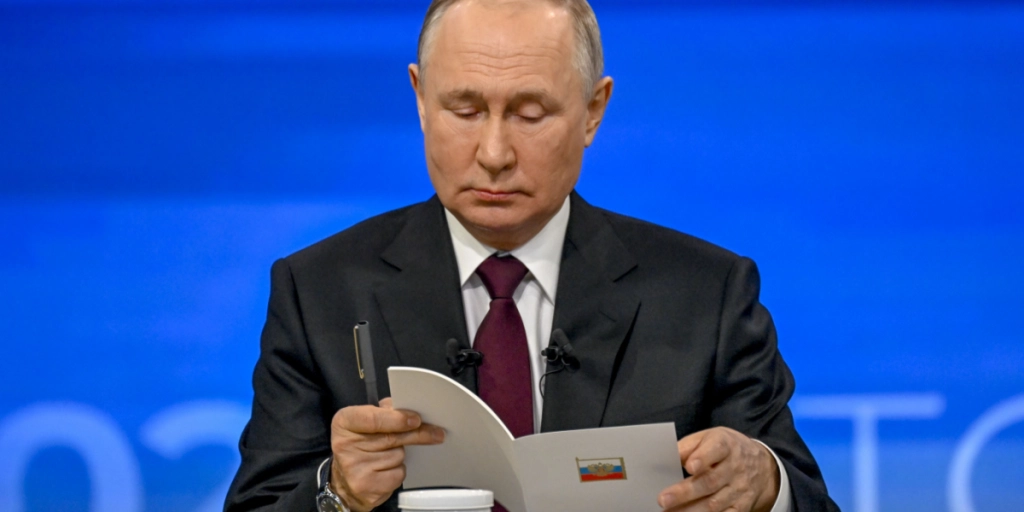
Russia has repeatedly used the argument of protecting its citizens to justify military actions beyond its borders.

The Kremlin has claimed such responsibility in conflicts ranging from Georgia to Ukraine, often stating that Russian speakers or passport holders needed protection.
Now Moscow appears to be strengthening that doctrine through new legislation that could significantly expand the president’s authority to deploy troops overseas.
New powers to deploy troops abroad
A government commission on legislative activity has approved draft amendments that would broaden President Vladimir Putin’s authority to use Russian armed forces outside the country.
According to the proposed changes, Putin would be able to deploy troops extraterritorially to protect Russian citizens if they are arrested, detained, or prosecuted abroad.


The draft law states that the military could be used to defend citizens of the Russian Federation in cases involving “arrest, detention, criminal prosecution and other forms of persecution.”
According to an Interfax source, the provision also applies to situations where Russians are detained by courts that operate “without the participation of the Russian Federation” or by international judicial bodies that Moscow does not recognize.
Amendments to existing laws
The bill introduces amendments to the laws “On Citizenship” and “On Defense.”
According to sources, the Russian Ministry of Defense developed the legislation.
Under the current version of Russia’s federal law on security, the president already has the authority to send troops abroad when foreign states or international organizations make decisions that are considered contrary to Russia’s interests or its public order.
The new amendments would further clarify that such deployments can be used specifically to defend Russian citizens facing legal action outside the country.
Tribunal for Russian leadership
Legal experts believe the legislation may be linked to efforts in Europe to establish a special tribunal against Russia.
Dmitry Malbin, a lawyer and partner at Verba Legal, told RBC that the proposal appears connected to initiatives by European Union countries to prosecute Russia’s leadership for the invasion of Ukraine.
Last summer the Council of Europe announced plans to create a tribunal intended to try senior Russian officials for the crime of aggression against Ukraine.
By autumn, 26 EU countries had confirmed their participation in the tribunal, which is modeled on the Nuremberg trials that prosecuted Nazi leaders after World War II.
In January 2026, the EU allocated its first €10 million to support the tribunal’s work. According to Deutsche Welle sources, prosecutors could target at least 20 individuals.
Growing warnings of conflict with NATO
The legislation also comes as Western intelligence agencies warn that Russia could pose a growing military threat to Europe.
Germany’s BND intelligence service warned last summer that Russia might attempt a provocation in the Baltic region similar to the annexation of Crimea.
In February, Danish intelligence assessed that Russia could be capable of launching a full scale war in Europe within five years.
NATO Secretary General Mark Rutte later echoed similar concerns.
France’s Chief of the General Staff, General Fabien Mandon, also warned in October that Europe must prepare for the possibility of conflict with Russia within three to four years.
Experts at the Institute for the Study of War say preparations for such a scenario may already have begun.
According to ISW, indicators include the reorganization of military districts along Russia’s western border, the creation of new bases near Finland, as well as incidents involving sabotage, electronic warfare interference, GPS jamming, fires and air provocations.
Sources: Digi24, Institute for the Study of War.



