
 Kathrine Frich

Authoritarian systems often concentrate power in the hands of a single leader.

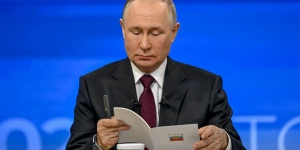
This creates a structure that can resemble monarchies in all but name. While elections and formal institutions may remain, real control tends to stay within a small, tightly managed circle.
In Russia, critics argue that this model has evolved over time into something closer to a modern-day monarchy.
KGB legacy
During a discussion on the WP program History, journalist Zbigniew Parafianowicz pointed to former KGB chief Yuri Andropov as a central figure in understanding Putin.
“Andropov is Putin’s alter ego. He’s the equivalent of his career. He’s a man who left the services, took over the party, and then took over the state. Exactly as Putin did. He’s a man from the technostructure, a secret service, a man from the intelligence service,” he said.


Path to power
Both Andropov and Putin rose through intelligence structures rather than traditional political routes.
According to Parafianowicz, this background allowed them to gradually consolidate control over state institutions through security networks.
Putin’s rise, he argued, was not accidental but part of a long-term process within those structures.
System of control
Parafianowicz also described what he called a system resembling a “constitutional monarchy.”
“The idea was to build a ‘constitutional monarchy’ (…) It simply means a certain repetition of power in the case of a leader, with a pause for the introduction of someone like Medvedev. Changes in positions and functions within the state, but keeping the state in check, just as Andropov did,” he explained.
Continuity of rule
This model allows for shifts in official roles while maintaining control within a small elite.
According to the analysis, Putin refined this system further, ensuring continuity of power while presenting the appearance of political change.
Observers say the influence of Soviet-era intelligence structures remains visible in how Russia is governed today.
Sources: Wirtualna Polska



