
 Kenneth Glad

Diplomatic efforts remain stalled as opposing demands continue to shape discussions over ending the fighting. Both governments are still presenting sharply different conditions for any future agreement.

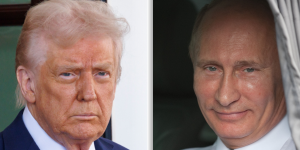
Russia has rejected proposals to halt the war in Ukraine along the current front line, saying any agreement must address broader political and territorial demands first.
According to the Kyiv Post and TASS, Russian Deputy Foreign Minister Mikhail Galuzin said Moscow would not accept a ceasefire that left what Russia calls the causes of the conflict unresolved.
“As Russian President Vladimir Putin has repeatedly said, no ‘freezing’ is possible without eliminating the root causes of this crisis,” Galuzin said.
Ceasefire terms differ
Ukraine has repeatedly proposed stopping the fighting along the current front line as an initial step toward broader negotiations. Kyiv has argued that a ceasefire could create the conditions for talks on a longer-term political settlement. Russia has rejected that approach, insisting that territorial and political issues must be addressed as part of any agreement rather than being postponed until after the fighting ends.


Moscow has demanded recognition of Russian claims to additional Ukrainian territory, including areas of the Donetsk region that Russian forces do not fully control. Those demands remain one of the most difficult obstacles to any negotiated settlement between the two sides.
Foreign Minister Sergei Lavrov has also opposed making a frontline ceasefire a precondition for negotiations, arguing that talks should address the wider terms of a possible settlement. Russian envoy Rodion Miroshnik has separately said Moscow should prepare for the possibility of a prolonged conflict, signaling that Russian officials do not expect a rapid breakthrough.
Ukrainian President Volodymyr Zelensky has continued to push for direct talks with Russian President Vladimir Putin, presenting a leader-level meeting as a possible route toward ending the war.
Putin, however, has resisted an immediate meeting, leaving the two governments divided not only over the terms of a ceasefire but also over how negotiations should begin.
Moscow criticizes Western support
Galuzin accused President Zelensky of escalating the war and criticized attacks carried out against targets inside Russia. His remarks reflected Moscow’s broader argument that Ukrainian strikes on Russian territory are undermining efforts to move toward negotiations.
The deputy foreign minister focused particularly on continued American weapons deliveries and intelligence assistance to Kyiv, presenting that support as evidence that Washington remains directly involved in sustaining Ukraine’s military effort.
“The continued supply of U.S. weapons to the Kiev regime, providing information and other forms of assistance speak for themselves,” he said.
Russian officials have continued to criticize Western military assistance while also maintaining that a diplomatic settlement remains possible. Moscow, however, has given no indication that it would accept a ceasefire based solely on the existing battlefield lines, and its public position continues to link any halt in fighting to a broader settlement.
Source: Kyiv Post, TASS



