
 Jens Asbjørn Bøgen
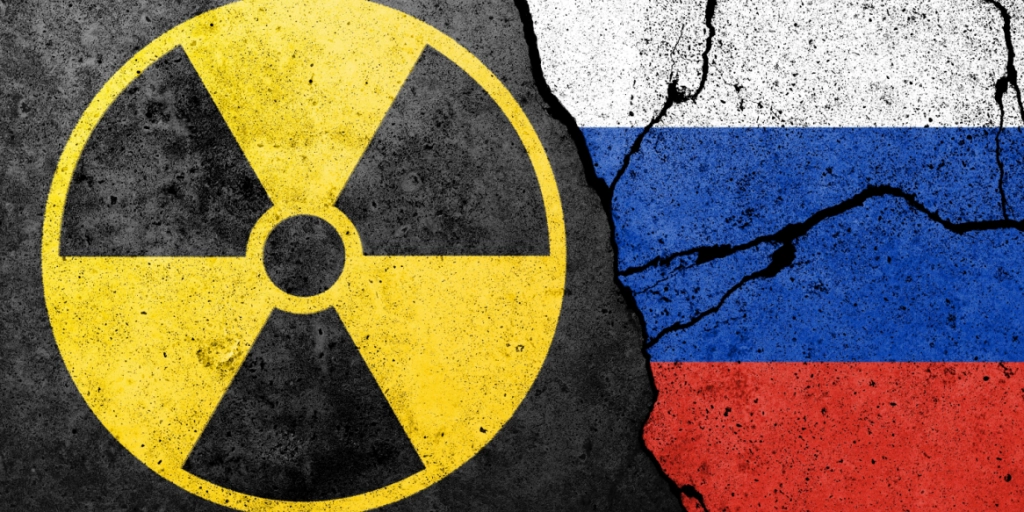
The report outlined a good, a bad, and a continued path for Russia’s future.
Two prominent Russian hardliners presented several future paths for the country at the St. Petersburg International Economic Forum, also known as “Putin’s Davos.”
According to the Russian business newspaper Kommersant, the presentation was made by Russian oligarch Konstantin Malofeev, known for his affiliation with the Kremlin, and Alexander Dugin, an ultranationalist philosopher and ideologue known as “Putin’s brain” because of his influence on the Russian leader.
Before starting the presentation, Malofeev stated that “this is a scientific report prepared by a whole group of experts.” He then started the slideshow, which outlined a good, a bad, and a continued path for Russia’s future.
And one of the paths included a nuclear strike within the next decade.


A dangerous trajectory
The continuing path focused on what happens if the war in Ukraine simply keeps going at its current pace until 2036.
The outlook for this continuing track is explosive. According to the presentation slides, if the battlefield situation remains stuck in its current rut, Russia will ultimately use nuclear weapons.
“We don’t consider the use of nuclear weapons a ‘slow-fire’ scenario; we consider it a good one,” Malofeev declared.
The “good” and the “bad” scenarios
In the good scenario outlined in the presentation, Russia will have occupied most of Ukraine, including Kyiv, Odesa, and Kharkiv, by 2036.
This scenario also includes the collapse of the European Union.
The “bad” scenario outlined a Russian military defeat in Ukraine, which, according to the presentation, would lead to the “colonization of Russia” by 2050.
Walking a tightrope
The Institute for the Study of War (ISW) suggests in its June 3 update on the war that these extreme ideas may actually serve a political purpose for the current government.
By allowing hardliners to voice such radical outcomes, the Kremlin can make President Vladimir Putin appear calm and moderate by comparison.
However, the think tank also suggests that the Russian government must walk a fine line. Putin relies heavily on the backing of these passionate hardliners to sustain the war effort. He cannot simply dismiss their radical demands without risking their crucial support.



