
 Jens Asbjørn Bøgen
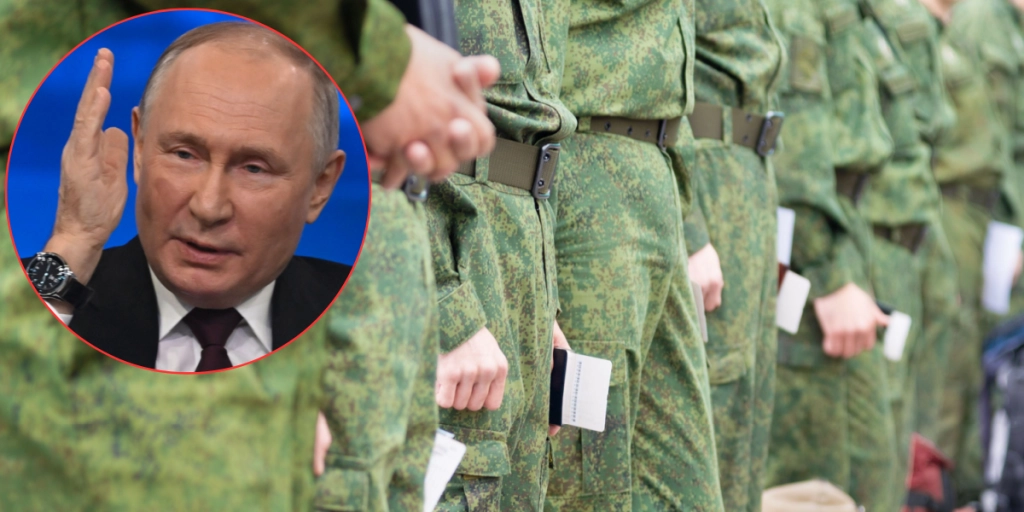
The question is, if Russia is able to replenish the losses with new recruits.

Ukraine’s new drone wall along the front line has drastically changed the battlefield. The high-tech defensive grid has caused casualty numbers to spike for the Russian military, which is now entering its fifth year of conflict while trying to seize territories annexed in 2022.
Russian forces are losing an average of 9,000 soldiers killed each month in 2026, according to calculations by Janis Kluge, an expert at the German Institute for International and Security Affairs.
This equals roughly 300 fatalities every single day.
Kluge analyzed regional budget statistics detailing compensation payments made to families. The numbers show that deaths have doubled since early 2024, when monthly fatalities hovered around 4,000 men.


Staggering historic losses
The scale of the current conflict completely eclipses prior historical engagements. The Washington-based Center for Strategic and International Studies (CSIS) estimated that total Russian casualties, including both killed and wounded personnel, reached 1.198 million by early 2026.
This four-year tally is 17 times higher than Soviet losses during the war in Afghanistan. It also easily surpasses the combined totals of both Chechen wars.
Data from CSIS indicates that up to 325,000 Russian soldiers have died, an amount comparable to the entire population of Smolensk.
Are Russian forces struggling to recruit?
In his analysis, Kluge notes that budget data on recruitment in Russia could indicate that the country is not struggling to recruit enough new personnel to replenish its losses in Ukraine.
However, he finds this unlikely to be the case, as the average regional enlistment bonus is increasing and has now reached an all-time high, indicating continued pressure on recruitment rates.
He also notes that considerable anecdotal evidence points to recruitment pressure campaigns in some regions.
But as he points out in his analysis:
“This is not proof. It is also possible that only a few regions are struggling to fulfill their quotas, while overall recruitment rates are sufficiently high or even ahead of schedule, as Russian Defense Minister Belousov claimed.”
Vanishing territorial gains
Despite these heavy sacrifices, actual territorial gains remain minimal. Over the last two years, Russia expanded its control by just 8,400 square kilometers, which amounts to less than two percent of Ukraine’s territory.
Now, the tide is turning. Figures from the Institute for the Study of War (ISW) reveal that Russia lost control of 281.1 square kilometers from December 2025 through May 2026, compared to only gaining roughly 40 square kilometers.
Yet the leadership in Moscow refuses to back down. Kremlin sources told The Guardian that Vladimir Putin still expects to capture the entire Donbas region by the end of the year.
According to the Financial Times, Russian generals have promised Putin full control of the region by autumn. Still, his ambitions may extend much further, potentially targeting major cities such as Kyiv and Odesa.



