Kathrine Frich
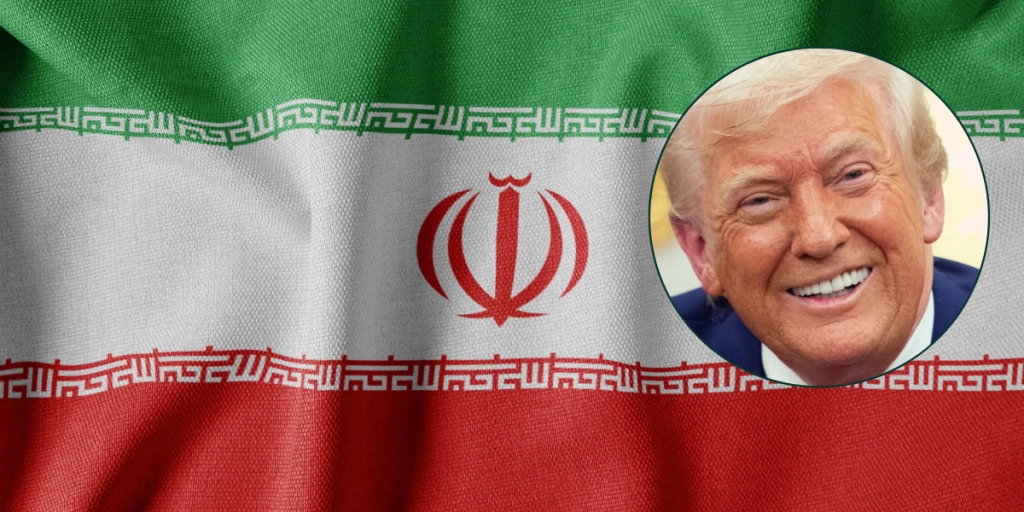
Iran’s political system was built around one man.

The Supreme Leader stood at the apex of a vast network of clerics, generals and security officials who shaped every major decision in the Islamic Republic.
Now, with Ali Khamenei killed in American-Israeli strikes, attention has shifted to the future of the regime, and to the fierce internal struggle already unfolding behind closed doors.
Opposition hopes fade
After the strike, US President Donald Trump publicly urged Iran’s opposition to seize power.
“When we’re done, take power. It will be yours for the taking. This is an opportunity that may not come again for generations,” he said. “Now is the time to take control of your destiny and unleash the prosperous and glorious future that is within your reach.”


But experts caution that such expectations are unrealistic.
“There is no possibility of the opposition in Iran taking power in the near future,” Dr. Łukasz Fyderek of the Jagiellonian University told Wirtualna Polska.
“The opposition in the country is currently very disorganized. Of course, looking at the diaspora, it’s a completely different picture, but in Iran itself, it’s almost nonexistent.”
Steven Erlanger of The New York Times similarly argued that the system built over nearly five decades will not collapse easily, noting that Iran’s leadership structure is deeply institutionalized.
Transitional council in charge
Until a successor is chosen, power rests with a three-member Transitional Council composed of President Masoud Pezeshkian, Justice Minister Gholam-Hossein Mohseni-Ejei and senior cleric Alireza Arafi.
The body manages day-to-day governance but cannot appoint a new Supreme Leader.
That authority lies with the 88-member Assembly of Experts, a clerical body formally elected every eight years but heavily vetted to ensure loyalty to the system.
The assembly must convene to select the next leader, though war conditions complicate logistics.
“We’re at war, which naturally complicates all decision-making procedures,” Fyderek said. “It’s like organizing a conclave during the bombing of Rome.”
Who could replace Khamenei?
Among the leading contenders is Mojtab Khamenei, the slain leader’s son, reportedly backed by elements of the Revolutionary Guard.
However, clerical elites fear that handing power from father to son could resemble a return to monarchy, the very system the Islamic Republic overthrew in 1979.
Alireza Arafi, already on the Transitional Council and deputy chairman of the Assembly of Experts, is also viewed as a strong candidate.
Other names mentioned include hardline cleric Mohammad Mehdi Mirbagheri and Hassan Khomeini, grandson of the republic’s founder.
Fyderek believes the final choice may be someone positioned between factions.
“The camp supporting greater understanding with the United States is currently in a much weaker position than the ‘hardliners’ camp,” he said. “Nevertheless, I believe that the chosen candidate will be someone who cannot be clearly classified as either a ‘dove’ or a ‘hawk.’”
This marks only the second formal leadership transition in the Islamic Republic’s history. Unlike the swift succession in 1989, this one is unfolding under the shadow of war and global uncertainty.
Sources: Wirtualna Polska, CNN, The New York Times.