
 Edith Hejberg

Since returning to power, Trump has repeatedly suggested that Canada could be annexed by the United States.


US President Donald Trump referred to Canadian Prime Minister Mark Carney as the “future governor of Canada” in a social media post on Tuesday.
The remark quickly drew attention because it echoed his repeated suggestion that Canada should become part of the United States.
Trump made the comment publicly on his Truth Social platform.
It came in the middle of a discussion about environmental concerns affecting both countries.
A comment tied to an environmental issue
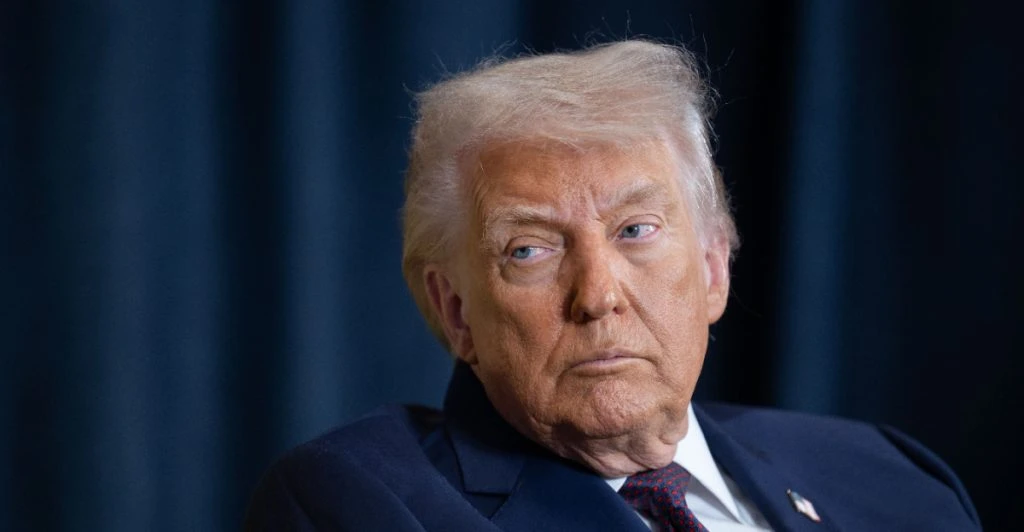
Trump’s post focused on efforts to stop the spread of Asian carp.
The invasive fish species threatens Lake Michigan, which lies along the natural border between the United States and Canada.
Officials have long warned that the species could damage ecosystems and local fishing industries.
Trump said cooperation between states and nearby regions was essential to contain the threat.
Cooperation with US governors
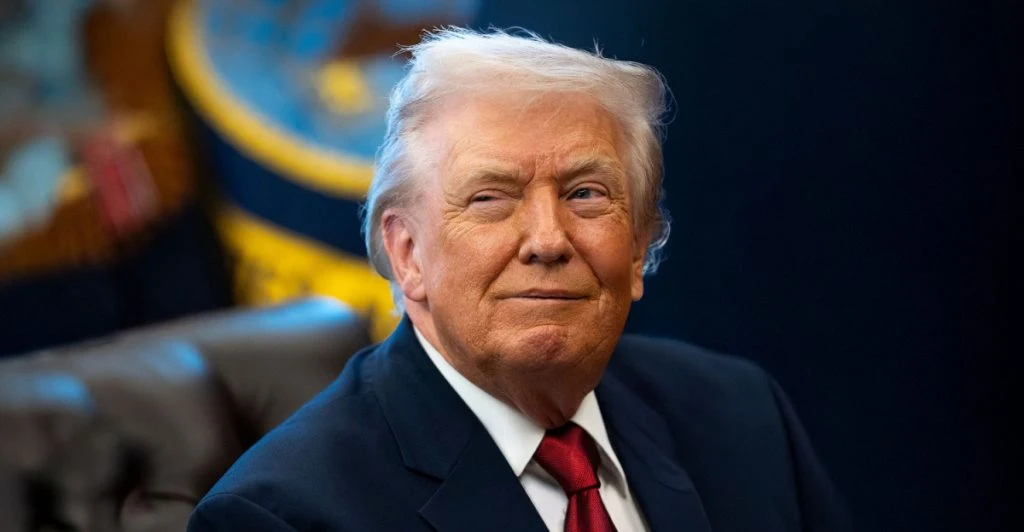
In his message, Trump said he was already working on the issue with Michigan Governor Gretchen Whitmer.
He added that other US state leaders should also take part in the effort.
Several states around the Great Lakes were mentioned in the post.
The list included Illinois, Wisconsin, Minnesota, Pennsylvania, Ohio, Indiana, and New York.
The remark about Mark Carney
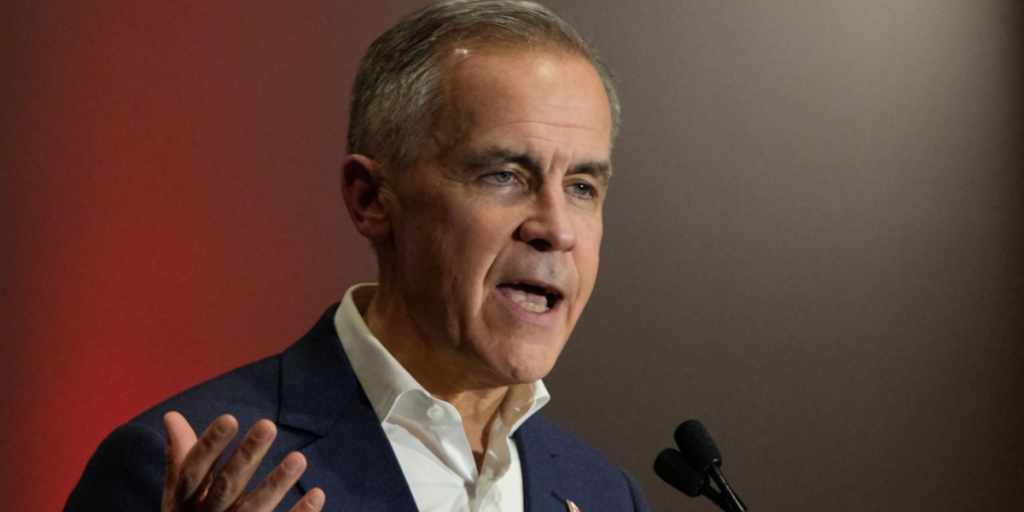
Trump ended the list with a reference to Canada’s prime minister.
He wrote that other governors should also “to join this fight, such as those in Illinois, Wisconsin, Minnesota, Pennsylvania, Ohio, Indiana, New York and, of course, the incoming governor of Canada, Mark Carney, who I know will be delighted to contribute to this noble cause.”
The phrase immediately stood out.
It suggested once again that Trump sees Canada as potentially becoming part of the United States.


Trump’s recurring idea about Canada
Since returning to power, Trump has repeatedly suggested that Canada could be annexed by the United States.
He has described the neighboring country as a potential 51st US state on several occasions.
These statements have sparked political debate in both countries.
They have also been widely criticized in Canada.
Strong rejection in Canada

The idea of Canada joining the United States has been firmly rejected by Canadian leaders.
Public opinion in Canada has also strongly opposed the notion.
Officials in Ottawa have stressed the country’s independence and sovereignty.
Trump’s comments have therefore been viewed as provocative by many Canadians.
Mark Carney’s rise to power

Mark Carney became prime minister after winning Canada’s legislative elections in April 2025.
He led the Liberal Party of Canada into the vote.
The election took place during a period of rising tension with Washington.
Relations were already strained by disputes over trade and tariffs.
Tariff threats from Washington

During the campaign and after the election, Trump warned about potential tariffs targeting Canada.
These threats created additional friction between the two governments.
Trade between the two countries is extensive and deeply interconnected.
Any tariff measures could therefore have wide economic effects.
A tense relationship between the two leaders

The relationship between Trump and Carney has been marked by sharp disagreements.
Public statements from both sides have reflected growing tensions.
Diplomatic exchanges have sometimes become personal and confrontational.
Observers say this dynamic has shaped the tone of US-Canada relations.
Carney’s criticism in Davos

Mark Carney openly criticized the global political direction associated with Washington.
Speaking at the World Economic Forum in Davos, he said there was a “break” with the international order led by the United States.
The comment highlighted his concerns about shifting global alliances.
It also illustrated the growing distance between Ottawa and Washington.
Trump’s response

Trump reacted quickly to Carney’s remarks.
He argued that Canada depends heavily on its southern neighbor.
In response to the Davos statement, Trump said Canada “lives” off the United States.
The exchange added further tension to an already strained relationship.
A symbolic comment with political weight

Trump’s description of Carney as the “future governor of Canada” was not a casual remark.
It fits into a broader pattern of statements about Canada’s potential integration into the US.
Even when delivered jokingly or rhetorically, such comments attract strong reactions.
They highlight the sensitive nature of relations between the two countries.
Relations under continued scrutiny

The latest comment is likely to keep US-Canada relations in the spotlight.
Political leaders, analysts, and the public on both sides of the border are watching closely.
Trade disputes, security issues, and environmental challenges already require cooperation.
But political rhetoric continues to complicate the relationship.



