
 Kenneth Glad
A celebratory giveaway at one of America’s best-known burger chains quickly veered off course. What was meant to reward loyal customers ended up exposing just how hard it is to keep up when turnout explodes overnight. The response from the company’s leadership was swift and, by its own standards, costly.
Others are reading now


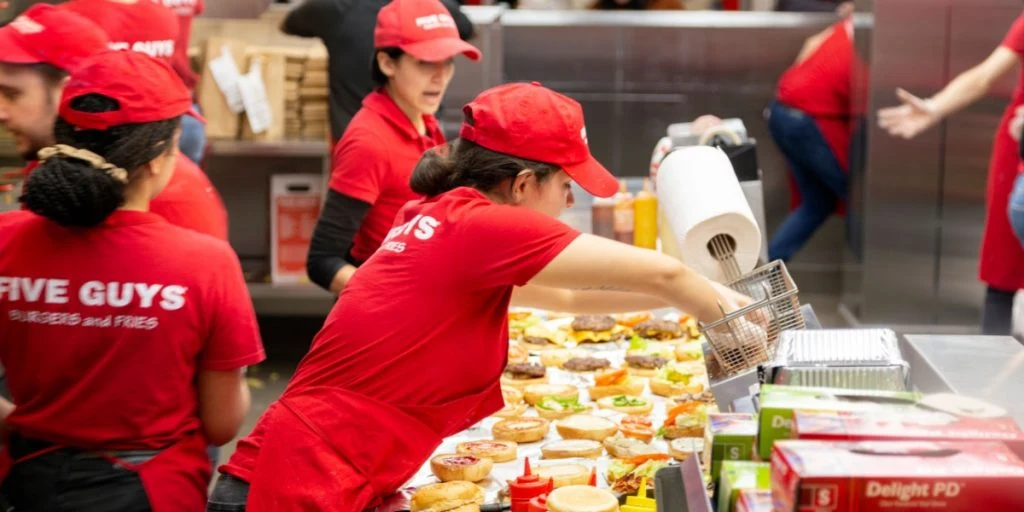
Five Guys CEO Jerry Murrell said he distributed $1.5 million in bonuses after a surge in orders during a February anniversary promotion disrupted operations across the United States.
In an interview with Fortune, he admitted the company had badly underestimated how many people would show up.
Each of the chain’s 1,500 US locations received $1,000. For Murrell, the payout was less about optics and more about recognising what staff had just handled.
He said: “I didn’t want anybody shooting me in the back or anything after the first day, because we really screwed it up. We had no idea that we were going to get that kind of response.”


He added: “I was gonna buy my wife a new fur coat, and I spent it on [the bonus] instead. She still looks at me like I’m stupid. But I thought it was worth it. They worked so hard. They were so overwhelmed.”
When demand spikes
The disruption traces back to a buy one, get one free burger deal marking the brand’s 40th anniversary.
The offer spread quickly, drawing far larger crowds than anticipated and pushing kitchens past their limits.
Some locations faced ingredient shortages. Lines grew. Staff had little room to recover.
And then the company pulled the offer sooner than expected.
That kind of outcome is not unusual in fast food. Big promotions can flood stores within hours, and even well-established chains, Five Guys operates thousands of locations globally, can find themselves stretched thin when forecasts miss the mark.
Repairing trust
Five Guys later acknowledged the misstep more bluntly. In a statement cited by LadBible, it said: “You visited our restaurants in overwhelming numbers, and we weren’t ready for you. We didn’t meet our own standards, and that’s not something we take lightly.”
The company later brought the deal back for a short run in March, giving customers another chance.
Murrell framed the episode less as a failure and more as a reminder of the brand’s reach, saying: “We were genuinely humbled by the response. Forty years is a long time, and the outpouring of support for our 40th birthday reminded us why we love what we do.”
Success, in this case, arrived faster than the operation could handle. And it showed.
Sources: Fortune, LadBible



