
 Kenneth Glad
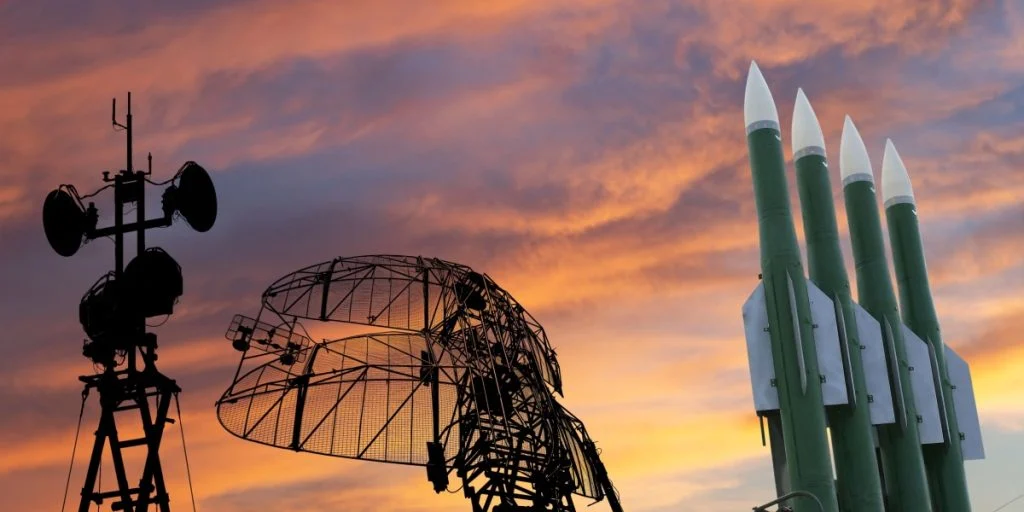
Rising uncertainty is reshaping security discussions across Europe’s eastern flank, with policymakers watching closely for signs of escalation. The situation underscores growing concerns about stability in a region where tensions have remained high.


Concerns are intensifying across Northern Europe as Ukrainian security officials warn that Russia may be weighing broader strategic options that extend beyond the battlefield in Ukraine.
Particular attention is now shifting toward the Baltic region, long viewed as one of NATO’s most exposed frontlines.
According to Latvian newspaper Latvija Avize, citing Ukrainian security official Andriy Kovalenko, recent signals from Moscow point to a strategy that could blend prolonged fighting in Ukraine with indirect pressure on NATO’s eastern flank.
Pressure beyond Ukraine
The most immediate concern for European security planners is the possibility of increased hybrid activity near NATO’s borders. Kovalenko indicated that Russia could escalate indirect operations aimed at alliance members, especially Estonia, Latvia and Lithuania.


“In the case of the Baltic states, the Kremlin could use drone attacks, as well as small sabotage and reconnaissance groups that infiltrate these countries’ territory to carry out specific operations,” he said.
Such methods echo earlier patterns seen in Crimea in 2014, as well as cyberattacks and disinformation campaigns attributed to Moscow in recent years.
While falling short of conventional war, these actions are designed to probe defenses and create ambiguity, complicating a unified NATO response under Article 5.
Kovalenko also pointed to proposed Russian legislation that would allow the deployment of forces abroad under the pretext of protecting Russian citizens, a justification that has previously accompanied interventions in neighboring states.
War drags on
At the same time, the conflict in Ukraine shows no clear sign of resolution. Ukrainian assessments suggest Moscow is still considering the option of sustaining offensive operations over a longer period, despite mounting costs.
“Such a war scenario until 2028 is not realistic without additional mobilization in Russia,” Kovalenko said.
This highlights the pressure on the Kremlin to balance military ambitions with available manpower and domestic tolerance for a prolonged war. Rather than decisive breakthroughs, the fighting has increasingly taken the form of attritional warfare, with only gradual territorial changes.
Recent developments underline that reality. As reported by The Guardian, Russia launched a large-scale aerial assault involving hundreds of drones and multiple missile types within a 24-hour period.
Ukrainian air defenses intercepted most targets, though several strikes still hit infrastructure across the country.
Uncertain path
Another possible direction involves a reduction in active fighting without a formal settlement. Kovalenko said Russian messaging has begun shifting in a way that could justify a prolonged stalemate to domestic audiences.
“Propagandists are creating a narrative that dictator Vladimir Putin was insufficiently informed about the situation at the front and that the war reached a deadlock due to the actions of generals,” he said.
Such an outcome would leave the conflict unresolved, creating a tense standstill similar to other post-Soviet disputes. For NATO and its eastern members, that uncertainty may prove as destabilizing as continued fighting.
Sources: Latvija Avize, The Guardian



