
 Kenneth Glad
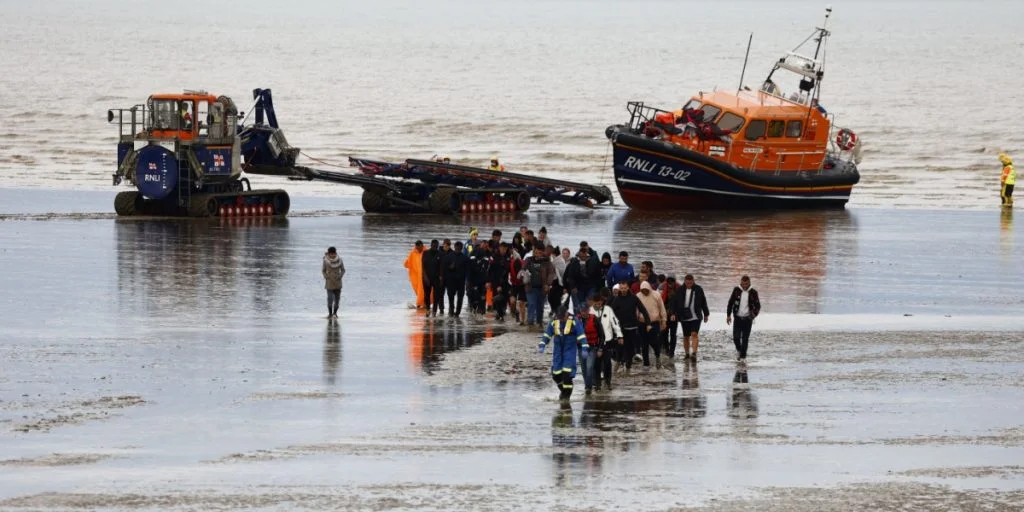
Small boats keep arriving on UK shores. The numbers haven’t dropped in any meaningful way, despite years of coordination between London and Paris. So the strategy is changing again. This time, it starts right on the sand.


More than 41,000 people crossed the Channel in 2025, according to BBC figures. The early months of 2026 point in the same direction. No real slowdown.
Calm weather still triggers spikes. But that’s only part of the story. The broader flow has held steady, and pressure is building on the UK government to show results.
Earlier deals between the two countries focused heavily on surveillance and joint patrols at sea. Those efforts, critics say, never fully disrupted the smuggling routes.
In northern France, migrants continue to wait and watch conditions. One man told the BBC he was homeless but believed he could live “like a normal human being” in the UK.


A woman explained her decision more simply: “There is a democracy in the United Kingdom – everything it offers is good, it protects us.”
A visible shift
Now comes a different approach. Under a £662 million agreement, France will send officers trained to handle unrest to key departure beaches, the BBC reports.
That detail stands out. Riot-trained units are rarely part of border enforcement at coastlines. Their presence suggests authorities expect confrontation, not just prevention.
Surveillance is being expanded too, but not in one single sweep. Drones will monitor stretches of coast. Helicopters will support from above. Cameras will track activity on the ground. Piece by piece, the net tightens.
UK Home Secretary Shabana Mahmood called the deal a “landmark agreement” that will help authorities “go after the smuggling gangs.”
The message is clear. Stop the crossings before they start.
Money and uncertainty
There is also a financial lever. British funding could be scaled back after a year if the numbers do not fall. What counts as success has not been clearly spelled out.
A processing centre in Dunkirk is back in focus as well. First proposed in 2023, it is expected to accommodate around 140 people, with more than 200 staff on site.
It will deal mainly with migrants from countries most represented in crossings, including Eritrea, Afghanistan, Iran, Sudan, Somalia, Ethiopia, Iraq, Syria, Vietnam and Yemen.
Still, there is a familiar question hanging over all of this. More patrols. More technology. More money. None of those are new on their own. And yet the boats keep coming.
Sources: BBC



