
 Kenneth Glad
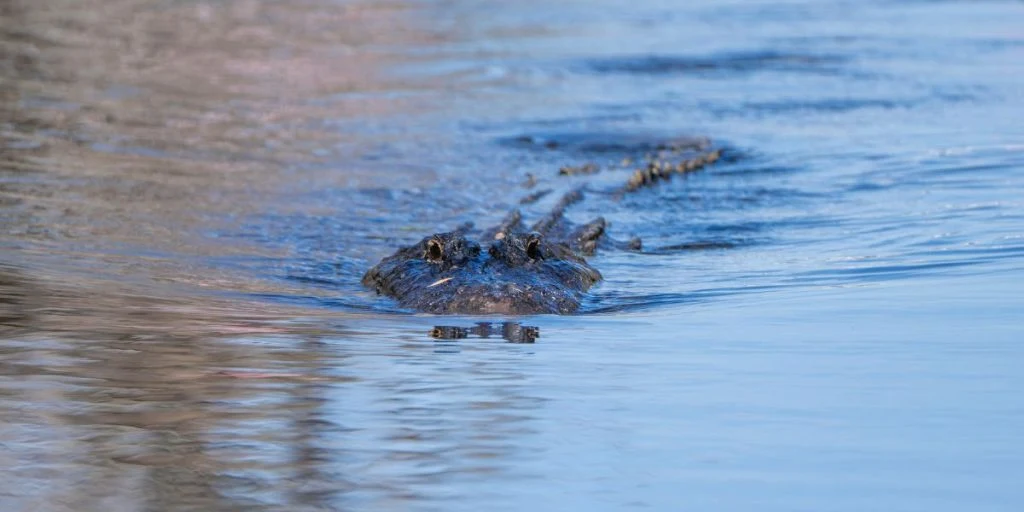
Similar outlines can conceal meaningful differences. Shape, location and behaviour offer the most useful evidence.

A dark shape resting beside a river may be difficult to identify before it slips into the water. Both animals have armoured bodies, muscular tails and jaws built for hunting, but they are not interchangeable.
The Daily Express reports that alligators and crocodiles belong to the order Crocodilia while differing in appearance, range and preferred habitat.
The head is usually the best place to begin. An alligator carries a wide, rounded snout that can exert the force needed to break hard shells. Its lower teeth largely vanish when the jaws close because they fit into the upper jaw.
Crocodiles present a rougher outline around the mouth. Teeth from both jaws can remain visible, and the snout generally tapers towards a narrower point. That shape is associated with catching fish and other quick-moving prey.


Colour may support an identification, though it is less decisive than the jaw. Alligators are commonly dark grey or nearly black. Olive, tan and brown shades occur more often among crocodiles.
The setting matters too
An observer in a freshwater swamp in the southeastern United States is more likely to be looking at an alligator. The animals also exist in eastern China, but their overall distribution is far more limited than that of crocodiles.
Crocodile species occupy a much broader range. Rivers and lakes provide suitable territory, but some also move through estuaries and coastal water. Salt glands in the tongue help them tolerate conditions that most alligators cannot.
Size does not provide a universal answer, since species and individual animals vary. Even so, crocodiles tend to reach greater lengths. Saltwater crocodiles can grow beyond six metres, making them the largest reptiles alive today.
Food changes as the animals mature. Insects and small fish sustain younger individuals, while adults may take birds, amphibians, reptiles and mammals. The available prey matters as much as the predator’s species.
Behaviour offers no guarantee, but alligators more often withdraw from people unless threatened or guarding their young. Crocodiles are generally described as more territorial and aggressive.
In the end, telling them apart comes down to a few practical details: The shape of the snout, the teeth and the kind of water they call home.
Sources: Daily Express



