
 Kenneth Glad
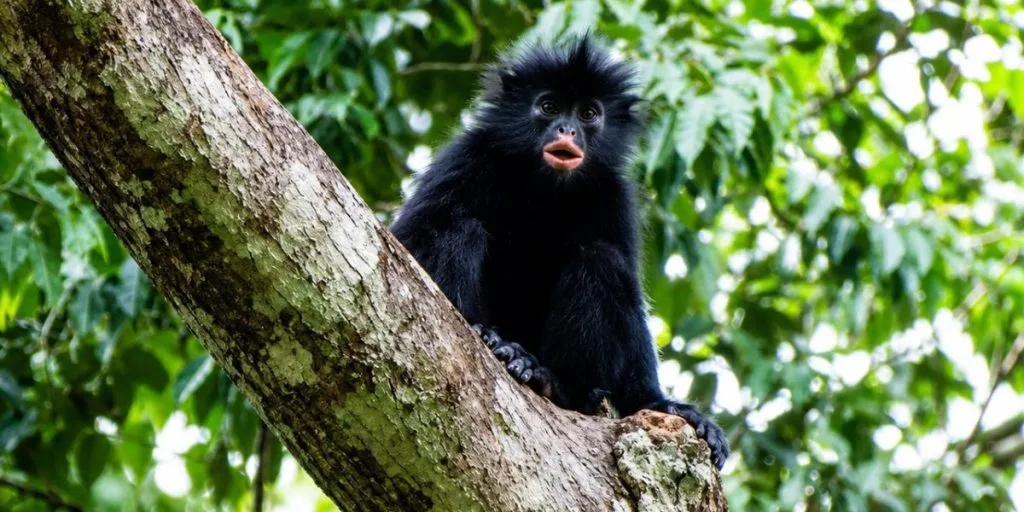
An unusual primate remained outside formal classification for years despite being familiar to nearby communities. Scientific testing has now established its place among Africa’s known wildlife.


A blurred photograph taken in 2008 offered the first scientific clue. Nearly two decades later, genetic analysis, recorded calls and field observations have confirmed that the dark-faced monkey living in the canopy of Lomami National Park represents a distinct species.
The primate is named Colobus congoensis, has black fur and orange-pink lips. Ziare.com reported that it is among only a small number of African monkey species formally described during the past 75 years.
Communities near the forest already knew the animal as Likweli. Researchers later interviewed residents across 52 villages, but sightings were reported in only eight, indicating that the monkey may occupy a particularly limited area.
That contrast between local familiarity and delayed scientific recognition shows how community knowledge can support biodiversity research, especially in remote forests where animals are difficult to observe.


Evidence emerged gradually
Researchers from the Democratic Republic of Congo, the United States and Germany assembled the evidence needed to distinguish the primate from related species. Genetic samples provided the strongest confirmation, supported by photographs and recordings of its vocalizations.
Earlier observations had not been sufficient because the monkey spends much of its life high in the trees and generally avoids people.
Junior Amboko, a doctoral researcher at Florida Atlantic University, described seeing it closely as “an extraordinary feeling.”
Because the animals remain hidden in dense foliage, their calls often reveal their presence first. “You often hear them, but you don’t see them,” Amboko said.
Recognition may aid protection
Colobus monkeys are African primates that lack opposable thumbs. Professor Kate Detwiler of Florida Atlantic University said they are canopy-dwelling herbivores that may support forest renewal by dispersing seeds.
The species’ vivid facial coloring could help individuals recognize one another or attract mates, although further research will be needed to understand its behavior.
Its restricted range may also leave it exposed to hunting and changes within its habitat. Formal recognition gives conservation groups a scientific basis for assessing the population, identifying threats and considering protective measures.
The discovery is therefore more than an addition to biological records. It demonstrates how local knowledge, international research and long-term fieldwork can combine to document wildlife before vulnerable populations disappear unnoticed.
Sources: Ziare.com



