
 Kenneth Glad
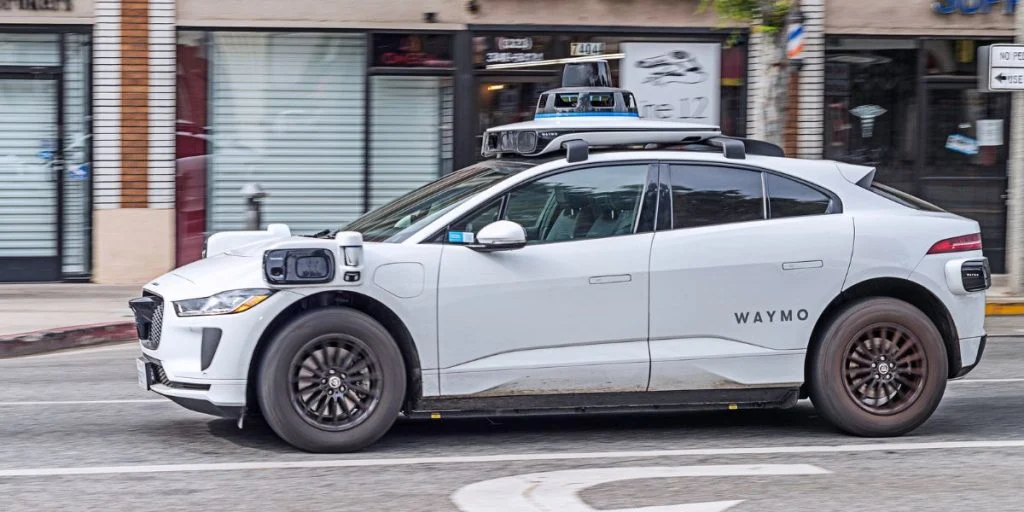
Driverless vehicles are becoming part of the city’s transportation system. Nearly five decades ago, advocates promoted a different way to give passengers private, direct journeys.
Waymo now offers fully autonomous commercial rides in Los Angeles. Long before its vehicles entered city traffic, supporters proposed electric pods that would move along dedicated guideways above the streets.
In a 1976 article published by the Los Angeles Times, University of Southern California instructor C.G. Burke described a personal rapid transit network made up of small, computer-controlled vehicles.
His proposal called for 232 miles of guideways, 89 stations and speeds of up to 60 miles per hour. Passengers would select their destinations electronically and travel there without the repeated stops or transfers associated with conventional buses and trains.
The concept was not limited to one newspaper proposal. It formed part of a wider programme of transportation research underway in Southern California.


Published in 1978, Fundamentals of Personal Rapid Transit drew on work conducted by The Aerospace Corporation between 1968 and 1976. The book examined how such a network might operate at metropolitan scale, treating the idea as an engineering challenge rather than a futuristic novelty.
Research shaped the vision
The book covered station design, routing, automated control, passenger demand, safety, reliability and projected costs. Its authors also documented computer simulations and a one-tenth-scale test facility used to study propulsion and control systems.
Their proposed vehicles generally carried between three and six passengers. Each party would receive a private pod and travel directly between stations on exclusive guideways separated from cars and pedestrians.
The book also contained detailed illustrations tied specifically to Los Angeles. A photomontage showed pods moving above the Civic Center, while other diagrams presented possible networks for downtown and West Los Angeles.
Advocates promoted personal rapid transit as a response to smog, congestion and fuel shortages. They argued that motorists might accept public transportation if it retained the privacy, speed and direct service associated with driving.
The proposed Los Angeles network was never approved or constructed. Questions persisted about cost, technical feasibility and the visual effect of elevated structures along major roads.
Instead, the region continued developing conventional buses and rail. The first section of Los Angeles Metro’s D Line extension opened in May 2026, adding three stations along Wilshire Boulevard. Further sections toward Century City and Westwood remain under construction.
Automation returned another way
Los Angeles World Airports is also preparing SkyLink, a fully electric automated train designed to connect airport terminals with parking, ground transportation, Metro services and the rental-car centre.
SkyLink is shared infrastructure rather than private transport, making it different from the system envisioned in the 1970s. Waymo provides the closer comparison.
Its passengers select a destination and travel in a small electric vehicle without driving. The crucial difference is that Waymo’s cars remain on ordinary roads, while the proposed pods would have used their own guideway network above street traffic.
Los Angeles therefore adopted separate parts of the earlier vision rather than the complete system. The city expanded conventional subway service, developed an automated airport train and welcomed commercial driverless taxis.
The elevated pod network remained on paper, but the central question behind it has not disappeared: Whether new technology should reproduce the individual experience of driving or become part of a broader public transportation system.
Sources: Los Angeles Times; Fundamentals of Personal Rapid Transit



