
 Kenneth Glad
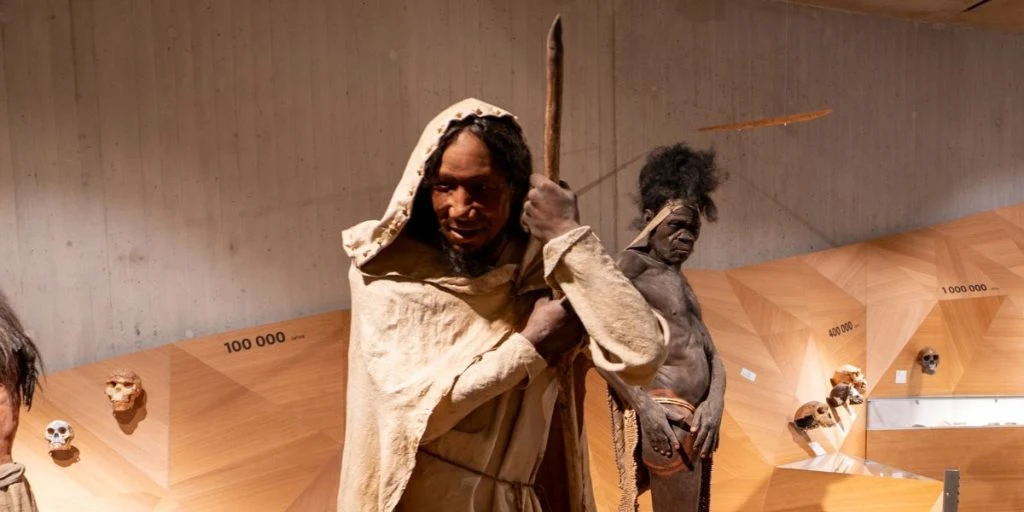
New discoveries continue to challenge long-held assumptions about prehistoric life. Scientists are finding that different human populations may have shared more than previously believed.


According to a study published in the Proceedings of the National Academy of Sciences (PNAS), Neanderthals and Homo sapiens living in what is now southern Turkey may have shared remarkably similar lifestyles, adding new evidence to the growing view that the two human populations were more alike than once thought.
Researchers from Gaziantep University in Turkey, Kyoto University in Japan and other institutions examined Üçağızlı II, a limestone cave occupied by Neanderthals between roughly 77,000 and 59,000 years ago. Modern humans later used the same site from about 59,000 to 47,000 years ago.
Although the cave was inhabited during different periods, the researchers argue that both populations likely overlapped elsewhere in the region. That raises the possibility that they not only interbred, as genetic evidence has already shown, but also exchanged ideas and traditions.
Scientists have known for years that Neanderthals and modern humans had children together. Whether they also learned from one another is a much harder question, and one that can only be explored through the traces they left behind.


Similar habits emerged across thousands of years
One of the study’s most intriguing discoveries was a collection of shells found in archaeological layers associated with both Neanderthals and modern humans.
The researchers believe the shells were probably used as personal ornaments, although their exact purpose remains uncertain. Decorative objects are often interpreted as signs of symbolic behavior, something once thought to distinguish Homo sapiens from other human populations.
Instead of revealing clear differences, however, the cave suggests striking continuity.
Animal remains show that both groups hunted many of the same species, including goats, roe deer and wild boar. Their hunting methods also appear to have been remarkably similar.
Although different populations occupied the cave across thousands of years, their way of life changed very little.
Writing in PNAS, the researchers stated: “Our hypothesis is that the two human species living together in the region were in contact with one another and exchanged cultural aspects.”
The evidence is compelling, although archaeologists continue debating how extensive any cultural exchange may have been. Similar behavior could reflect direct contact, independent adaptation to the same environment or a combination of both.
Old stereotypes have steadily collapsed
The Turkish discovery adds to decades of research that has transformed scientific understanding of Neanderthals.
When the first widely recognized Neanderthal fossils were uncovered in Germany’s Neander Valley in 1856, many scientists rejected the idea that they represented an extinct human population. Others portrayed Neanderthals as unintelligent, primitive beings that stood apart from modern humans.
Later discoveries painted a different picture.
Excavations across Europe and western Asia showed that Neanderthals made sophisticated stone tools, mastered fire and hunted large Ice Age animals with considerable skill. Evidence from sites such as Shanidar Cave in present-day Iraq also suggests they cared for injured members of their communities, while several burials indicate they deliberately treated their dead, although archaeologists continue debating the meaning of those practices.
Finds of pigments, ornaments and other objects have further challenged the old image of Neanderthals as lacking symbolic thought.
Rather than supporting outdated stereotypes, the Turkish cave reinforces the growing impression that Neanderthals were adaptable, socially complex and capable of behaviors once considered unique to modern humans.
Their legacy survives in our DNA
Ancient DNA research has revealed another important part of the story.
Neanderthals and Homo sapiens evolved separately from a common ancestor before meeting again when modern humans expanded out of Africa into Eurasia around 45,000 years ago. During that period, the two populations interbred.
Today, most people with ancestry outside Africa carry between one and four percent Neanderthal DNA.
Those inherited genes still influence human biology. Some variants appear to strengthen immune responses against certain infections, while others have been linked to fertility, skin biology, blood clotting and even susceptibility to depression or nicotine addiction. Scientists stress that these effects are usually small and result from complex interactions between many genes and environmental factors.
Traits that once helped Ice Age hunters survive may even increase the risk of certain medical conditions today, illustrating how evolution often involves trade-offs rather than simple advantages.
The picture is still evolving
Exactly why Neanderthals disappeared around 40,000 years ago remains uncertain.
Researchers believe several factors probably contributed, including climate change, relatively small population sizes and competition with expanding Homo sapiens, whose broader social networks and increasingly diverse technologies may have provided important advantages.
Yet Neanderthals did not vanish entirely.
Part of their genetic legacy survives in millions of people today, while new archaeological discoveries continue to reshape perceptions of who they were.
The findings from Üçağızlı II do not prove that Neanderthals and modern humans shared every aspect of their culture. They do, however, suggest that the boundary between the two populations may have been far less rigid than scientists once imagined.
As excavation techniques improve and ancient DNA analysis becomes increasingly sophisticated, researchers expect the story of our closest extinct relatives to keep changing. Each new discovery offers another reminder that human history is rarely as straightforward as it first appears.
Sources: Proceedings of the National Academy of Sciences (PNAS).



