
 Kenneth Glad
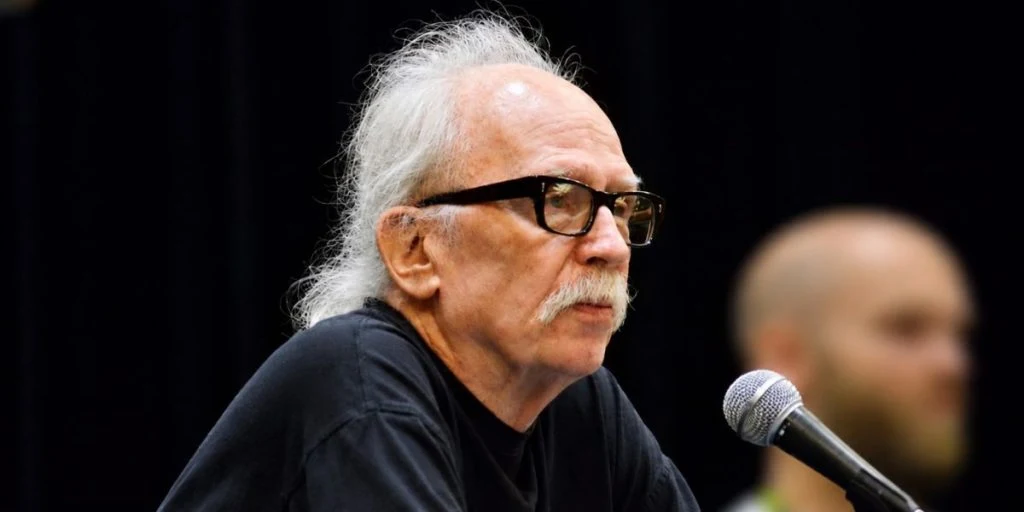
Comics and music now provide the horror filmmaker with a route outside conventional studio production. The new project also shows that his appetite for disturbing stories remains intact.


A disused church conceals an entrance to the underworld. Beyond it lies a nightmarish realm filled with demons, violence and victims subjected to grotesque physical transformations. The imagery has the scale of one of John Carpenter’s films, but it did not begin as a screenplay or a studio project.
The idea came to the horror legend in a vivid dream in 2024. Rather than letting the vision fade after waking, he began shaping it into Cathedral, a graphic novel that allows him to explore horror through illustration instead of live-action filmmaking. The project is accompanied by an album built around the weight, rhythm and ominous atmosphere of heavy metal.
According to Sacred Bones Records, each composition is connected to a specific section of the illustrated narrative. The music is therefore not simply promotional material or a separate release. It forms part of the storytelling, adding mood and momentum to the images as the plot moves deeper into its supernatural world.
“I rarely have cinematic dreams, but this was one of them,” Carpenter told The Guardian in a recent interview.


The format fits the path Carpenter has taken since stepping away from regular feature-film production. Working across comics and music gives him another way to construct suspense, create unsettling worlds and control the tone of a story. It also removes many of the practical and creative pressures of managing a large film set, while preserving the independence that has defined his career.
Why Hollywood wore him down
Carpenter told the newspaper that his affection for cinema never disappeared, and neither did his interest in the craft of filmmaking. What changed was his willingness to keep working within the Hollywood studio system, where creative decisions often became the subject of prolonged negotiations and conflict.
He said those repeated battles gradually took a personal toll. Directing required not only shaping performances, images and sound, but also defending choices against producers, executives and other commercial pressures. Over time, the process became less rewarding, even when the work itself remained important to him.
That tension helps explain why Carpenter’s career cannot be measured only by how his films performed when they first reached cinemas. Many were not immediate commercial successes, and several received mixed or hostile reactions on release. Their standing improved later as new audiences, critics and filmmakers reassessed the precision of his visual style, the economy of his storytelling and the political undercurrents running through his work.
The Thing, The Fog, Escape from New York and Assault on Precinct 13 all became lasting reference points in horror, science fiction and action cinema. Their influence grew gradually, often well after the original box-office results had faded from public attention.
Halloween was the clearest exception. The Numbers lists its production budget at $325,000 and its worldwide gross at about $70.3 million. The scale of that return showed how effectively a low-cost horror film could reach a mass audience when suspense, pacing and atmosphere were handled with discipline.
Carpenter told The Guardian that he was not trying to create a blueprint for the wave of slasher films that followed. His purpose was more immediate: To control what viewers saw, keep them uncertain about where danger might come from and make the experience feel like a carefully managed ride.
The film’s later influence was enormous, but Carpenter’s own explanation places the emphasis on technique rather than genre history. He was trying to frighten an audience in the moment, not design a formula for an industry.
His films kept resisting
Carpenter has linked part of his distrust of power to his childhood in Jim Crow-era Kentucky. After his family moved to Bowling Green, he felt like an outsider and faced violence from other children, experiences that left him wary of conformity and authority.
Those early tensions later surfaced in the worlds he created on screen. His films rarely treat institutions as dependable or social order as secure. Instead, they often show ordinary settings being undermined by forces that people either fail to recognise or refuse to confront.
In Halloween, the threat enters a quiet suburban neighbourhood, turning familiar streets and homes into places of fear.
Escape from New York imagines a government that responds to social collapse with repression and abandonment.
In They Live, advertising and consumer culture become instruments of hidden control, disguising inequality beneath the appearance of normal life.
The political message of They Live has proved especially durable. Carpenter said the consumerism and economic divisions criticised in the film has not disappeared and, in his view, has become more severe ever since.
Its blunt slogans and striking visual language have travelled far beyond the original release. They have appeared in visual art, advertising spoofs, protest imagery and internet memes, allowing the film’s ideas to reach new audiences who never saw it in a cinema.
That continued relevance helps explain why Carpenter’s work is often discussed as more than genre entertainment. His films use horror, science fiction and action to question who holds power, who benefits from it and how easily people can be persuaded to accept the systems around them.
Carpenter now expresses those instincts through a different combination of forms. He records and performs with his son, Cody Carpenter, and his godson, Daniel Davies, bringing together electronic composition, atmosphere and narrative.
Cathedral extends that approach by using music as part of the storytelling rather than as an element added after the fact. The project allows Carpenter to build another dark, controlled world without returning to the large productions, executive disputes and studio pressures that eventually pushed him away from regular feature directing.
Sources: The Guardian, Sacred Bones Records, The Numbers



