
 Kenneth Glad
Two deaths at a Renaissance court fuelled suspicions that endured for centuries. Genetic evidence has now given historians a stronger explanation for what happened.

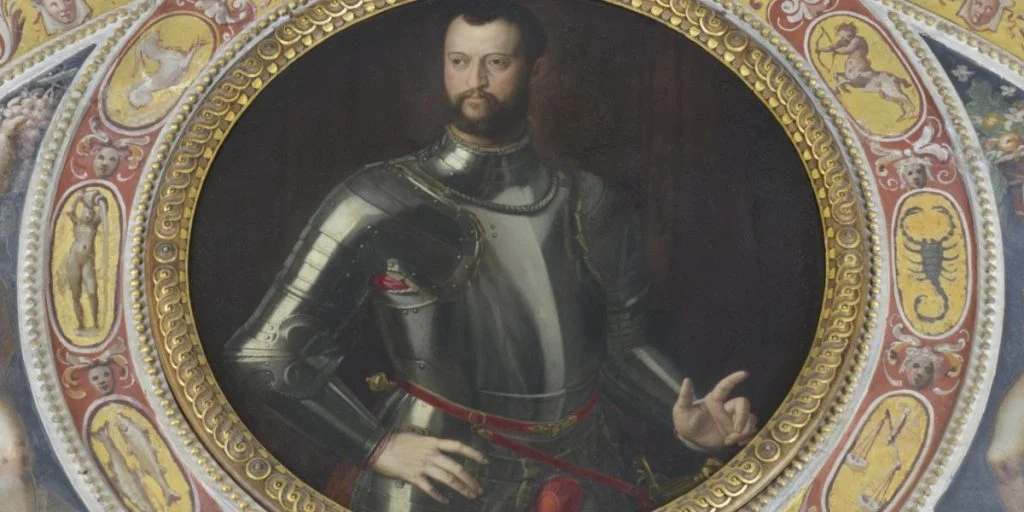
Francesco I de’ Medici, grand duke of Tuscany, died in October 1587 after suffering severe intermittent fevers. His wife, Bianca Cappello, died the following day, and Francesco’s brother Ferdinando succeeded him as grand duke.
The deaths immediately raised suspicion. Many believed, according to Historienet, that Ferdinando had poisoned the couple, and the rumour persisted despite medical accounts describing the severe fevers they suffered.
The centuries-old theory has now been tested using genetic material recovered from remains attributed to members of the Medici family.
Rather than relying solely on written accounts or forensic examinations of the bones, researchers were able to search for genetic traces left behind by disease, an approach that has become increasingly important in archaeology over the past two decades.


Malaria evidence emerges
In research published in iScience, scientists from Yale University and the University of Pisa reported malaria evidence in remains attributed to Francesco and his younger brother Giovanni.
Giovanni’s bones contained a previously uncharacterised strain of Plasmodium falciparum, the species responsible for the deadliest form of human malaria.
Francesco’s remains produced molecular traces associated with both P. falciparum and P. malariae. Further sequencing would be required to confirm whether both parasite species infected him at the same time.
The findings are consistent with historical descriptions of the brothers’ illnesses and strengthen malaria as an explanation for Francesco’s death. They also weaken the poisoning theory, although evidence of infection alone cannot conclusively establish a cause of death.
Beyond the centuries-old mystery, the study also provides new insight into the history of infectious disease in Europe. Malaria is now primarily associated with tropical and subtropical regions, but for centuries it was widespread across southern Europe, including parts of Italy.
The genetic material preserved in the Medici remains offers researchers a rare opportunity to examine how the parasite evolved before it was eliminated from the region during the twentieth century.
Genetics changes history
Johannes Krause, director of the Department of Archaeogenetics at the Max Planck Institute for Evolutionary Anthropology, told Historienet in an interview that ancient DNA should be treated as an additional historical source.
He argues that advances in sequencing technology have transformed the field. Instead of examining a handful of individuals, researchers can now analyse DNA from thousands of ancient people, allowing them to investigate entire populations and compare communities separated by both time and geography.
Krause considers population movement one of the field’s most important discoveries. Genetic studies indicate that migration often helped spread customs and technologies between ancient communities, challenging earlier assumptions that ideas usually travelled without large movements of people.
The method can also identify biological relationships within burial grounds, allowing researchers to reconstruct family connections, trace ancestry and examine patterns of settlement that would otherwise remain hidden in the archaeological record.
Krause expects DNA analysis eventually to become as routine in archaeology as radiocarbon dating. The Medici research shows how evidence preserved in human remains can test an old historical claim while adding new knowledge about malaria in Renaissance Europe.
At the same time, he argues that genetics is most valuable when combined with archaeology, historical documents and other forms of evidence rather than being treated as a complete answer on its own.
Sources: Historienet; iScience



