
 Kenneth Glad
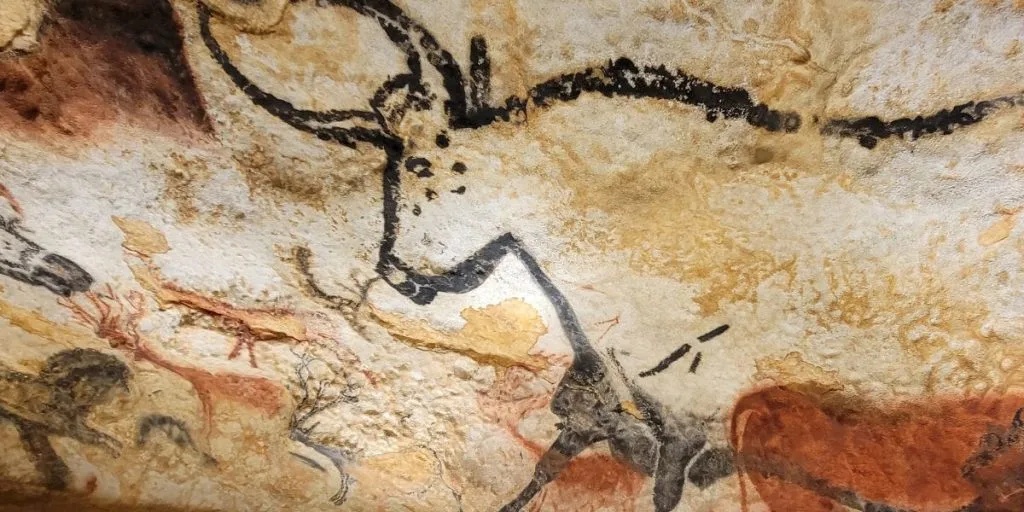
Ancient images from a connected European region reveal recurring choices in subject, direction and arrangement. Statistical tools are helping researchers identify those similarities without claiming to decipher their original meaning.

Bison, horses and ibex emerged as the most strongly connected subjects in an analysis of 500 prehistoric images from nine caves in southern Europe.
The research, published in the Journal of Archaeological Method and Theory, covers artwork dating broadly from 18,500 to 14,000 years ago. Archaeologist Iñaki Intxaurbe examined 500 images from nine decorated caves across the Basque region of northern Spain and southwestern France
These sites lie along the Bay of Biscay axis, a region that connected the Iberian Peninsula with continental Europe during the Late Ice Age. Their location makes them useful for investigating whether communities across the area made similar choices when arranging animals and signs on cave walls.
The researchers looked at which animals and signs appeared together on the same cave panels. Certain combinations turned up often enough to suggest a clear pattern.


How the connections were measured
Intxaurbe used co-occurrence networks, which show how frequently two subjects share the same panel. A relationship becomes stronger when the pair appears together repeatedly across the dataset.
The method allows researchers to compare the importance of different motifs without first assigning them a ritual, narrative or religious explanation. In practical terms, animals and signs become points in a network, while their repeated associations form the links between them.
Several versions of the network were produced. Some counted the number of shared panels, while others adjusted the results so that very common animals did not automatically dominate simply because they appeared more often.
The models were then filtered to remove weaker connections and reveal the most persistent relationships. A minimum spanning tree reduced the network further, retaining only the links needed to show its basic hierarchy.
Cave art is often discussed in terms of what the images might mean. This study takes a simpler route, asking which animals and signs repeatedly appeared together across the nine caves.”
Three animals remained prominent
In the main minimum spanning tree, bison occupied the leading position. It connected the strongest branches of the network and appeared closely associated with the other major herbivore themes.
That hierarchy was not fixed. When the category of unidentified figures was removed, ibex could move into the most prominent position. When the unusually ibex-rich Atxurra assemblage was also excluded, horse could become the leading node.
Those changes prevent the findings from being reduced to a claim that bison always dominated Magdalenian compositions. Intxaurbe’s more durable result is that the same three animals continued to form the principal cluster under the different tests.
Rarer animals and non-figurative signs became less central after weaker relationships were filtered out. However, several still maintained numerous links in the denser models, suggesting they were not simply disconnected additions.
The panel-based analysis also found that some subjects were highly restricted. Sexual imagery, for example, was rare in the corpus and remained largely isolated. The paper notes that such marginality could reflect regional practice, preservation problems or difficulties in classifying very simplified figures.
Direction added another pattern
The study also examined the way animals faced and how their bodies were positioned on the cave surface.
Bison and ibex appeared more frequently facing left, while horses were more often directed to the right. The individual results for those species weakened after correction for multiple statistical tests, so they are presented as tendencies rather than definitive rules.
Across the full corpus, however, the relationship between subject and facing direction remained statistically detectable. Horses within the same panels also tended to align with nearby figures more often than they faced them directly.
Inclination produced further differences. Horses were strongly associated with horizontal positions and were less common in inclined or vertical arrangements. Bison showed greater variety, including more inclined and vertical examples.
The corpus was supported by laser scanning, photogrammetry, spatial mapping and three-dimensional recording. Researchers also considered erosion, sediment movement, damaged surfaces and other processes that may have removed part of the original artwork.
Intxaurbe interprets the recurring combinations and positional choices as evidence consistent with shared regional conventions. The analysis cannot reveal what the images meant, but it provides a testable foundation for comparing cave art traditions in other regions.
Source: Journal of Archaeological Method and Theory



