
 Camilla Jessen
Artemis II crew face perilous return after Moon mission.


After completing a historic journey around the Moon, the Artemis II astronauts are now entering the most critical stage of their mission. The crew’s safe return is far from guaranteed as they prepare for a high-speed descent back to Earth.
With the mission already breaking new ground, attention is shifting to the dangers of re-entry.
NASA astronauts Reid Wiseman, Victor Glover and Christina Koch, alongside Canadian astronaut Jeremy Hansen, began their return journey after a successful lunar flyby.
The mission included a seven-hour pass around the Moon, during which the spacecraft experienced a 40-minute communications blackout on the far side.


Return target
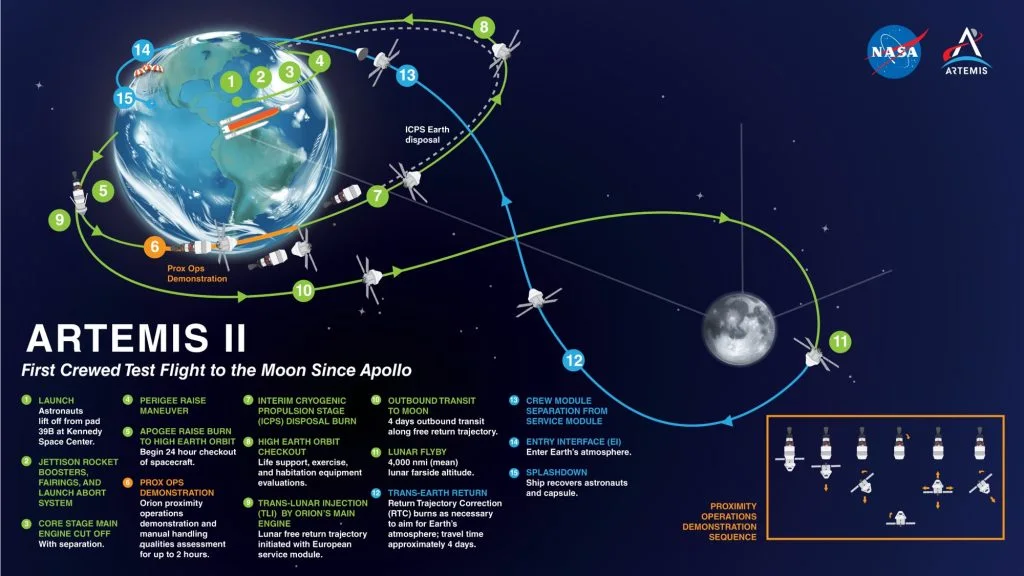
The Orion spacecraft is scheduled to land on Friday, April 10, with a planned splashdown in the Pacific Ocean off the coast of San Diego, according to Tyla.
Instead of a runway landing, the capsule will descend using parachutes before hitting the ocean, where recovery teams will be stationed.
The US Navy has deployed the USS John P. Murtha to retrieve both the crew and spacecraft, while a helicopter will monitor the descent from above.
According to the BBC and Newsner, Orion is expected to re-enter Earth’s atmosphere at around 25,000 mph (40,000 km/h), exposing it to extreme heat and pressure.
These conditions are difficult to replicate on Earth, making re-entry one of the most unpredictable phases of any space mission.
The spacecraft’s heat shield will be critical in protecting the astronauts during this intense stage.
During the earlier Artemis I mission in 2022, Orion’s heat shield showed signs of unexpected damage, including charring and cracking.
The findings triggered a detailed investigation and contributed to delays in launching Artemis II.
NASA officials have since worked to address those issues, but the re-entry remains a key moment of risk.
“Before they left, they said they hoped this mission would be forgotten, but it will be remembered as the moment people started to believe that America can once again do the near-impossible and change the world. This mission isn’t over until they’re under safe parachutes, splashing down into the Pacific,” NASA administrator Jared Isaacman shared.
Sources: BBC, Tyla, NASA, Newsner



