
 Kenneth Glad
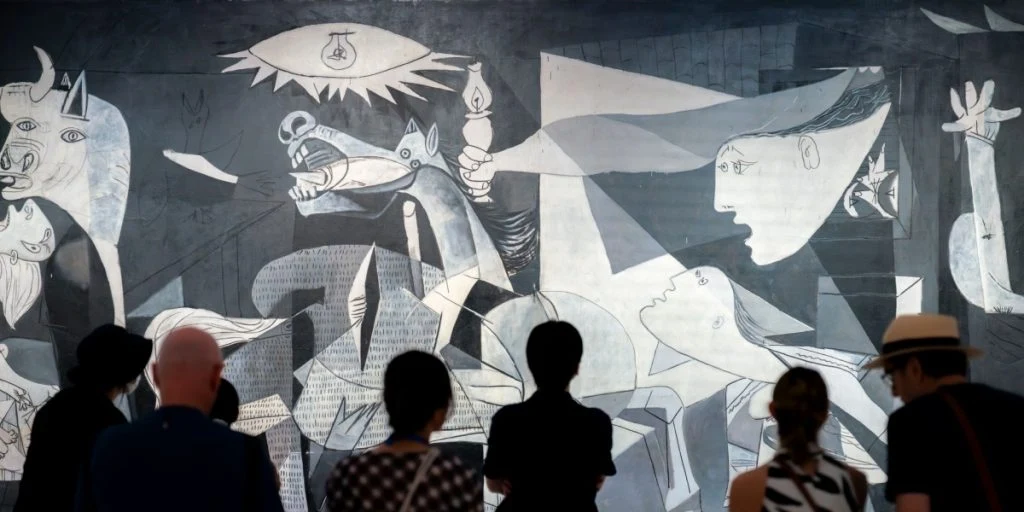
A decades-old artwork is once again drawing attention far beyond the art world. What might seem like a routine cultural decision has instead opened a wider debate with national implications.


Few artworks are as politically charged as Pablo Picasso’s Guernica, a vast anti-war painting rooted in the devastation of 1937.
Decades later, it remains not only a symbol of suffering, but also a focal point in Spain’s ongoing debate over history, identity and regional power.
As the 90th anniversary of the bombing approaches, that tension has resurfaced in a dispute that, according to The Guardian, goes well beyond museum walls.
Origins and journey
Picasso created Guernica in Paris in 1937 after the destruction of the Basque town by German and Italian forces supporting General Francisco Franco.


First unveiled at the Paris International Exposition that same year, the work quickly drew global attention for its stark portrayal of civilian suffering.
The painting later traveled across Europe and the United States, eventually settling at New York’s Museum of Modern Art (MoMA) for decades. Picasso had insisted it should not return to Spain until democratic rule was restored.
It was finally transferred to Madrid in 1981. Since 1992, it has been housed at the Reina Sofía, whose officials have consistently refused loan requests, citing both conservation risks and the painting’s central role in the museum’s collection.
Renewed dispute
A new request from the Basque government seeks to bring Guernica to Bilbao’s Guggenheim Museum for a limited exhibition marking the anniversary of the 1937 bombing.
The Guardian notes that Madrid’s regional president Isabel Díaz Ayuso dismissed the proposal, arguing that returning works to their place of origin reflects a “provincial mindset.” Basque leaders, in turn, have framed the refusal as symbolic of broader central control over cultural heritage.
Imanol Pradales, the Basque president, openly questioned Madrid’s willingness to act, while nationalist figures have used sharper language to challenge what they see as an imbalance in how Spain’s cultural assets are distributed.
This is not the first such request. Previous appeals, including earlier efforts to move the painting or secure loans, have been rejected, reinforcing the museum’s long-standing position.
A living symbol
The dispute highlights a deeper issue: Guernica occupies two identities at once. It is a cornerstone of Spain’s national collection, yet it is also inseparable from Basque history and memory.
Transporting the enormous canvas remains a technical challenge, but the argument is no longer purely about preservation. It touches on how Spain balances regional autonomy with national institutions, especially in a country where historical grievances still shape political discourse.
Nearly nine decades after its creation, Guernica continues to do what it has always done: Provoke, unsettle and force uncomfortable questions. The fact that it now sparks disagreement over where it belongs only reinforces its enduring power.
Source: The Guardian



