
 Kenneth Glad
A proposed shake-up of Lithuania’s public broadcaster has ignited a wider debate about media independence, spilling from political circles onto the streets of Vilnius and into European institutions. What officials describe as technical adjustments is being viewed by critics as something far more consequential.

Concern is growing among European media organisations and legal bodies. As reported by DR, several public broadcasters, including the BBC, have called on Lithuania’s parliament to reconsider the proposal.
The Council of Europe’s Venice Commission has also voiced unease, particularly over provisions that would make it simpler to oust LRT’s top executive.
Hungarian investigative journalist Szabolcs Panyi, speaking in Vilnius, drew parallels with developments in Hungary over the past decade.
“This is exactly how Viktor Orbán began his attacks on Hungarian media immediately after coming to power in 2010. It started with public radio,” he said, reports LRT.


For many observers, the comparison underscores fears that incremental legal changes can have lasting institutional consequences.
Protest in focus
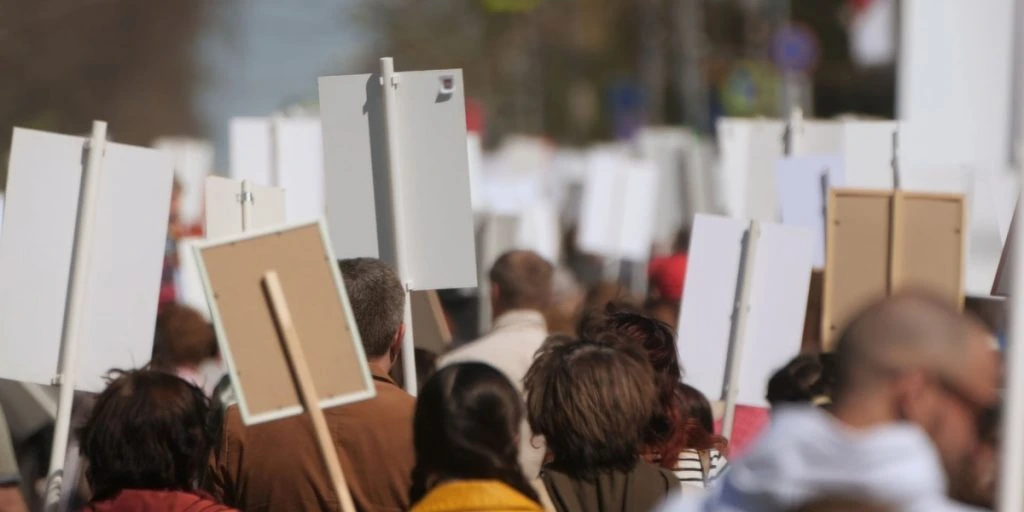
By Wednesday evening, central Vilnius had filled with demonstrators, many carrying signs defending press freedom. Police estimates cited by DR placed attendance at about 10,000, a significant turnout for a city of this size.
The rally, organised under the slogan “Hands off freedom of speech,” brought together journalists, students and civil society groups. Chants of “shame” could be heard from parts of the crowd.
From a stage facing parliament, veteran journalist Rita Miliūtė delivered a blunt message.
“I, Rita Miliūtė, give the ruling majority the finger for their legal ignorance and inability to govern the state,” she said, according to Delfi.
She followed with: “You do not scare us,” drawing applause from those gathered.
Reform under fire
The proposals target how LRT is governed and supervised. DR writes that the government points to audit findings that flagged unclear internal structures and gaps in oversight.
Among the changes under discussion are adjustments to the broadcaster’s governing council, tighter conditions for commissioning external productions, and revised rules allowing leadership changes if judged necessary by oversight bodies.
Critics argue that, taken together, these steps could shift influence closer to political power. Law professor Toma Birmontienė, who reviewed the plans for parliament, warned: “These restrictions mean in practice that the LRT council exercises internal editorial control. This can be perceived as censorship of content.”
The debate carries broader weight in Lithuania, where public broadcasting has been closely tied to democratic development since independence in 1991.
That legacy helps explain why the current proposal is attracting scrutiny not only domestically but also within a European Union increasingly focused on rule-of-law standards.
Government officials insist the draft is still evolving. Committee chair Kestutis Vilkauskas said lawmakers are “consulting experts on how best to adjust the proposal,” according to LRT, noting that formal deliberations have yet to begin.
Sources: DR, Delfi, LRT



