
 Nicolai Haugsted
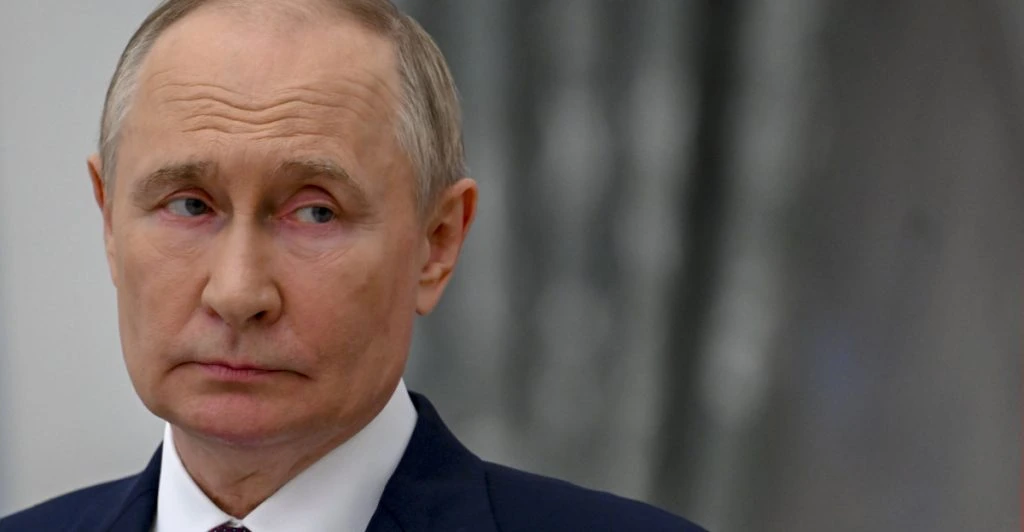
The Russian president will hit a brick wall, due to Nato’s latest strategy.


Military planners across Europe are paying increasing attention to a windswept Swedish island that has become one of NATO’s most valuable pieces of real estate.
Gotland, located in the middle of the Baltic Sea, recently hosted its first major NATO-coordinated military exercise since Sweden joined the alliance in 2024. Roughly 18,000 troops from 13 countries took part in drills designed to prepare for a potential confrontation in the region.
Exercise delivered reassurance for allies—but also revealed several uncomfortable lessons.
A Key Piece of NATO’s Puzzle
According to TV3.it, Military strategists have long viewed Gotland as one of the most strategically important locations in Northern Europe.


Control of the island provides influence over shipping lanes, airspace and military movements across much of the Baltic region.
Niklas Granholm, deputy director of the Swedish Defence Research Agency, explained the significance.
“Given the range and positioning of today’s weapons systems, if you control Gotland, you can control most of what happens in the Baltic Sea.”
Military experts often refer to the island as an “unsinkable aircraft carrier” because of its ability to support operations throughout the region.
Sweden Expands Defenses
Stockholm has spent recent years transforming Gotland from a lightly defended outpost into a heavily reinforced military hub.
More than €200 million has been invested in infrastructure, while Swedish forces have returned tanks, armored vehicles and air-defense systems to the island after decades of reduced military presence.
Andreas Gustafsson, commander of the Gotland Regiment, said troop numbers will continue growing.
More than 1,000 additional rotating soldiers are expected to join the approximately 4,500 personnel already stationed there within the next year.
Plans also include longer-range artillery and new IRIS-T medium-range air-defense systems beginning in 2028.
Ukraine Exposes a Weakness
Perhaps the most striking lesson from the exercises came not from NATO commanders but from Ukrainian drone specialists.
During training scenarios, Ukrainian operators repeatedly demonstrated how small drones could neutralize expensive military hardware.
A 24-year-old Ukrainian drone operator known by the call sign Tarik described the experience bluntly.
“I just flew my drone — I saw them all, so they were easy targets.”
Performance left a clear impression on Swedish officers.
“My main conclusion is that we need to train much more with drones,” Gustafsson admitted.
Concerns Over American Presence
Exercises also highlighted another issue attracting attention among European defense officials.
American participation was smaller than originally anticipated.
Some analysts view that as a reflection of growing uncertainty surrounding Washington’s long-term role in European security.
Others caution against reading too much into the numbers.
US Marine Corps Lieutenant Colonel Travis Chamberlain insisted cooperation remains strong.
“Our forces worked exceptionally well together,” he said.
Growing Tensions Around the Baltic
Military preparations are not focused solely on conventional warfare.
Authorities on Gotland have reported multiple incidents involving damaged undersea cables, disruptions to communications infrastructure and suspicious drone activity over the past 18 months.
Anna Wieslander of the Atlantic Council said Russian activity in the region has intensified noticeably.
“They have seen a very intensified Russian activity … cable cutting, drone flights, a number of espionage incidents.”
Sweden’s armed forces leadership argues that waiting for Russia to rebuild its military capabilities would be a mistake.
According to Swedish Commander-in-Chief Michael Claesson, readiness must remain constant.
“We should not sit passively and wait for one level or another of renewal of the Russian armed forces, but instead be constantly ready and on our toes,” he said.
Claesson also offered a stark assessment of the broader security environment, warning that a Russian attack “could happen at any time.”
For NATO, Gotland is no longer simply a remote island in the Baltic Sea. It has become a frontline test of how the alliance plans to deter future threats in Northern Europe.



