
 Kenneth Glad

A Russian teacher featured in an award-winning film has been officially targeted by authorities, as pressure mounts on voices documenting life inside the country. The decision follows international recognition for a documentary that portrays changes within Russia during wartime.

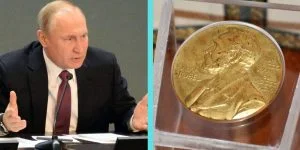
Pavel Talankin, who appears in the Danish documentary Mr. Nobody Against Putin, has been added to Russia’s “foreign agents” register, Reuters reports, citing the justice ministry of Russia.
The label has increasingly been applied to critics of the state, particularly since laws were expanded in recent years to cover a broader range of individuals.
Court ruling and backlash
The designation comes alongside a court decision in Chelyabinsk to ban the film, according to the BBC.
A state-affiliated human rights body had previously raised concerns about the inclusion of schoolchildren in the footage without parental consent.


The court echoed that point and went further, ruling the documentary contained elements of “propaganda for terrorism.”
Criticism has also come from within Russia’s cultural sphere. Director Nikita Mikhalkov called the film a “shameful manifesto of hatred against Russians”.
Inside the film
The Oscar-winning documentary follows Talankin, known as “Pasha,” as he records how the war in Ukraine reshaped messaging in Russian classrooms.
Shot discreetly, the footage captures how official narratives filtered into schools, a theme that helped draw international attention to the film beyond its Academy Award win.
Talankin later left Russia. Reflecting on that period, producer Helle Faber told Danish newspaper Ekstra Bladet that the team grew increasingly anxious as plans for his departure approached.
“Leading up to that summer holiday, I think we all became more and more paranoid. Pasha did, and so did we. Because we were so close, and nothing could be allowed to go wrong,” she said.
A wider pattern
Faber indicated that securing Talankin’s future outside Russia became the next priority after his exit, while authorities appeared to avoid publicly engaging with the film.
Rather than openly addressing it, she found that officials sought to ignore its existence altogether.
His case fits into a broader pattern in which educators, filmmakers and journalists face legal and political consequences for narratives that diverge from official messaging — particularly when they touch on how the war is presented to younger generations.
Sources: Reuters, BBC, Ekstra Bladet



