
 Jens Asbjørn Bøgen
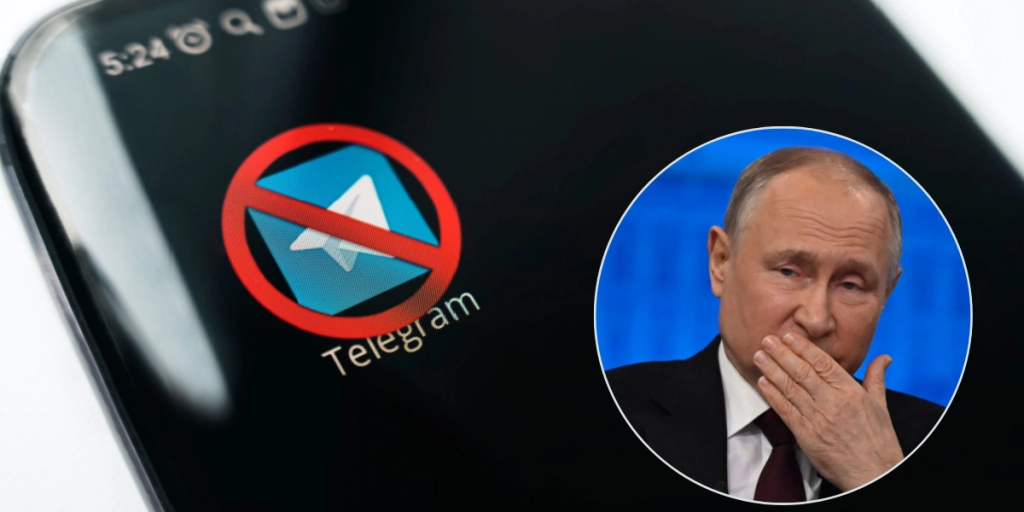
A state-run opinion center recently recorded the lowest Putin approval ratings since the beginning of the Ukraine war.

Russian officials appear to be shifting course on one of the country’s most contentious digital policies.
Forbes Russia reported Tuesday, citing a source familiar with internal discussions, that authorities have decided to slow down efforts to block the messaging platform Telegram.
The source indicated that the adjustment is aimed at easing social tension as Russians face new tax changes, rising prices, and tighter internet controls.
The move comes at a time of growing economic strain and public unease, raising questions about how far authorities are willing to go in controlling online spaces.


Mounting pressures
The move comes at a time of growing economic strain and public unease, raising questions about how far authorities are willing to go in controlling online spaces.
On April 14, Bloomberg reported that the Kremlin could be reconsidering its broader stance on internet restrictions.
According to the outlet, officials fear the measures may harm President Vladimir Putin’s approval ratings.
Bloomberg said several senior figures recently warned the administration about both political and economic risks linked to aggressive blocking policies.
Support sliding
These concerns follow new polling data released last week by the state-run Russian Public Opinion Research Center, which showed Putin’s approval rating had dropped to 67.8 percent.
In late March, the approval rating was 70.1 percent, Bloomberg reported at the time.
April 1 had long been suspected to mark the beginning of a nationwide shutdown of Telegram, the most popular messaging app in Russia.
Duma election coming
Such figures pose challenges for the Kremlin ahead of September’s State Duma elections and clash with official narratives of strong public unity during the war in Ukraine.
Despite this, Kremlin spokesperson Dmitry Peskov defended the restrictions on Tuesday, telling RBC that a majority of Russians “understand the appropriateness of and need for” internet blocking.
He added that the measures would remain in place until “the need for them disappears.”
Does Putin fear a new revolution?
It is difficult to predict, especially the future, but looking back in history, we can see some noticeable similarities between Russia in 2026 and Russia just before the Russian Revolution of 1917.
The Russian Revolution was sparked by several factors brewing for years, but the disastrous Russian performance in World War I is widely considered the match that lit the fire under the revolution.
During World War I, Russia’s economy was crippled, widespread famine marred the land, and the country suffered humiliating and catastrophic losses at the front.
The war in Ukraine has now been raging for more than four years, with more than 1.3 million Russian casualties, global ridicule over not performing on the battlefield, skyrocketing domestic inflation, and increasing isolation on the international stage.
Of course, the two situations cannot be directly compared, as a number of factors played into sparking the revolution. But history tends to repeat itself, and maybe the Kremlin knows that.
Sources: Bloomberg, Forbes Russia, RBC, Novaya Gazeta



