
 Kenneth Glad
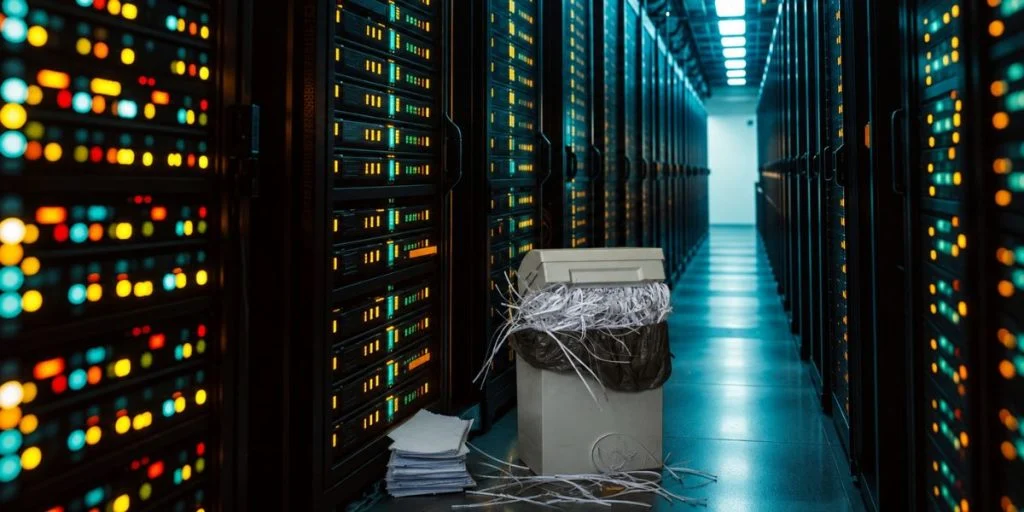
AI developers are turning to second-hand books for human-written training data, prompting concern that rare or historically significant copies could be destroyed during scanning. The practice has also opened a wider dispute over copyright, ownership and cultural preservation.


Dutch antiquarian bookseller Pieter de Vries initially suspected fraud when he received an inquiry connected to a list of about 3,000 titles, writes The Telegraph.
The request was far removed from ordinary business at his shop in Haarlem, where customers typically select individual maps, prints or rare books. The sender identified herself as a representative of 2077AI and said the company was gathering publications in several languages.
Booksellers in Europe and other regions told 404 Media and The Telegraph that they had encountered similarly unusual orders. The outlets reported that some buyers were prepared to pay delivery charges exceeding the value of the books themselves.
The demand reflects the artificial intelligence industry’s search for reliable training material. Books published before the generative-AI boom offer predominantly human-written content that is less likely to contain machine-generated text.


404 Media reported that ISBNdb advertised a proposed acquisition service capable of sourcing between 1,000 and one million books. The company later told The Telegraph that it had only been testing demand and had not launched the service.
According to 404 Media and records from the Anthropic copyright litigation, some books obtained for AI projects have been dismantled for high-speed scanning and discarded afterward. The evidence does not establish that every unusual order reported by booksellers was destined for destructive processing.
Bindings are removed for faster scanning
Industrial scanning operations can increase their speed by cutting away a book’s spine and passing the separated pages through automated equipment.
Once the binding has been removed, the original volume cannot be restored.
The loss of a single mass-market paperback may have little effect on public access. The risk is greater when the book is an obscure local history, a limited academic edition or a work absent from major library collections.
Marçal Font i Espí, a second-hand bookseller near Barcelona who also teaches literature at the University of Barcelona, told The Telegraph that digitisation was necessary but should not come at the expense of the original document.
A physical book may carry evidence that a straightforward text scan does not preserve. Handwritten comments, inserted papers, repairs, unusual bindings and printing characteristics can reveal how a copy was produced, owned and read.
Elon Musk, who owns X and leads SpaceX, addressed the issue in a post on X. He said his AI team had been instructed to place rare books in a library and scan them without cutting through their bindings.
Click to display external content from x,
- You can always enable and disable third-party content.

You agree to display external third-party content. Personal data may be sent to the provider of the content and other third-party services.
Library of Congress guidance advises institutions to consider an item’s physical form, condition and preservation needs when planning digitisation. Its guidelines also distinguish between preserving intellectual content and conserving the original physical object.
Such assessments are routine in professional archives but may be difficult to reproduce when commercial contractors are processing books at industrial scale.
Anthropic created a digital research library
The legal significance of destructive scanning emerged in Bartz v. Anthropic, a copyright dispute in the United States District Court for the Northern District of California.
Court records showed that Anthropic, the developer of the Claude chatbot, spent millions of dollars buying printed books. The company removed their bindings, scanned the pages and added the resulting files to a digital research collection.
On June 23, 2025, Judge William Alsup ruled that Anthropic’s use of books to train its language models was transformative fair use.
He also found that digitising purchased print books and destroying the physical copies, rather than keeping both physical and digital versions, qualified as fair use on the facts before the court. The decision addressed copyright liability and did not declare the practice acceptable under every legal, regulatory or ethical standard.
Alsup reached a different conclusion concerning millions of files obtained from pirate libraries. He rejected Anthropic’s attempt to claim fair-use protection for acquiring and retaining that unauthorised digital collection.
The piracy claims were later resolved through a class-action settlement. According to the court’s final approval order, Judge Araceli Martínez-Olguín approved the $1.5 billion agreement on July 20, 2026. It covered nearly half a million books downloaded from pirate sources.
The settlement did not overturn the earlier findings concerning model training or print books that Anthropic had legally purchased. It resolved claims about how other copies had been obtained.
The ruling may encourage developers to buy inexpensive second-hand editions rather than negotiate licences with authors and publishers.
Ownership leaves unresolved ethical questions
Ed Newton-Rex, a former AI executive and founder of the creator-rights organisation Fairly Trained, told The Telegraph that buying one physical copy should not automatically provide permission to use its contents to develop a commercial generative model.
An author normally receives nothing when a used book is resold. The purchaser, however, may use the text to improve a system capable of producing material that competes with writers and publishers.
Copyright law also gives limited weight to the cultural importance of an individual copy.
James Grimmelmann, a Cornell University professor specialising in digital and information law, explained to The Telegraph that the law generally regards a physical volume as a copy of an underlying work. It does not primarily distinguish between an edition printed in millions and one with only a handful of surviving examples.
A legally purchased book may therefore possess historical importance that is not reflected in its price or copyright status.
Questions have also been raised about the secrecy surrounding bulk acquisitions. In material reviewed by 404 Media, ISBNdb acknowledged the reputational risks associated with reports that AI companies were destroying large numbers of books. Its proposed service also emphasised confidentiality for clients.
Specialist dealers may research a book’s scarcity, provenance and condition before agreeing to sell it. Large warehouses handling inexpensive stock are less likely to have the time or expertise to evaluate every copy individually.
Basic checks could prevent permanent losses
Large-scale digitisation does not have to eliminate scarce or historically important books.
Before dismantling a volume, buyers could compare its edition with national, university and specialist library catalogues. Copies that appear uncommon could be redirected to non-destructive scanning equipment or offered to a public institution.
Books with distinctive physical features could receive individual review. This would not require every damaged paperback to be preserved indefinitely. It would create a safeguard against destroying an item before its significance has been considered.
AI companies could also seek agreements with writers, publishers and libraries. Licensing would address questions of compensation, while institutional partnerships could provide access to professionally managed collections without permanently removing books from circulation.
Federal digitisation standards already recommend documented workflows, suitable equipment, quality control and trained personnel when cultural material is converted into digital form.
Applying comparable standards to commercial AI projects would make mass digitisation slower and more expensive. It would also reduce the likelihood that a scarce edition disappears simply because its contents were valuable as training data.
Older books may matter both for their language and as physical evidence of how texts were printed, circulated and used. Once a copy has been destroyed, an electronic file cannot recover all of those characteristics.
The dispute is over what companies should be required to check before a physical book is permanently dismantled.
Sources: The Telegraph; 404 Media; Bartz v. Anthropic; Elon Musk’s post on X; Library of Congress



