
 Kathrine Frich

Many expected a swift campaign that would quickly bring Kyiv under Moscow’s control.

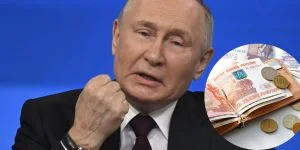
When Vladimir Putin launched the full-scale invasion of Ukraine in 2022, many expected a swift campaign that would quickly bring Kyiv under Moscow’s control. Instead, the war has dragged on for years, reshaping both the battlefield and Russia’s position in it.
Now, more than four years later, the conflict has settled into a grinding struggle, with Ukraine retaking land and an outcome far from what was initially anticipated.
Frontline stalemate
Former CIA director David Petraeus said Russian forces are no longer dominating the war, according to an interview with CBS News cited by the Independent.
“I think what’s remarkable is that Russia no longer has the upper hand,” Petraeus said.


He noted that while Russia still has greater resources, Ukrainian forces are holding their ground.
“Russia heavily outnumbers Ukraine. It outguns Ukraine. It has an economy 10 or 12 times the size of Ukraine’s. And yet the Ukrainian forces right now are stopping the Russians cold on the front lines,” he added.
Ceasefire offer
The comments come as Ukrainian president Volodymyr Zelensky proposed a temporary ceasefire focused on halting strikes against energy infrastructure over the Orthodox Easter period.
A similar proposal during the previous Easter weekend was rejected by Moscow.
Kyiv has continued to push for limited pauses in fighting, particularly around critical infrastructure targets.
Strikes continue
At the same time, Ukraine has maintained attacks on Russian energy facilities, despite some Western calls to scale back such operations.
Russian authorities said Ukrainian drones struck the Caspian Pipeline Consortium’s terminal on the Black Sea.
The site handles around 1.5% of global oil supply, making it a strategically significant target.
Sources: CBS News, The Independent.



