
 Kenneth Glad
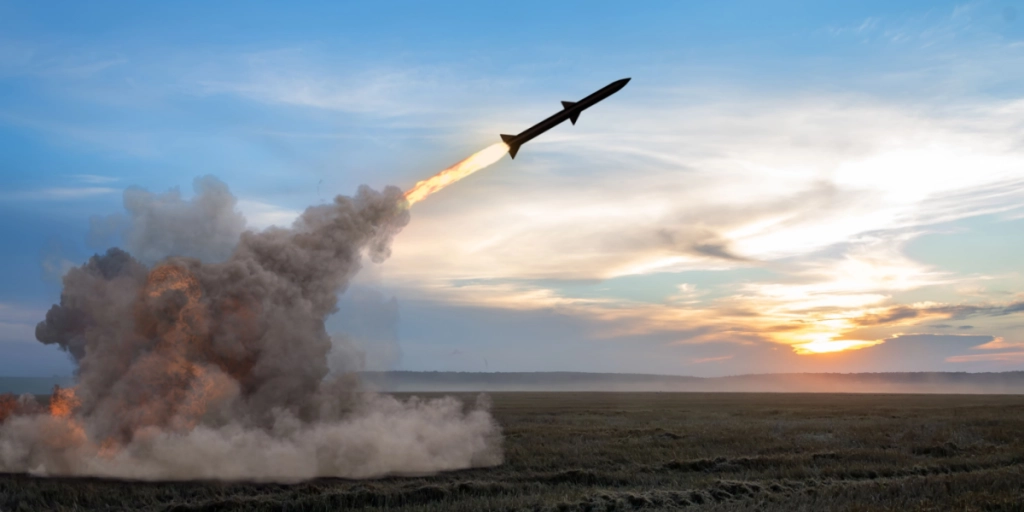
Escalating strikes are raising questions about the balance of military resources across the region. Analysts are increasingly watching how long each side can sustain the pace of operations as the confrontation evolves.


The war involving Iran, Israel and the United States has entered a new phase as airstrikes and missile attacks continue across the region. What began earlier this month as an exchange of strikes is increasingly turning into a contest over resources and endurance.
One question dominates military assessments: How long can Tehran sustain its missile campaign?
No one knows for sure. Even intelligence agencies acknowledge that Iran’s remaining missile stockpile is uncertain.
Drones shape the battlefield
Iran’s strategy has relied heavily on unmanned aircraft as well as missiles. Waves of attack drones have become one of the most visible tools used by Tehran during the war.


Defense analysts cited by the Polish defence outlet Portalobronny say Iran has launched roughly 3,000 attack drones so far. Most are believed to be Shahed-136 systems, the same type widely used by Russian forces during the war in Ukraine.
These drones are relatively inexpensive compared with ballistic missiles. Their real value lies in volume. Large drone barrages can force opponents to use costly interceptor missiles, gradually straining air-defense networks.
Wars of attrition rarely depend on a single weapon system. In this campaign, drones appear to be filling the role of pressure weapons while more advanced missiles are used more selectively.
Ukraine, which has spent years defending its cities from Shahed attacks, may soon share that experience with partners in the Middle East. Ukrainian President Volodymyr Zelensky said, according to the Polish outlet, that discussions about cooperation are underway. “If we’re talking about increasing certain resources, we’d really like it to be a two-way street.”
The role of long-range missiles
Ballistic missiles remain the backbone of Iran’s military deterrence. The country has invested in them for decades to compensate for its aging air force and to maintain the ability to strike distant targets.
Iran’s missile arsenal is widely considered the largest in the Middle East. Analysts, according to Portalobronny, estimate that Tehran possessed between 3,000 and 10,000 ballistic missiles before the war began.
Such weapons have long been central to Iran’s strategy. They allow the country to threaten targets across the region without relying on modern combat aircraft.
One frequently discussed system is the Khorramshahr-4 missile. The missile is believed to be linked to North Korea’s Hwasong-10 design and forms part of Iran’s medium-range strike capability.
Its estimated range of about 2,000 kilometres means it can reach Israel even when launched from deep inside Iranian territory.
Signs of a slower campaign
Despite that large arsenal, Iran’s missile activity has slowed significantly since the first phase of the war.
Portalobronny reports that retaliatory launches have dropped by roughly 90 percent compared with the opening days of the campaign. Analysts remain divided over the reasons.
Some believe Tehran is deliberately pacing its strikes to preserve missiles for a longer confrontation. Others say repeated Israeli and American strikes may have damaged launch systems or disrupted production facilities.
The Times of Israel, citing information from the Israel Defense Forces, reported that Iran has fired around 550 ballistic missiles at Israeli and US targets since the war began.
In a prolonged war, stockpiles alone may not decide the outcome. Production capacity, supply chains and the ability to replace lost equipment could become just as important.
Sources: Portalobronny, The Times of Israel



