
 Kathrine Frich
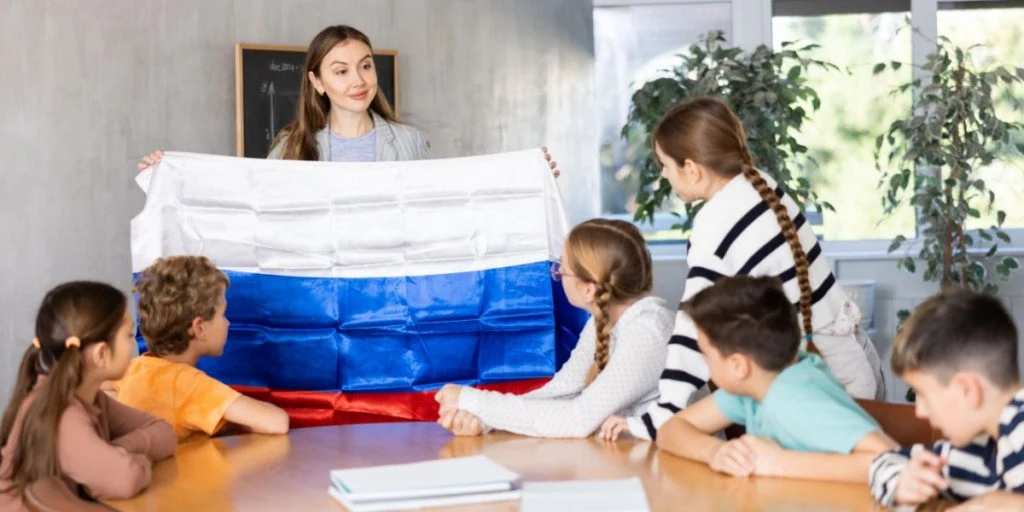
Propaganda plays a central role in shaping public opinion inside Russia.


It has evolved from Soviet-era messaging into a modern, highly coordinated system of state influence.
Through television, education, and tightly controlled media narratives, the Kremlin has worked to promote loyalty, national identity, and support for its policies.
Now authorities place greater emphasis on reaching younger generations and embedding these ideas from an increasingly early age.
New program rollout
Starting September 1, Russia will introduce a new program in kindergartens called “Good Games,” according to Deputy Education Minister Olga Koludarova.


The initiative mirrors the “Discussions about important things” lessons already implemented in schools.
Officials say the classes will focus on “spiritual and moral values.”
Early indoctrination
President Vladimir Putin previously ordered that what he described as the country’s “fundamental values” should be taught from preschool age.
A pilot version of the program was launched in 2025 across 25 regions, said Alexander Tsvetkov from the Institute for the Study of Childhood, Family and Education.
Activities include games, storytelling, and discussions designed to introduce key themes in a simplified format.
Lesson content
Topics covered range from everyday themes such as “My Favorite Kindergarten” to broader subjects like “Peoples of Russia” and “Native Land.”
Guidelines provided to educators suggest messaging around unity and patriotism.
For example, children aged 3–5 are told: “To defend our homeland, we are ready to unite.”
Older children are introduced to historical references, including figures such as Minin and Pozharsky.
Guidance for families
The program also extends beyond the classroom.
Parents are given recommendations on games, books, and cartoons to use at home, reinforcing the same themes.
Riddles and activities are designed to encourage children to associate personal identity with the concept of the homeland.
Sources: Russian Ministry of Education statements, Digi24.



