
 Kathrine Frich

The Kremlin relies on tightly controlled media and coordinated messaging to shape public opinion at home, reinforcing its narrative around politics and war.

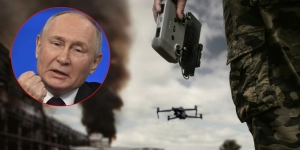
State television, online networks, and official channels have all played a role in maintaining that control.
Now, those same tactics are increasingly being directed beyond Russia’s borders, as pro-Kremlin voices attempt to influence audiences abroad and shape how the war is perceived internationally.
Unusual battlefield message
According to an investigation by the Kyiv Independent cited by Ziare, one Russian artillery shell fired in August 2024 carried an unexpected inscription.
Instead of a typical frontline message, it read: “Subscribe to Russians With Attitude,” referencing a podcast linked to pro-Russian narratives.


Launched in 2020, the “Russians With Attitude” project built a following among English-speaking audiences, particularly in the United States.
Hidden identities revealed
The creators, known only as “Kirill” and “Nikolay,” kept their identities concealed while growing their online presence.
The Kyiv Independent, citing data from TUA Research, identified them as Kirill Kamenetsky and Eldar Orlov, both linked to ultranationalist circles.
Investigators said the pair had also promoted fundraising efforts for Russian troops, with some posts later removed.
Messaging tailored west
The podcast’s content reflects pro-Kremlin narratives, including support for Russia’s territorial claims in Ukraine and criticism of Ukrainian identity.
In one episode, “Kirill” said: “I would ban it. It’s offensive. It’s against human decency.”
The platform gained traction on major Western services such as YouTube, Spotify, Apple Podcasts, and Patreon, where it generated thousands of subscribers and steady income.
Far-right links
The investigation found connections between the podcast and figures associated with far-right movements.
Its content and tone were described as closely aligned with extremist online communities, particularly in the US.
On social platform X, the account attracted more than 400,000 followers, with messaging often tailored to American audiences.
Funding and fallout
Following Russia’s full-scale invasion in 2022, the creators reportedly used their platforms to raise funds for military units, including some under sanctions.
After inquiries from journalists, Patreon removed the podcast, citing policy violations.
The creators later claimed censorship and moved their content to alternative platforms.
Sources: Kyiv Independent, TUA Research



