Kathrine Frich
Espionage is once again taking center stage in Europe.

Decades after the Cold War, old methods are reappearing with modern technology making them more powerful and harder to detect.
Rooftop surveillance
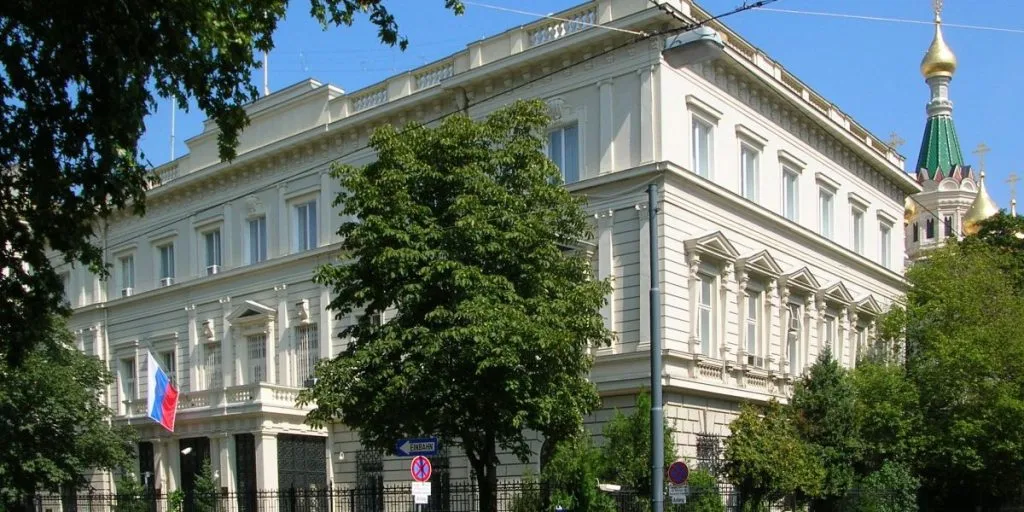
Russian diplomatic buildings in Vienna are being used as large-scale signal interception platforms, according to reports by the Financial Times and Austrian broadcaster ORF cited by Digi24.
Satellite dishes and antenna systems installed on rooftops are believed to serve purposes beyond standard embassy communications.
Experts cited in the report say the equipment is likely being used to monitor electronic and satellite signals across multiple regions.


Not facing Moscow
One key detail has raised concern among Western officials.
The antennas are not pointed east toward Russia, as would be expected for diplomatic communication, but instead toward the West, as well as Africa and the Middle East.
This suggests the systems are designed to intercept signals rather than transmit them.
Officials say Vienna has become a major center for Russian intelligence activity in Europe.
“Vienna has become very important to them… it’s their hub in Europe,” a senior European diplomat told the Financial Times.
The city’s role has grown as Russian operations in other European countries have been disrupted following the invasion of Ukraine.
Wide reach
From Austria, Russian systems are believed to monitor communications not only in Europe but also in parts of Africa and the Middle East.
Austria’s domestic intelligence agency has warned that these capabilities pose a significant counterintelligence risk.
The flexible positioning of antennas allows operators to track multiple satellites and targets.
Observers have noted frequent repositioning of some antennas, indicating active use.
In one case, a large antenna was redirected ahead of the Munich Security Conference and then returned to its previous position after the event.
Such changes are seen as possible indicators of targeted surveillance.
“Russencity” complex
Much of the activity is centered around a large Russian diplomatic complex in Vienna, sometimes referred to as “Russencity.”
The site includes residential buildings, a school and a major diplomatic mission, with rooftops covered in satellite equipment.
Experts say the complex may have been designed for intelligence purposes as far back as the Soviet era.
Despite the concerns, Austria has taken a more cautious approach than other European countries.
As a neutral state, it has not carried out large-scale expulsions of Russian diplomats.
Officials say legal limitations and political considerations make it difficult to act directly.
Sources: Financial Times, ORF, Digi24