
 Jens Asbjørn Bøgen
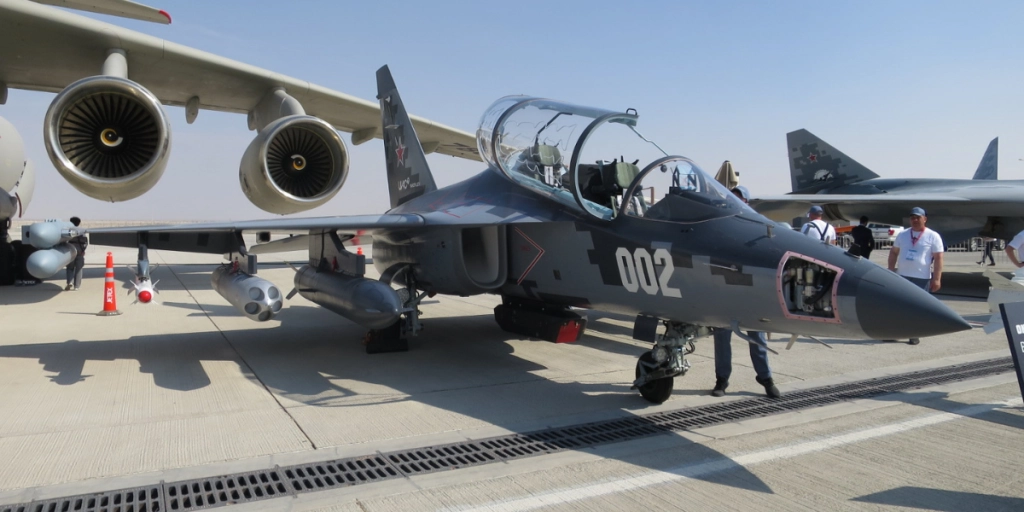
Instead of using top-tier fighter jets to fight of Ukrainian drones, Kremlin is trying to create a cheaper alternative.


Russia is transforming a modest training aircraft into a specialized hunter designed to destroy heavy aerial drones and robotic sea craft.
According to Army Recognition, citing the Russian news agency TASS, Moscow is working on upgrading the existing Yak-130M to ease the burden on its most expensive frontline jets.
Scrambling top-tier Su-57 fighters to chase down slow-moving drones wastes vital flight hours and cash. Army Recognition reported that Russian state media unveiled the new role, which builds a budget-friendly defense layer over vulnerable regions.
The plan places these upgraded planes on daily patrol around coastal facilities, strategic military bases, and vital power plants, reserving the scarce number of stealth fighters for far more dangerous combat missions against advanced enemies.


Loaded with tech
Engineers did not simply repaint the old aircraft. They overhauled more than half of its internal electronics, adding a powerful BRLS-130R radar alongside a SOLT-130K optical targeting system and an upgraded Prezident-S130 self-defense suite.
The upgraded jet carries long-range R-77-1 radar missiles and agile R-74M infrared weapons. These tools allow crews to lock onto large unmanned aircraft and strike them well before making visual contact.
A two-person cockpit keeps heavy workloads manageable during tense operations. One pilot focuses strictly on flying the plane, while the second operator controls the sensors, tracks moving targets, and fires guided weapons.
Long road ahead
Hunting maritime surface drones presents a much tougher puzzle for pilots. Small, fast-moving motorboats easily blend into ocean waves, forcing crews to depend on coastal radar networks and thermal imaging to locate targets in poor weather.
Moscow has already assembled three prototype models for field testing. However, official trials will stretch until late 2028 before full production and deliveries to active units can finally begin.
With a maximum speed near 596 mph and a range around 1,000 miles, the plane will never win a high-speed dogfight. Yet its real strength lies in providing a practical, low-cost shield against persistent drone attacks.



