Jens Asbjørn Bøgen

Russia is likely to achieve some tactical gains, but the cost will be significant.


Fighting in eastern Ukraine appears to be entering a new phase as Russian forces intensify operations along a critical axis.
The Institute for the Study of War (ISW) assesses that it is the awaited Russian spring–summer offensive of 2026 that has finally begun, preparing for deeper advances into the so-called “Fortress Belt” of Ukraine.
But it is unlikely that Russia will achieve much beyond massive losses.
The Fortress Belt
The focus is on a chain of fortified cities that have long formed the backbone of Ukraine’s defenses in the Donetsk region. These cities are known as the “Fortress Belt”.


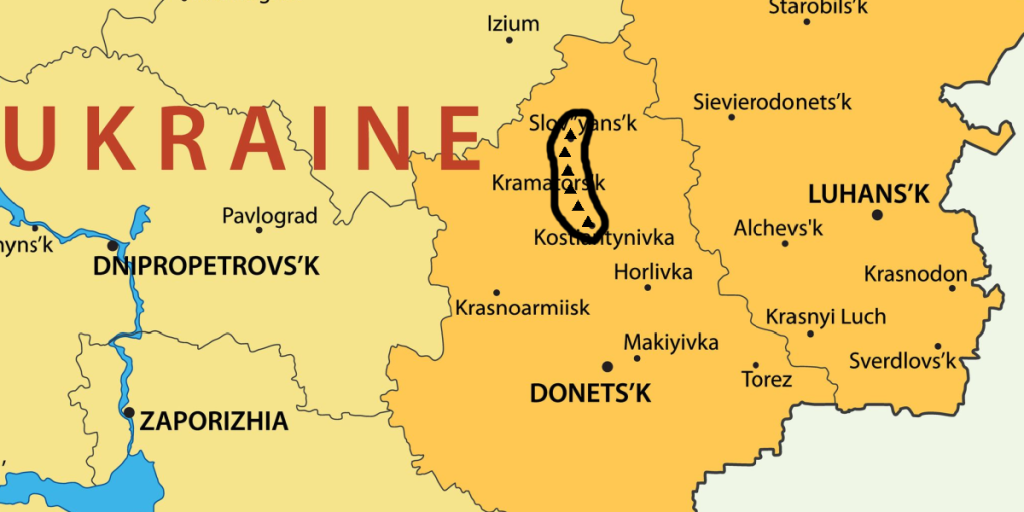
According to the ISW, Russian troops have stepped up coordinated assaults near Lyman, a strategically important northern point on the road toward Slovyansk. Recent attacks have been larger and more complex than those seen in previous months, suggesting a shift in tempo.
Ukrainian officials report that Russian forces are combining infantry, armored vehicles, and lighter mobile units in multi-directional assaults.
At the same time, Moscow’s forces appear to be adjusting tactics. Rather than advancing in tight formations, they are dispersing units across several axes, a move likely aimed at complicating Ukraine’s drone-based defenses.
Growing pressure north
Alongside ground assaults, Russian forces have increased aerial and drone strikes in the area. These attacks are believed to target logistics routes and defensive infrastructure, weakening Ukraine’s ability to sustain frontline positions.
Such coordinated strikes form part of a wider battlefield interdiction campaign designed to disrupt supply lines before major advances.
The ISW assesses that these intensified operations around Lyman are part of a broader effort to position Russian forces for future offensives against Slovyansk and nearby urban centers.
Southern buildup
Further south, the ISW reports that signs are emerging of similar preparations near Kramatorsk and Kostyantynivka, another key section of Ukraine’s defensive belt.
Ukrainian officials report a rise in troop movements, equipment deployments, and intensified artillery and drone activity in these areas.
The ISW notes that these developments likely indicate preparations for a multi-directional offensive aimed at stretching Ukrainian defenses.
Strikes on transport routes and nearby settlements have also increased, suggesting efforts to isolate Ukrainian units ahead of potential ground operations.
Costly advances
Despite the escalation, the ISW remains skeptical about Russia’s ability to achieve a decisive breakthrough this year.
The think tank assesses that while Russian forces may secure limited tactical gains, these are likely to come at a high cost. Heavy casualties and ongoing manpower constraints could limit the sustainability of large-scale assaults.
Ukrainian forces continue to hold advantageous terrain in several areas, complicating Russian advances. At the same time, Kyiv is intensifying strikes on Russian artillery systems and logistics hubs to disrupt offensive momentum.
Overall, the ISW expects the coming months to bring sustained fighting, with both sides attempting to shape conditions on the battlefield. However, a rapid or decisive shift in control of the defensive line appears unlikely.
Sources: Institute for the Study of War (ISW)