
 Jens Asbjørn Bøgen
It is, howver, not guaranteed that it would be a success.
Others are reading now


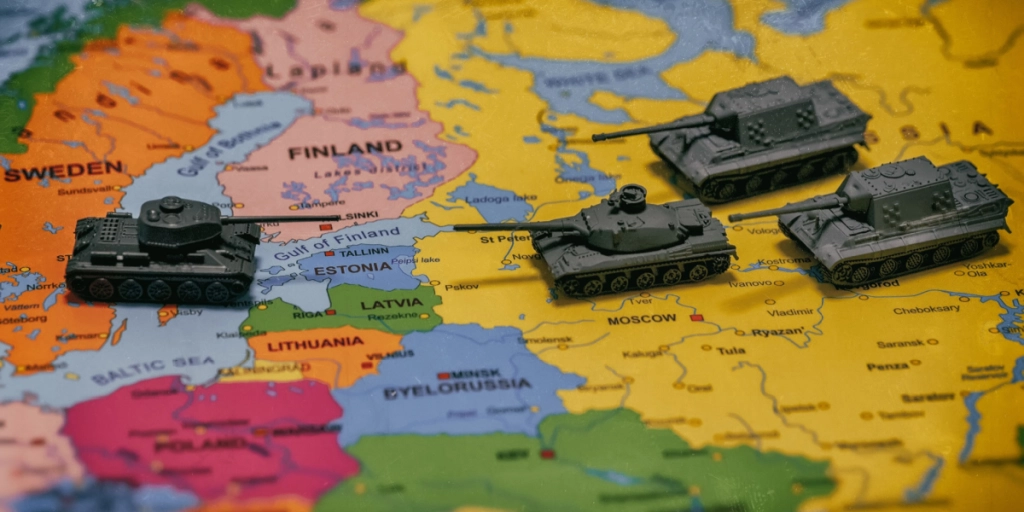
Tensions around Europe’s eastern flank are again drawing scrutiny as analysts warn of possible new pressure points. Recent reporting and expert commentary suggest the Baltic region could face heightened risks.
Attention has intensified amid shifting global focus and ongoing war in Ukraine.
In an interview with the Ukrainian outlet Glavred, political scientist Vladimir Gorbach said the risk of provocations in the Baltics remains significant regardless of such publications.
He pointed to developments inside Russia that could signal preparation for external operations.


Among them is a proposed law on the “Protection of Russian Citizens Abroad,” a measure that could be used to justify intervention. Russian-speaking populations remain sizeable in parts of the Baltics, particularly in Latvia.
Signs of pressure
In the interview with Glavred, Gorbach noted that legal cases against Russian nationals accused of anti-state activities are ongoing in Baltic countries.
He argued that Moscow could frame such cases as grounds for involvement by its security services abroad.
He also highlighted Estonia, where narratives about a so-called Narva “people’s republic” have surfaced in information channels.
Observers have compared this rhetoric to earlier developments in Crimea and eastern Ukraine, as we reported earlier in March.
Such patterns, he suggested, could precede more direct actions, though not necessarily a full-scale invasion.
Limited scenarios
The analyst said a more likely course would involve localized operations rather than a broad offensive. Areas in Estonia or Latvia could be targeted, while Lithuania and the Suwalki Corridor are seen as less probable due to the risk of immediate escalation with Poland.
With international focus currently centered on the Middle East, Gorbach warned that Moscow might perceive an opportunity to act amid reduced attention. However, he stressed that any such move would carry substantial risks and uncertain outcomes.
He added that operations could be masked as military exercises and potentially unfold within a year.
Full-scale war unlikely – but hybrid could be a challenge
While Russia may struggle to sustain a full two-front war, the expert said limited or hybrid actions remain feasible, supported by existing military infrastructure.
Any escalation in the Baltics could reshape the war in Ukraine, either diverting attention or prompting stronger Western coordination
Outcomes remain uncertain, but the risks are widely acknowledged.
Sources: Glavred, la.lv, Dagens



