
 Kenneth Glad
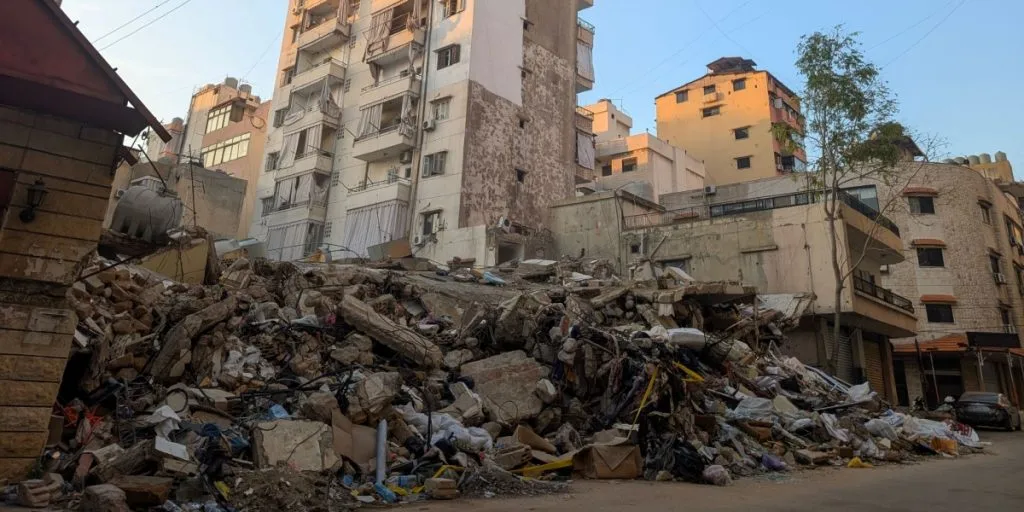
Just as Washington and Tehran appeared to edge toward a fragile understanding, a sudden Israeli assault in Lebanon has shifted the mood. The timing alone has raised questions about whether diplomacy can survive another shock.
Lebanon’s health ministry said more than 200 people were killed. Several governments reacted with concern, warning the situation could quickly get worse.


Fighting resumed soon after the strikes, underscoring how thin the margin for calm really was. What looked like a pause now feels more like a gap between rounds.
Iranian president Masoud Pezeshkian said the attacks breached the agreement and could make negotiations “meaningless.”
European officials signalled similar unease, pointing to the risk of talks unravelling before they gain traction.
The Soufan Center, in analysis cited by The Guardian, warned: “Even if Lebanon was formally outside the deal, the scale of Israel’s strikes was likely to be viewed as escalatory, nonetheless.”


A deal on paper doesn’t control events on the ground. It never really does.
Motives and messaging
Israeli officials have described the operation as a strike on Hezbollah infrastructure, maintaining that the group operates from civilian areas.
The breadth of the attack leaves room for doubt. Some analysts see a straightforward military objective. Others think it was meant to send a message, not just to Hezbollah but to Washington and Tehran as talks continue.
The killing of Ali Yusuf Harshi, reported to have close links to Hezbollah leadership, has added to speculation that more senior figures may have been targeted. There is no clear evidence of that, but the question lingers.
It may also be about leverage. If Israel felt sidelined in ceasefire discussions, this was a forceful way to reassert its position.
Alliances tested
For Washington, the dilemma is familiar and uncomfortable. Back its ally, or protect a negotiation that could still collapse.
Marion Messmer of Chatham House wrote: “Israel’s insistence that its military action in Lebanon is not part of the agreement reveals a key vulnerability and shows the limits of the US ability to manage its allies.”
Israeli officials, according to reporting by Reuters, appear to believe they have a short window to act while talks continue.
That could prove a miscalculation. Continued strikes risk hardening positions in Tehran and exposing quiet friction with Washington.
Diplomacy rarely fails all at once. More often, it slips away in increments until there is nothing left to salvage.
Sources: The Guardian, Reuters, Chatham House



