
 Asger Risom
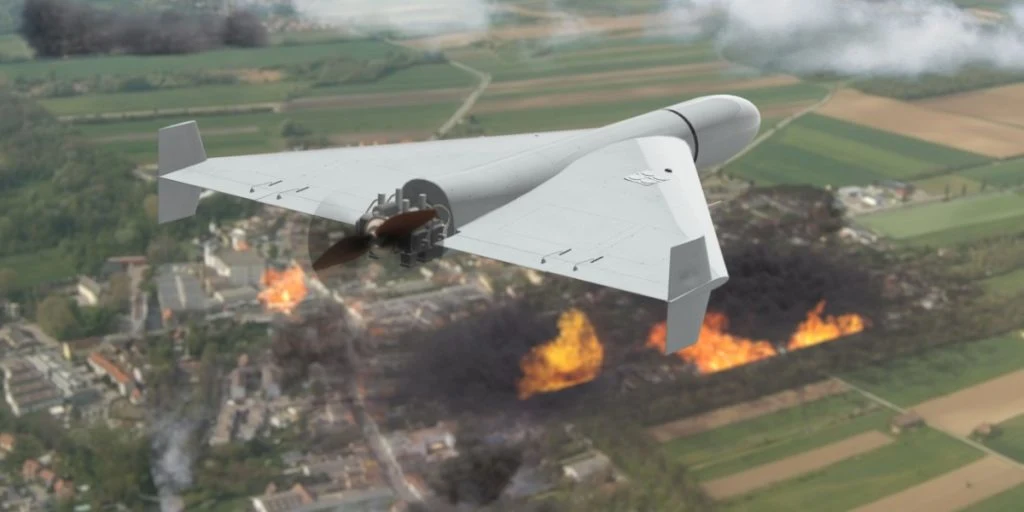
Ukraine’s rapid drone innovation is giving it a battlefield edge while also striking deep into Russia’s oil infrastructure, increasing both military and economic pressure.


Ukraine’s rapid advances in drone technology are reshaping the war, delivering mounting pressure on Russian troops while increasingly targeting the country’s vital energy infrastructure.
What began as a tactical tool has evolved into a strategic advantage, with drones now playing a central role both on the battlefield and deep inside Russian territory.
According to the Institute for the Study of War (ISW), recent Ukrainian innovations are not only slowing Russian advances but actively shifting momentum in Kyiv’s favor.
Battlefield edge grows
Drones now account for a significant share of battlefield casualties, reflecting how central unmanned systems have become to modern combat.


ISW said Ukrainian upgrades have contributed to rising Russian losses this year, following already heavy casualties in 2025 that were estimated at around 30,000 per month.
Improved capabilities have also allowed Ukraine to strike air-defense systems more effectively and intercept incoming drones, weakening Russia’s offensive capacity and enabling counterattacks.
“Ukraine’s defensive successes, drone adaptations, and midrange strike campaign are creating compounding effects that are degrading Russian frontline forces,” ISW said.
Faster innovation cycle
Ukraine’s advantage appears to stem from speed and adaptability.
The Kyiv Post reported that newer drones are equipped with artificial intelligence, making them harder to jam, detect and intercept, while extending their operational range.
By contrast, ISW noted that Russia has focused on mass-producing existing drone models rather than rapidly innovating, with institutional resistance among military leadership slowing adaptation.
Former CIA director David Petraeus said Ukraine’s defense sector is evolving into a major force, describing it as “the most important military-industrial complex in the free world.”
“It is producing cutting-edge unmanned systems, not just in the air, but on the ground and at sea,” he said.
Strikes beyond the front
Ukraine’s drone campaign is no longer confined to the battlefield.
Long-range strikes have increasingly targeted Russia’s oil infrastructure, a key pillar of its economy and war financing.
ISW highlighted attacks on major export hubs, including Novorossiysk on the Black Sea and the Baltic ports of Primorsk and Ust-Luga, which together previously handled a large share of Russia’s seaborne crude exports.
Economic damage mounts
The impact of these strikes is becoming more visible.
Reports cited by ISW indicate that an attack on Primorsk destroyed oil worth around $200 million, while exports of petrochemical products from Ust-Luga dropped sharply in late March.
“Ukraine’s expanding long-range strike campaign against Russian oil infrastructure is exploiting overstretched Russian air defenses and significantly damaging Russian oil export capabilities,” ISW said.
War increasingly automated
The growing reliance on drones reflects a broader transformation in warfare, where rapid software updates and iterative hardware improvements can shift battlefield dynamics in weeks rather than years.
Petraeus noted that Ukraine’s systems are evolving at exceptional speed, with software updates arriving in less than a week and hardware changes rolling out every few weeks.
As the conflict continues, the balance may increasingly depend not just on firepower, but on which side can innovate faster.
Sources: Institute for the Study of War, Kyiv Post



