
 Kathrine Frich
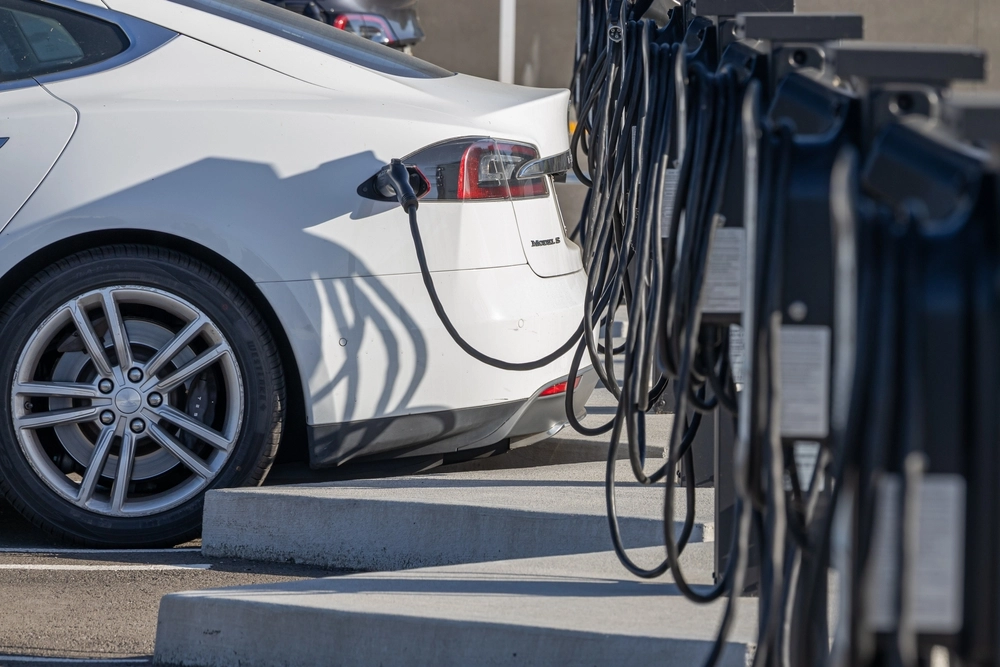
The heat is tough on lithium-ion cells, and five mistakes in particular can cost you range and battery life in July and August.


When the thermometer creeps up, your electric vehicle’s battery goes into overdrive to keep itself cool. This doesn’t just mean the AC draws from your range, but also that the battery itself ages faster if you park, charge, and drive incorrectly.
A study from fleet data company Geotab, which analyzed over 22,700 EVs, shows that cars in hot climates degrade on average 0.4 percent faster per year than cars in milder areas. It might not sound like much, but combined with incorrect charging habits, that number can add up to a noticeable reduction in range over a car’s lifespan.
Here are the five mistakes you should avoid whether you are taking your EV on a summer road trip down south or just experiencing a classic American heatwave.
1. Parking in Direct Sunlight with a Full Battery
The most expensive single mistake is leaving the car with a fully charged battery in the baking sun. The German automobile club ADAC, Europe’s largest of its kind, recommends in its official guidelines that drivers park in the shade during the summer, and ideally in a garage during the winter.


The combination of high temperatures and a full state of charge puts unnecessary strain on the cells and accelerates chemical aging, according to the German outlet t-online. Find a parking garage or the shade of a tree if the car is going to be sitting idle for several hours anyway.
2. Charging to 100 Percent Without Driving Immediately
Many people charge their car to full capacity overnight and then leave it sitting in the heat all day. According to ADAC, this is a highly unfortunate combination. The club recommends only charging to 100 percent when you are heading out on a long trip shortly after. For daily driving, 80 percent is plenty and much gentler on the battery cells.
This rule counts double in the summer. A full charge state combined with temperatures over 86°F is the worst possible situation for battery longevity.
3. Fast Charging When the Battery is Already Hot
DC fast chargers are a blessing on a long trip, but a bad habit if you use them as your default. Geotab’s analysis shows that cars predominantly using DC fast chargers over 100 kW can experience up to 3.0 percent annual degradation, which is roughly double that of cars primarily charging with standard AC power.
ADAC points out that frequent fast charging at 50 to 350 kW, depending on the car, can negatively impact lifespan. When the battery is already hot from sunshine and highway driving, the effect is further worsened. Choose a slower Level 2 charger in the evening if you have the option.
4. Skipping Pre-Cooling Before Driving
One of the most overlooked tips is pre-cooling, or preconditioning, while the car is still plugged into the charger. ADAC recommends activating manual preconditioning well before a charging stop if your car has the feature.
The principle also applies in the other direction. If you are driving away from a hot parking lot, the car can use power from the charging station to cool the cabin and the battery down before you get in. This saves range because the cooling energy isn’t pulled from the battery itself. The American outlet GreenCars notes that lithium-ion batteries function best in a temperature window of roughly 59 to 80°F, and both cold and heat outside that range cause efficiency to drop.
5. Aggressive Driving in the Heat
The final mistake happens behind the wheel. Hard acceleration and high speeds demand large currents, and current turns into heat in the cells. ADAC emphasizes that a forward-looking and smooth driving style spares the battery, while heavy acceleration and high speeds draw heavily on it.
With American summers regularly hitting well over 86°F, these tips are highly relevant for all Americans driving locally. And if you take your EV on a road trip to the Sun Belt or the desert where temperatures easily reach 95°F or more, these five mistakes will hurt your battery even more.



