
 Nicolai Haugsted
Confidence in America plunges as new poll exposes growing political divide


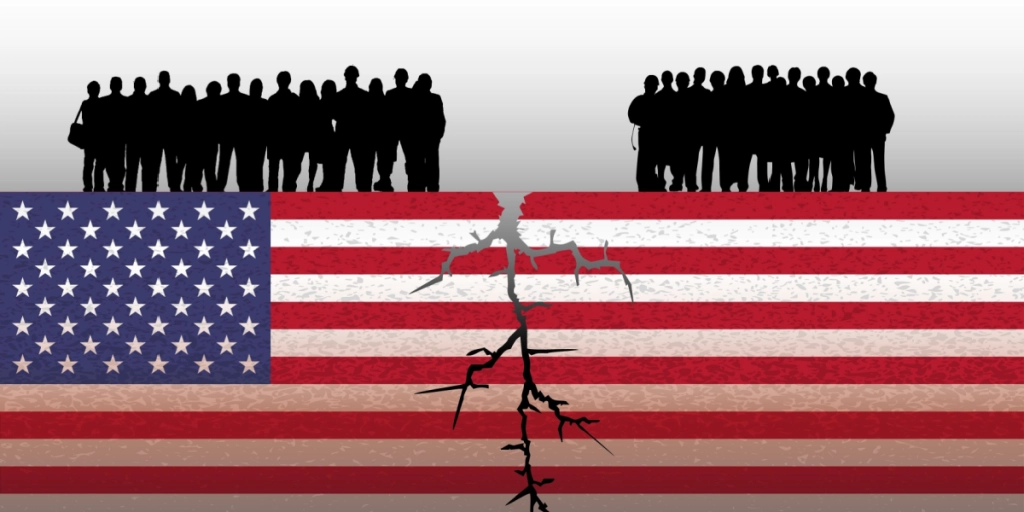
America has just marked 250 years as a nation, but fresh polling suggests the celebrations arrive at a moment when many citizens feel less enthusiastic about key parts of the country than they did just a few years ago. New data points to declining confidence in American democracy, national history and even the military, while exposing an increasingly sharp political divide over national pride.
A new survey from The Associated Press-NORC Center for Public Affairs Research indicates that Americans have become markedly less proud of several core national institutions since 2017.
Confidence in the way American democracy functions has dropped from 42 percent to 28 percent over that period. Pride in the military has also fallen significantly, while appreciation for the nation’s history has declined by 14 percentage points.
Separate polling from Gallup paints a similar picture. According to its latest figures, just 53 percent of American adults now describe themselves as “extremely” or “very” proud to be American—the lowest level recorded since Gallup began tracking the question in 2001.


Political divide dominates the findings
Political affiliation appears to be the strongest predictor of how respondents answered.
Only 14 percent of Democrats said they are extremely proud to be American, compared with 28 percent of independents and 70 percent of Republicans.
Support for the military followed a similar pattern. Roughly nine out of ten Republicans expressed strong pride in the armed forces, while the overall national figure stood at around six in ten adults.
Texas Republican Samantha Fulks acknowledged reservations about recent foreign policy decisions but maintained her backing for the military.
“I still support our troops no matter what they do.”
Americans disagree on what has changed
Respondents also offered sharply different explanations for the country’s current direction.
Karla Galdamez, a former history teacher from California, argued that recent years have represented a setback, though she believes the country’s long-term trajectory remains positive.
“Despite some of the very ugly history that we have of segregation and slavery, if you look at the trajectory of the last 250 years, we’ve done nothing but get better and move toward a more egalitarian nation.”
Others placed less emphasis on government policies and more on the increasingly polarized political climate.
Massachusetts resident Matt Stafford said his greatest concern is the growing divide between Americans, arguing that both ends of the political spectrum continue to move further apart.
Identity varies across generations
Researchers also found noticeable differences between age groups and political affiliations when participants were asked how important being American was to their identity.
Older respondents and Republicans were considerably more likely than younger adults and Democrats to describe their nationality as central to who they are.
Race and ethnicity also played a major role for many participants. Among Black Americans surveyed, 73 percent said their race was either “extremely” or “very” important to their identity—more than those who gave the same answer about being American.
The AP-NORC survey questioned 2,596 adults between April 16 and April 20 and reported a margin of error of plus or minus 2.6 percentage points.



